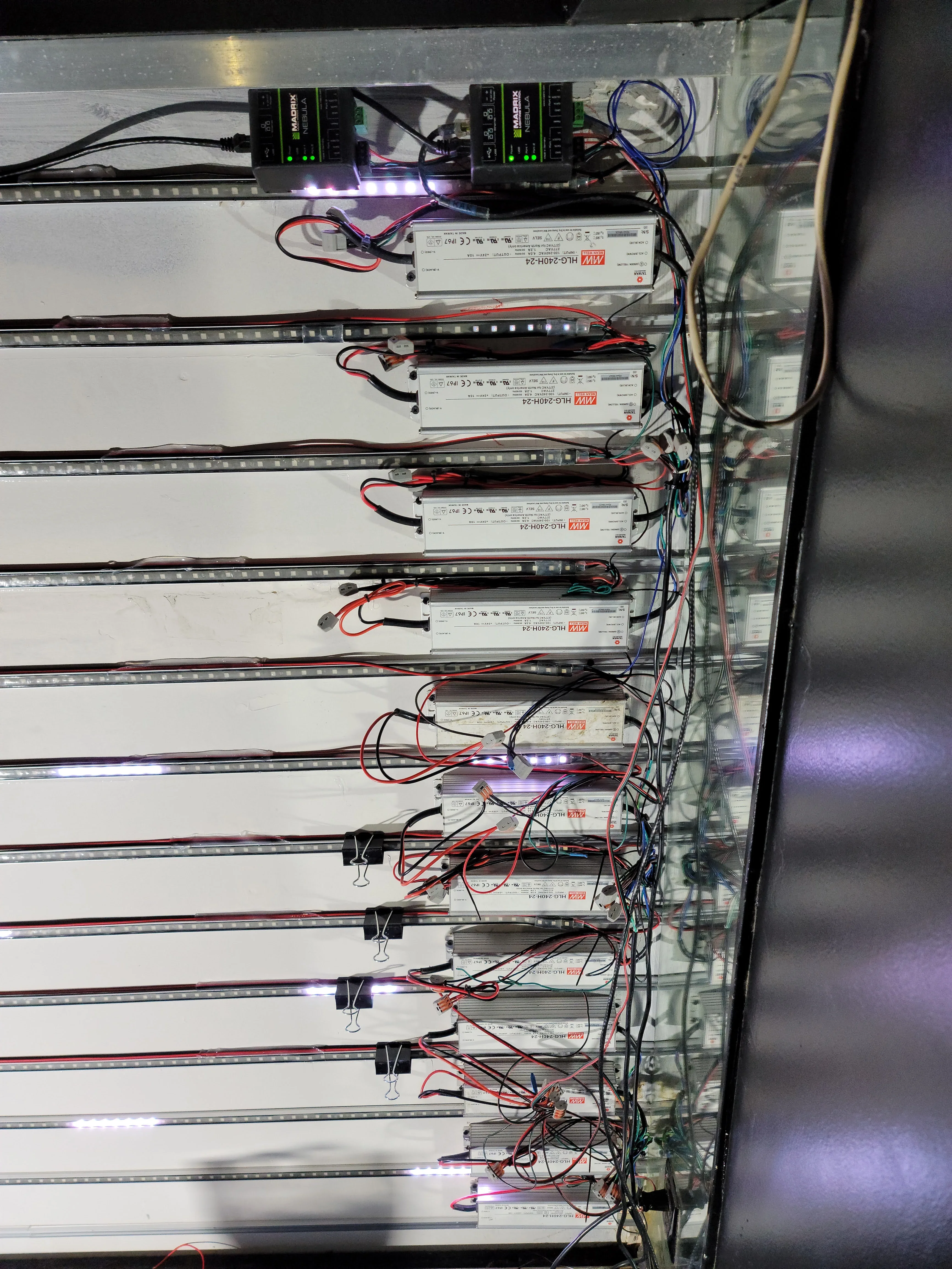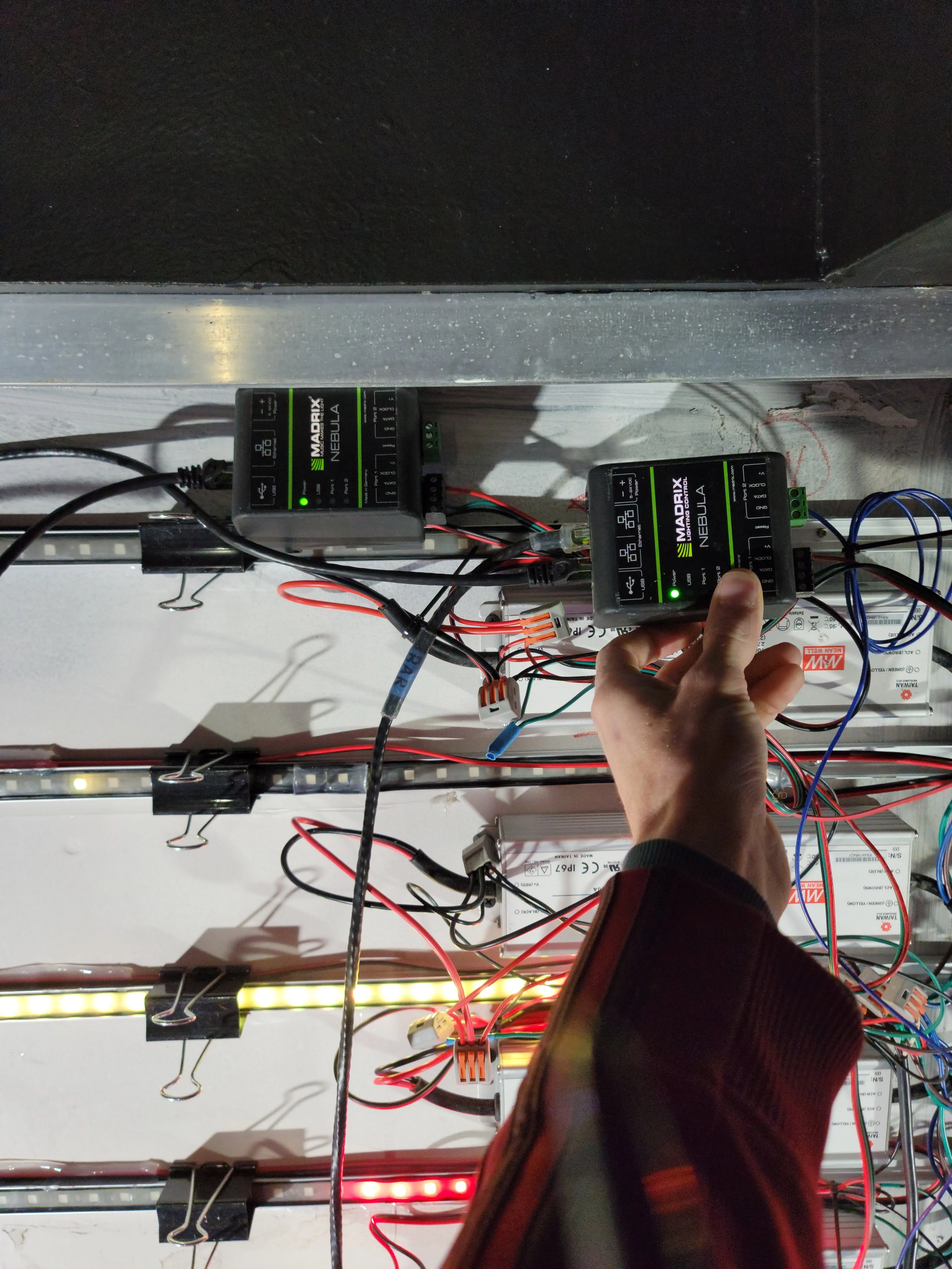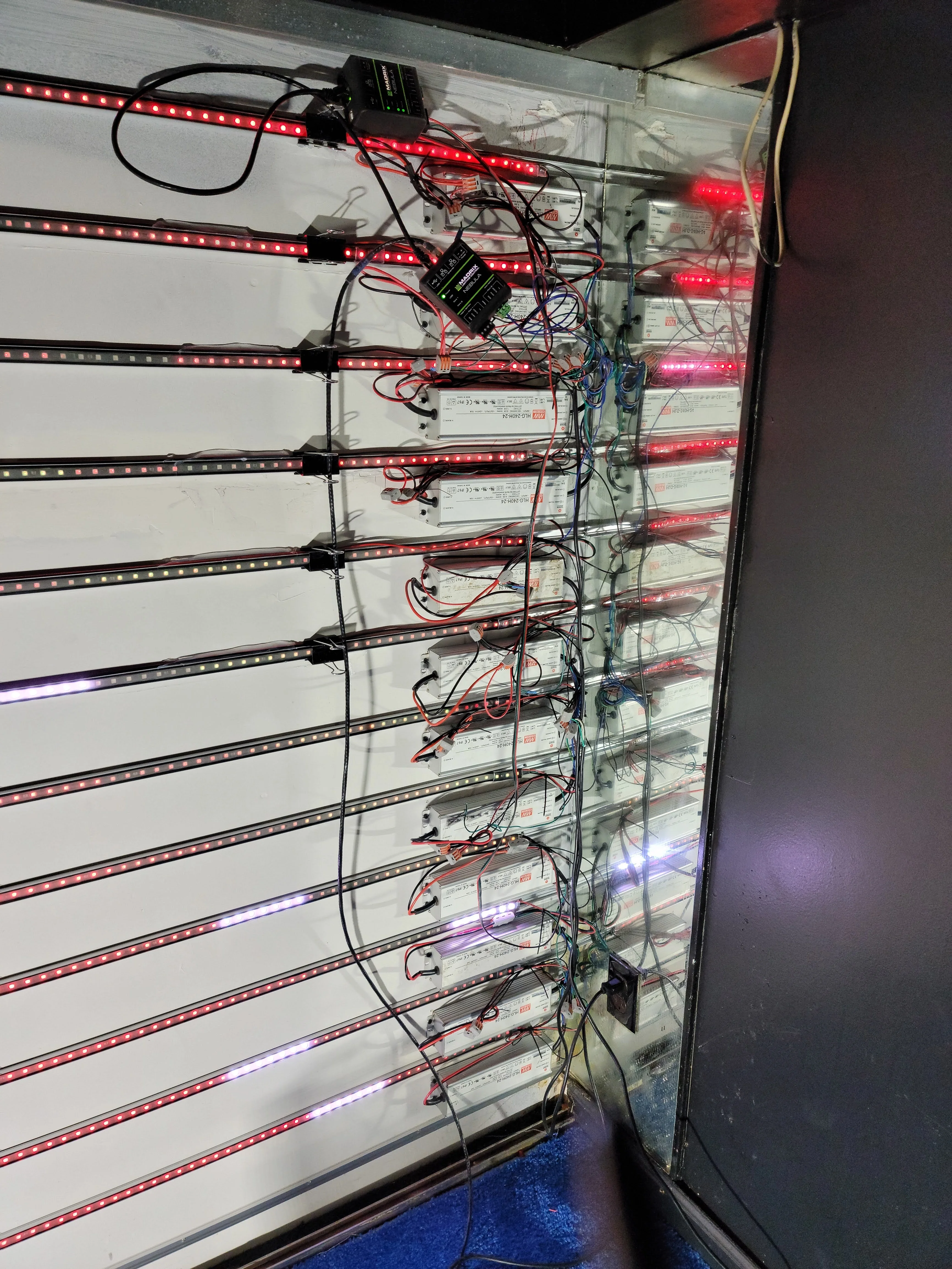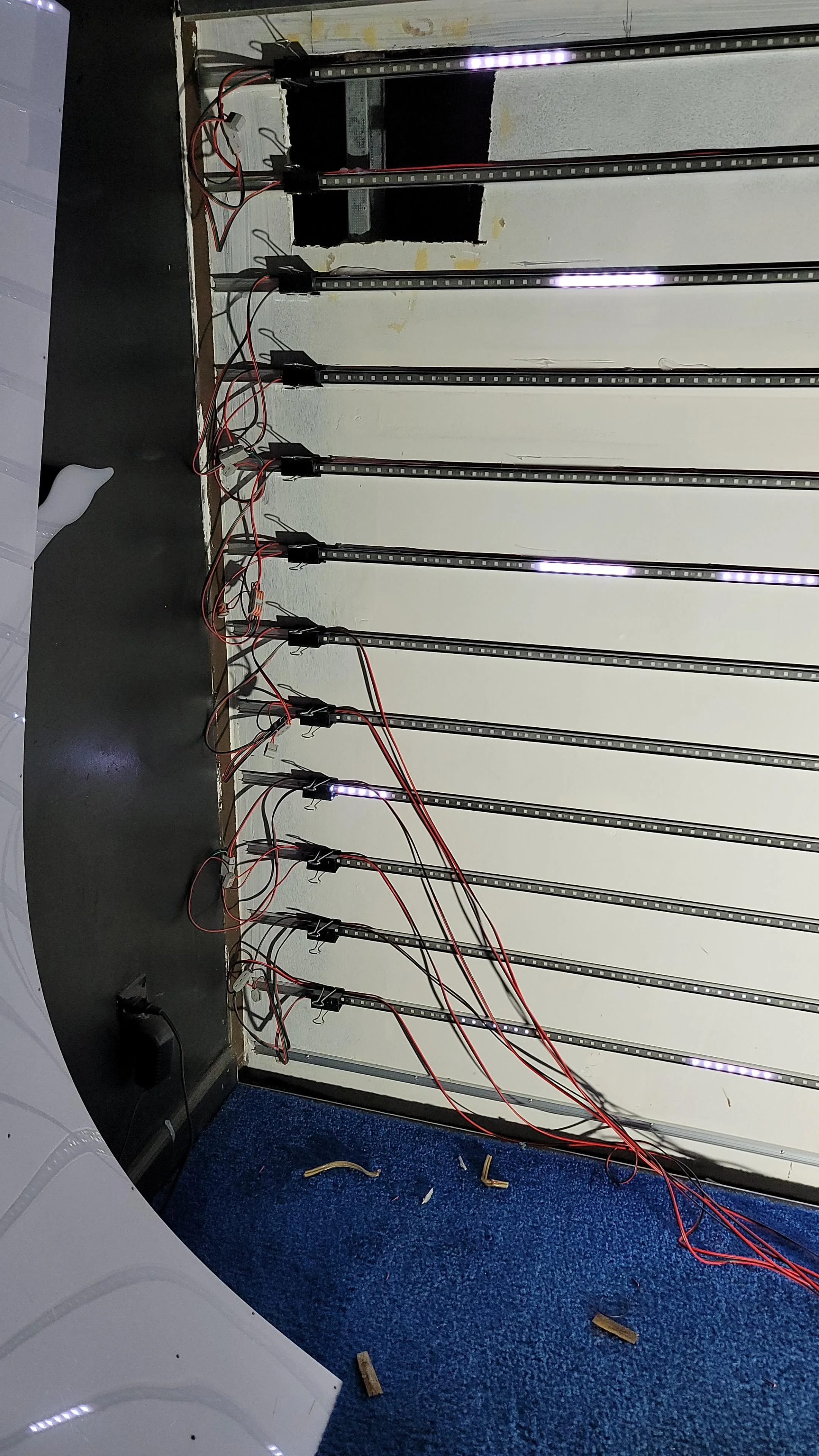
Hundred-pound glass panels, walked out on suction cups, to fit a salvaged pixel grid into a five-inch gap.
About the project
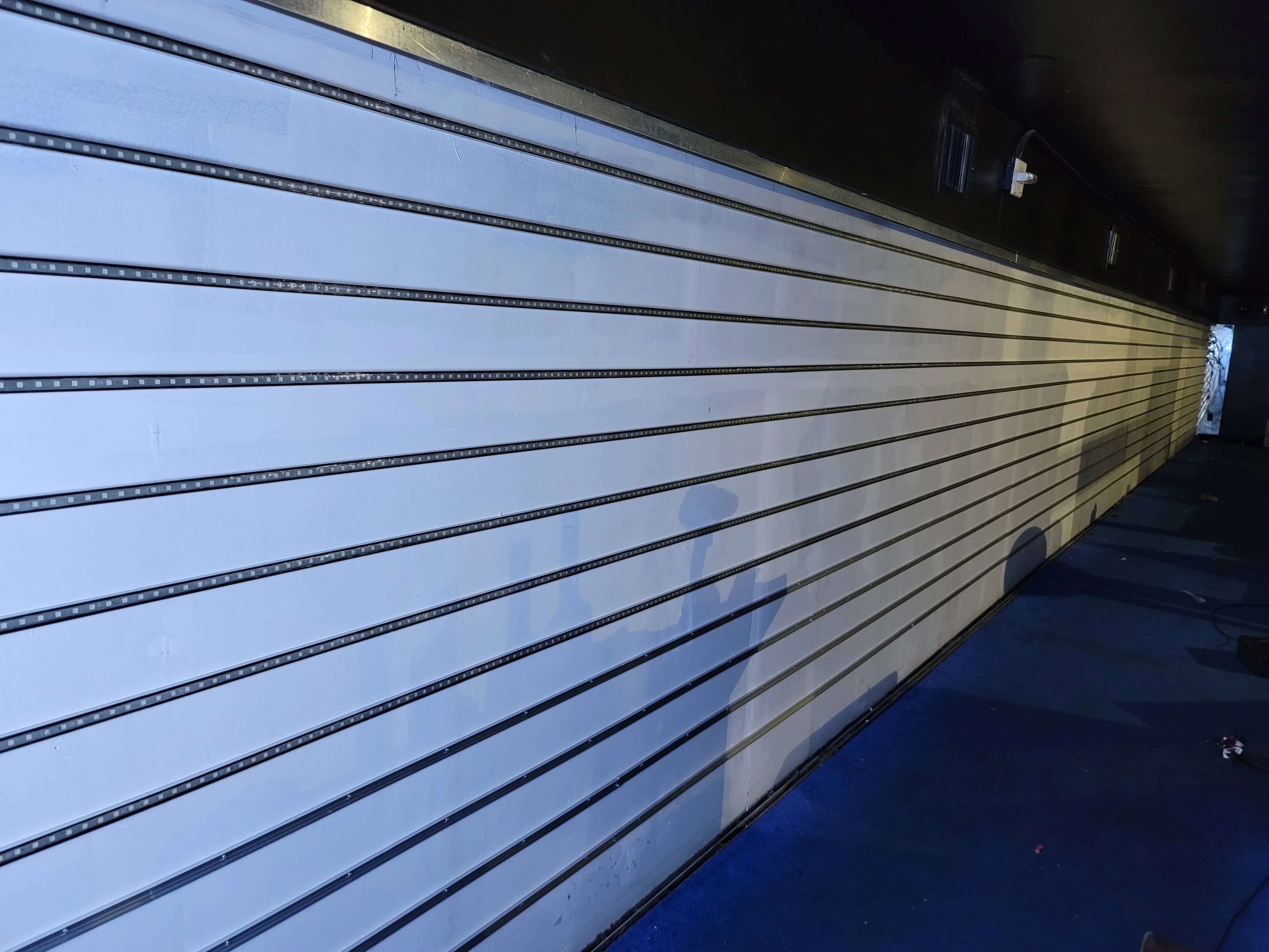
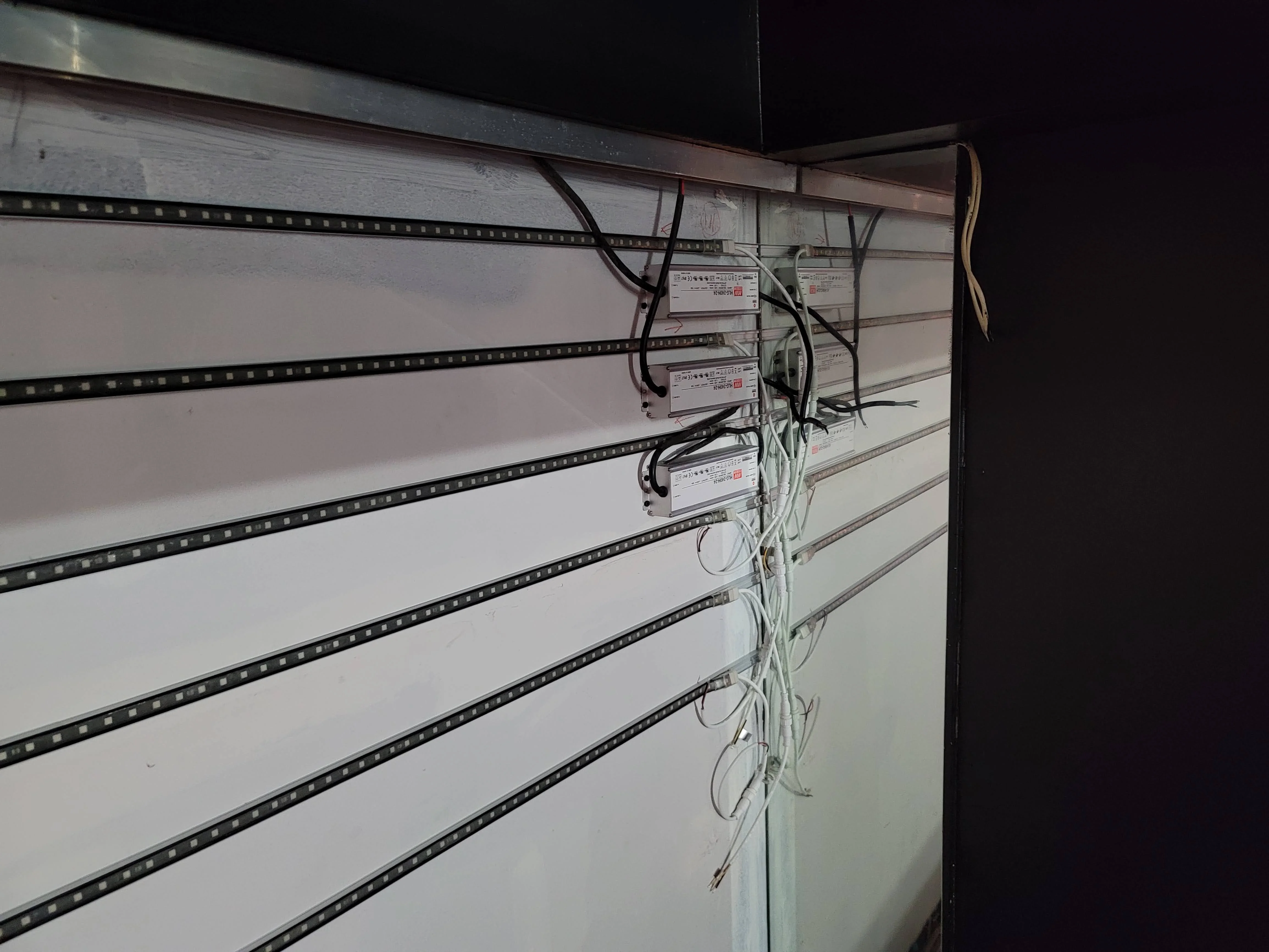
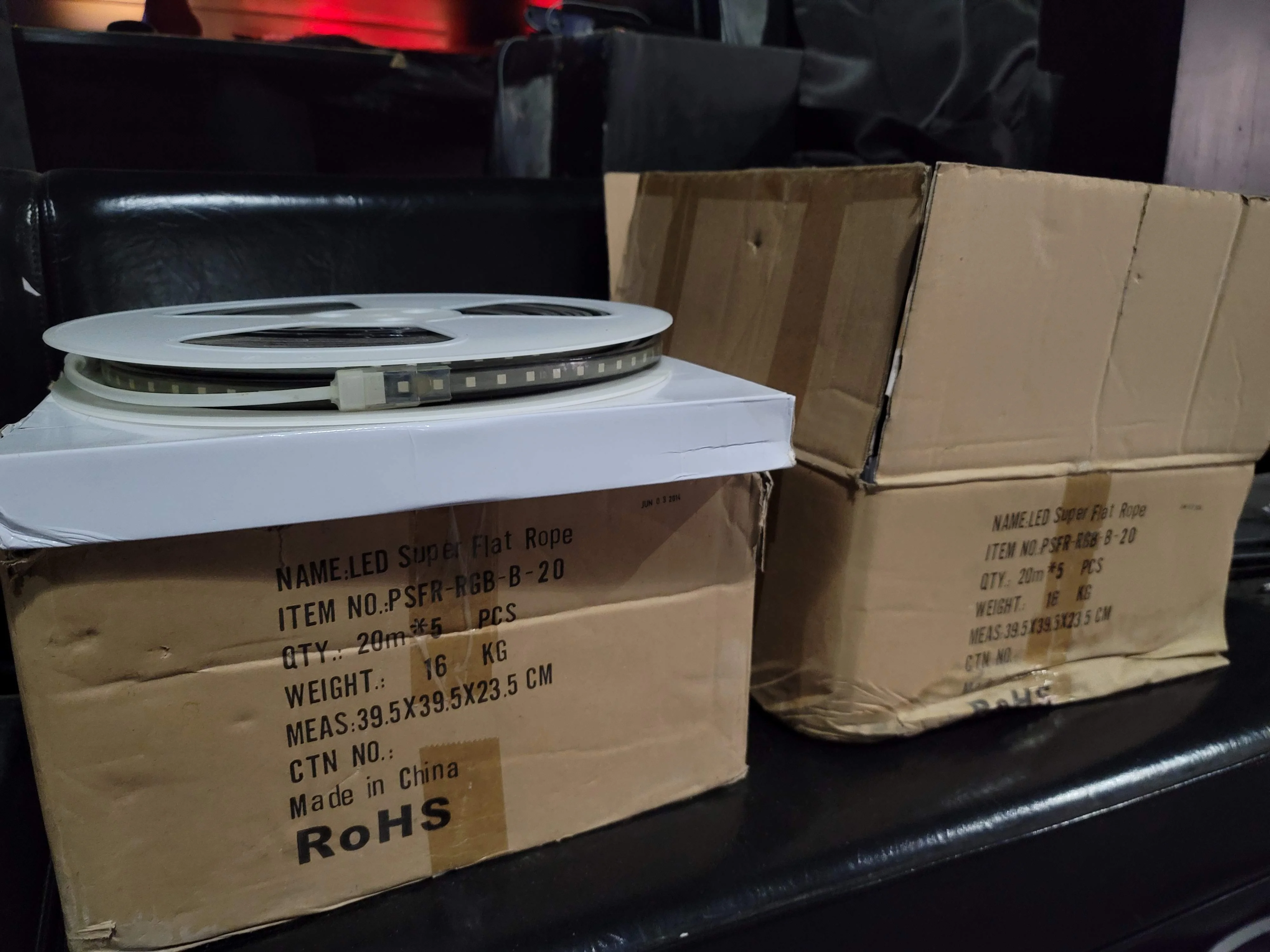
The glass mezzanine wall needed a pixel grid sized to the panel, and no such thing exists to buy. I built this one from salvaged parts. I found boxes of 24V waterproof LED strips buried under some stairs during lockdown. It was thousands of dollars of high-end product meant to replace a single dead strand. I gathered enough leftover Madrix Nebula decoders and power supplies to build a proper installation.
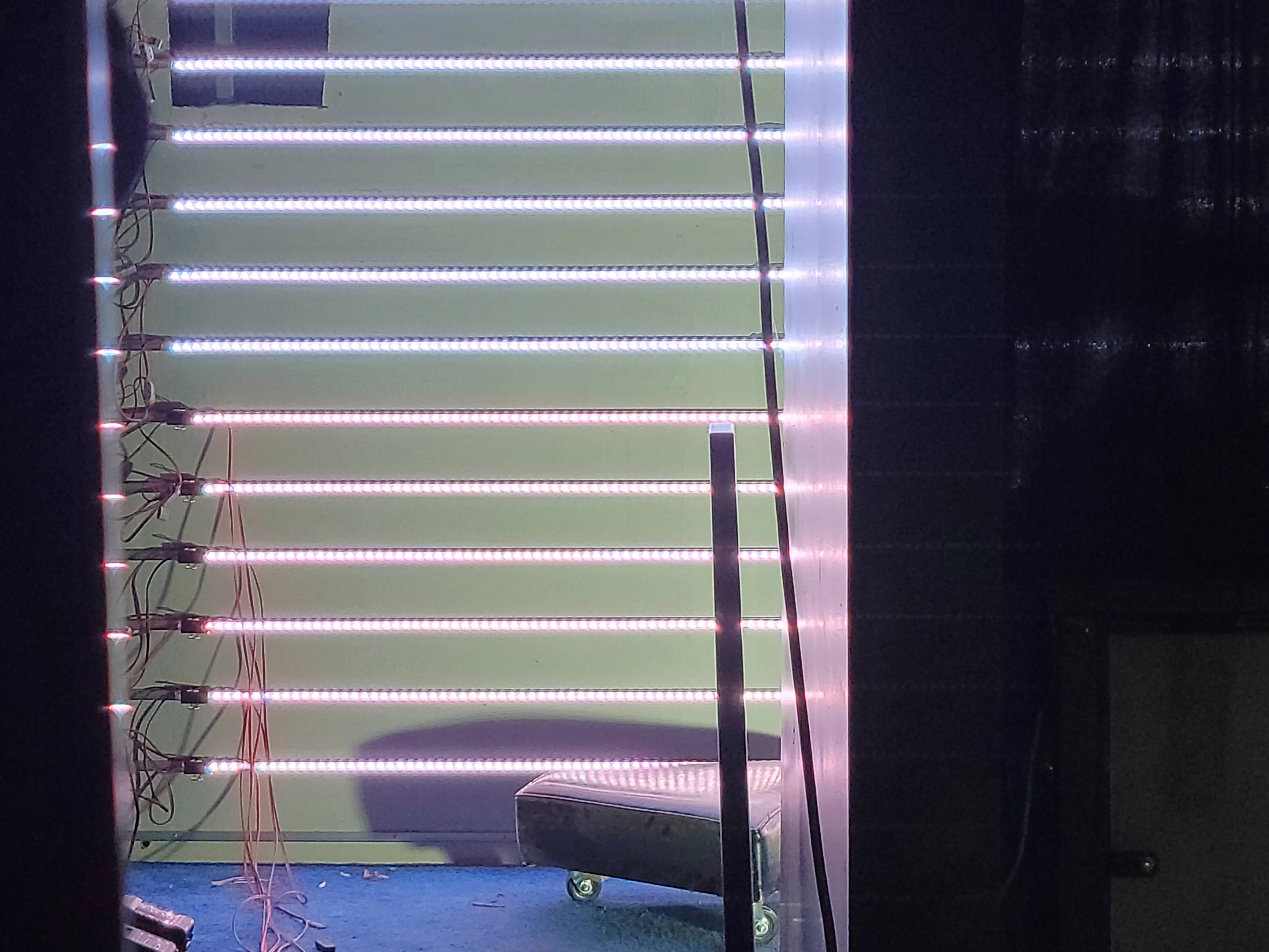
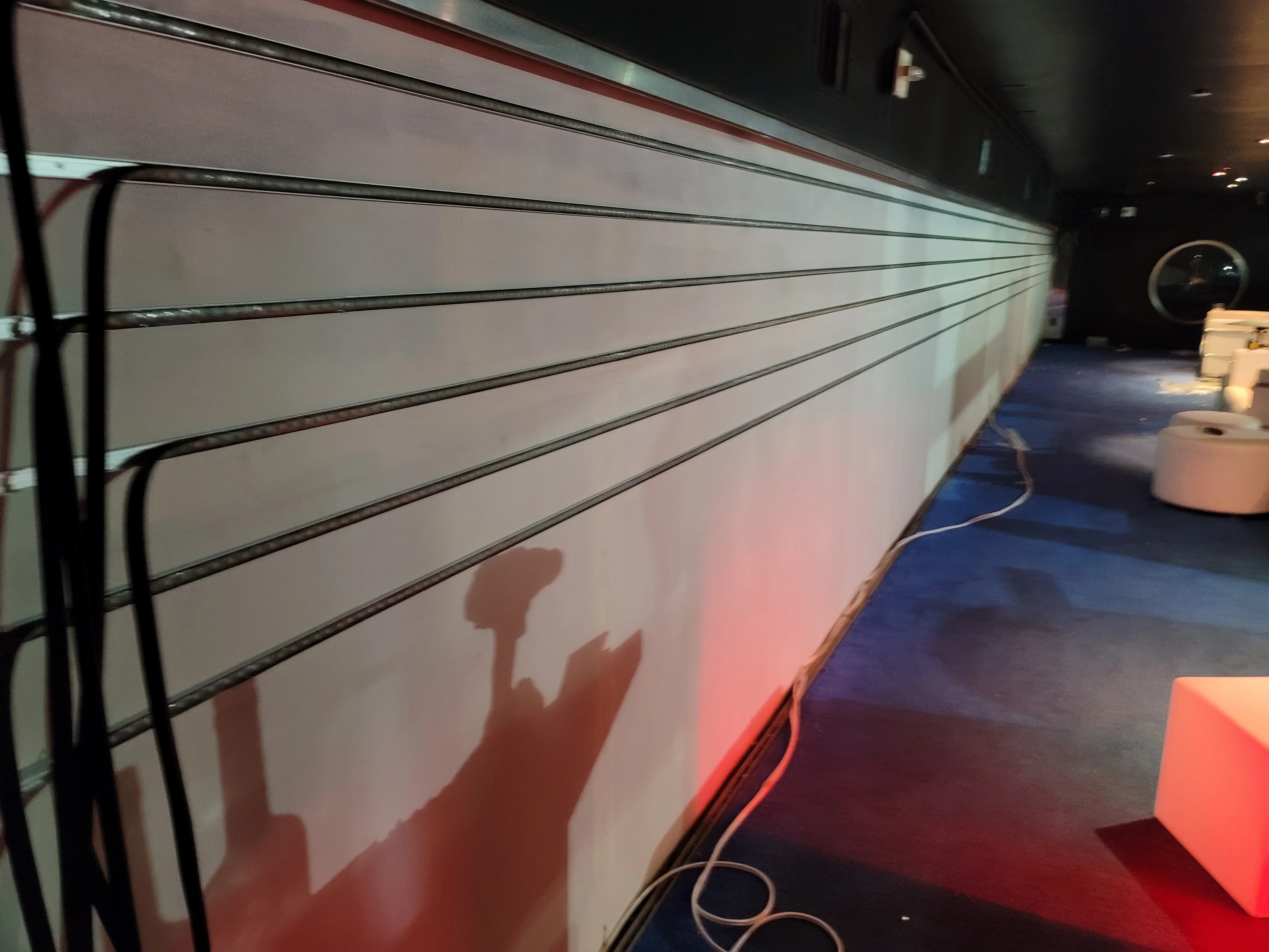
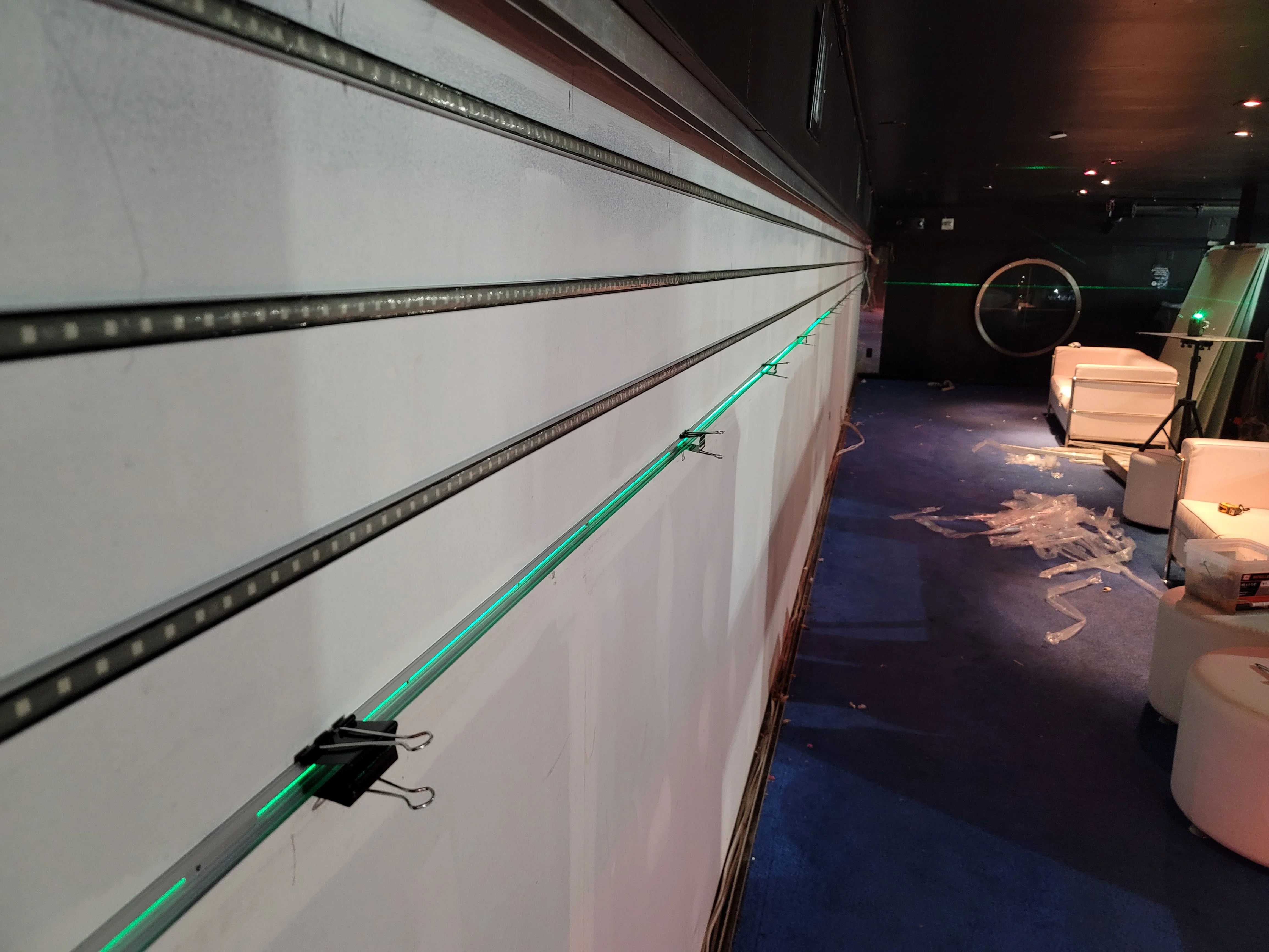
The glass panels weighed 100 pounds each. I bought industrial suction cups, got them over the lip, and walked them out by the corners to expose a five-inch working gap. I shot a laser level across the wall to set the rigid track, calculated the physical length of a single pixel, and set the vertical spacing to match exactly.
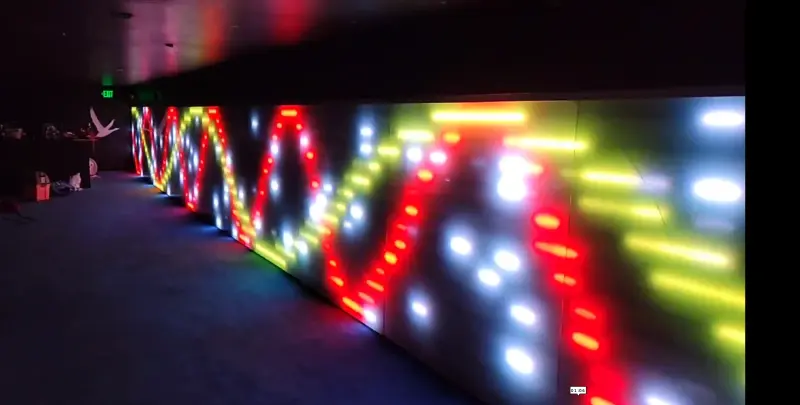
Voltage drop over a 20-meter run is inevitable. When I ran all channels at full white, the far end tinted red. I countered this by running an 18AWG power injection wire to the opposite end, tying the DC ( - ) lines together across the power supplies behind the last panel. The wall mapped cleanly, but it hit an operational reality. The venue never fixed the house lighting in that area, making our grid the primary light source for VIP. When the dancefloor hit a master blackout, the lounge plunged into pitch black. We had to isolate the mezzanine to ignore blackouts entirely so people could see their drinks.
- AC/DC Load Calc
- ArtNet
- Hand tools
- Madrix
- Pixel Mapping
- Power Distribution
- Power tools
- TCP/IP
- SPI
- Wire-to-Board Soldering
- Lighting Design
Gallery