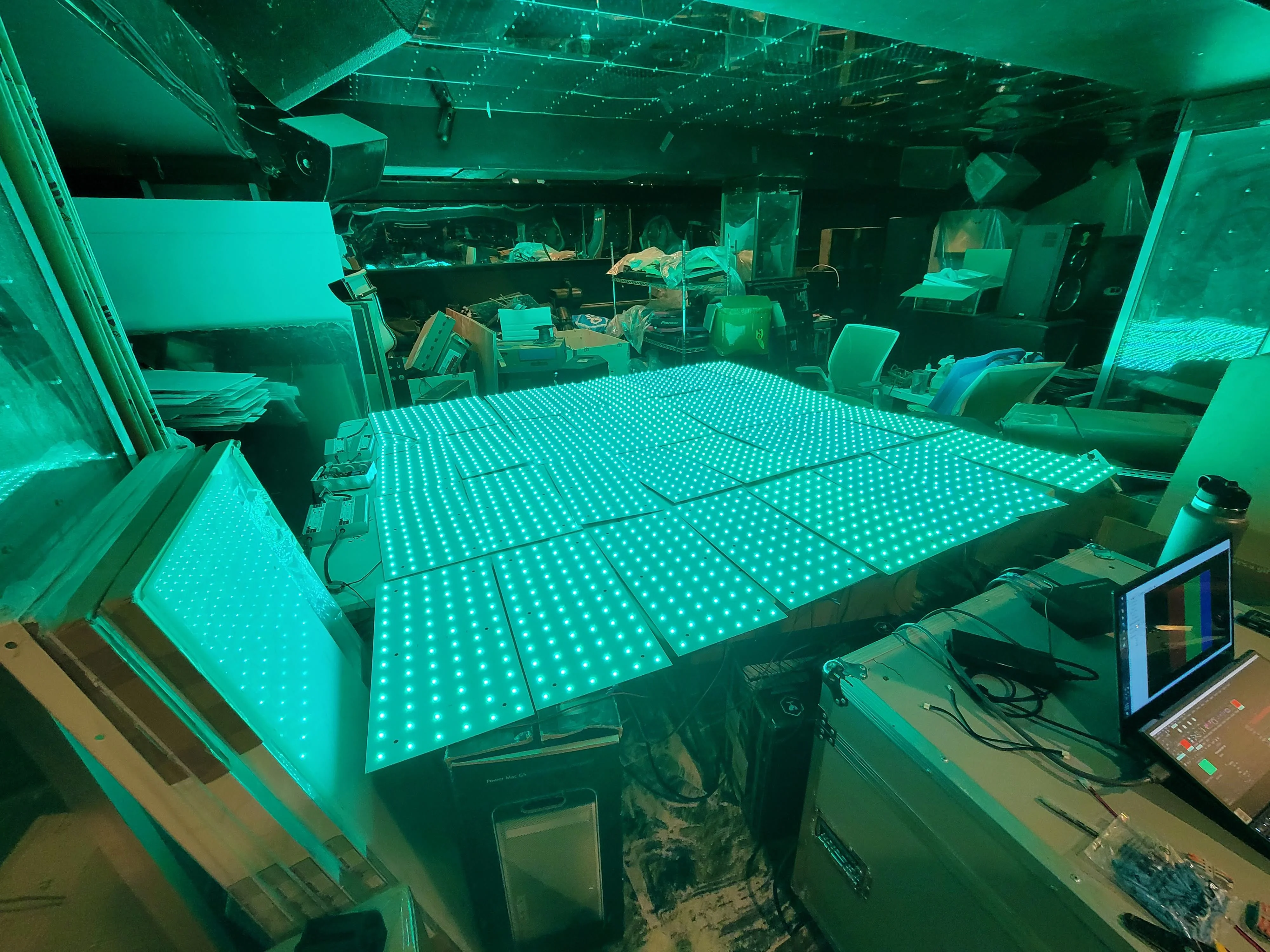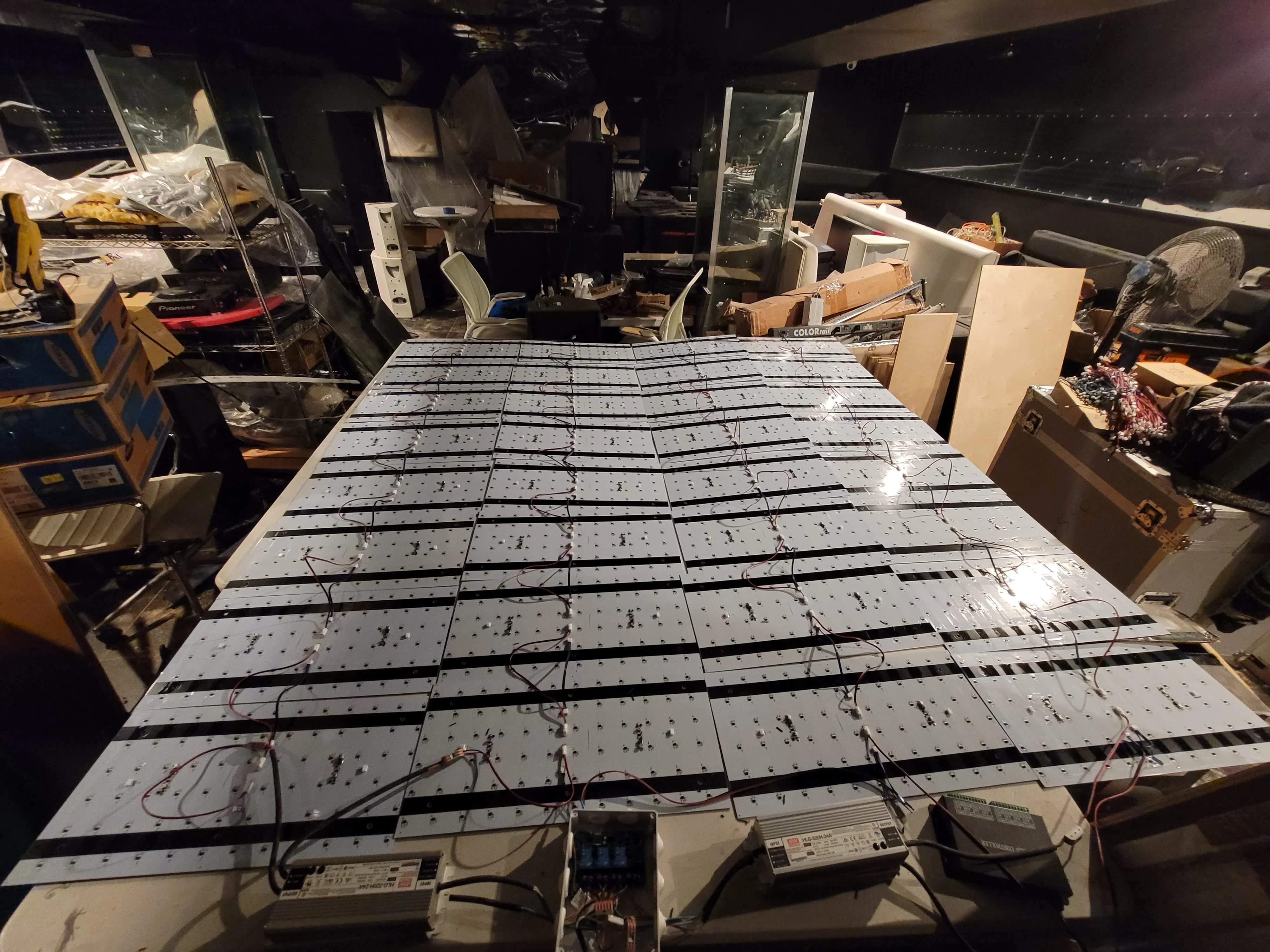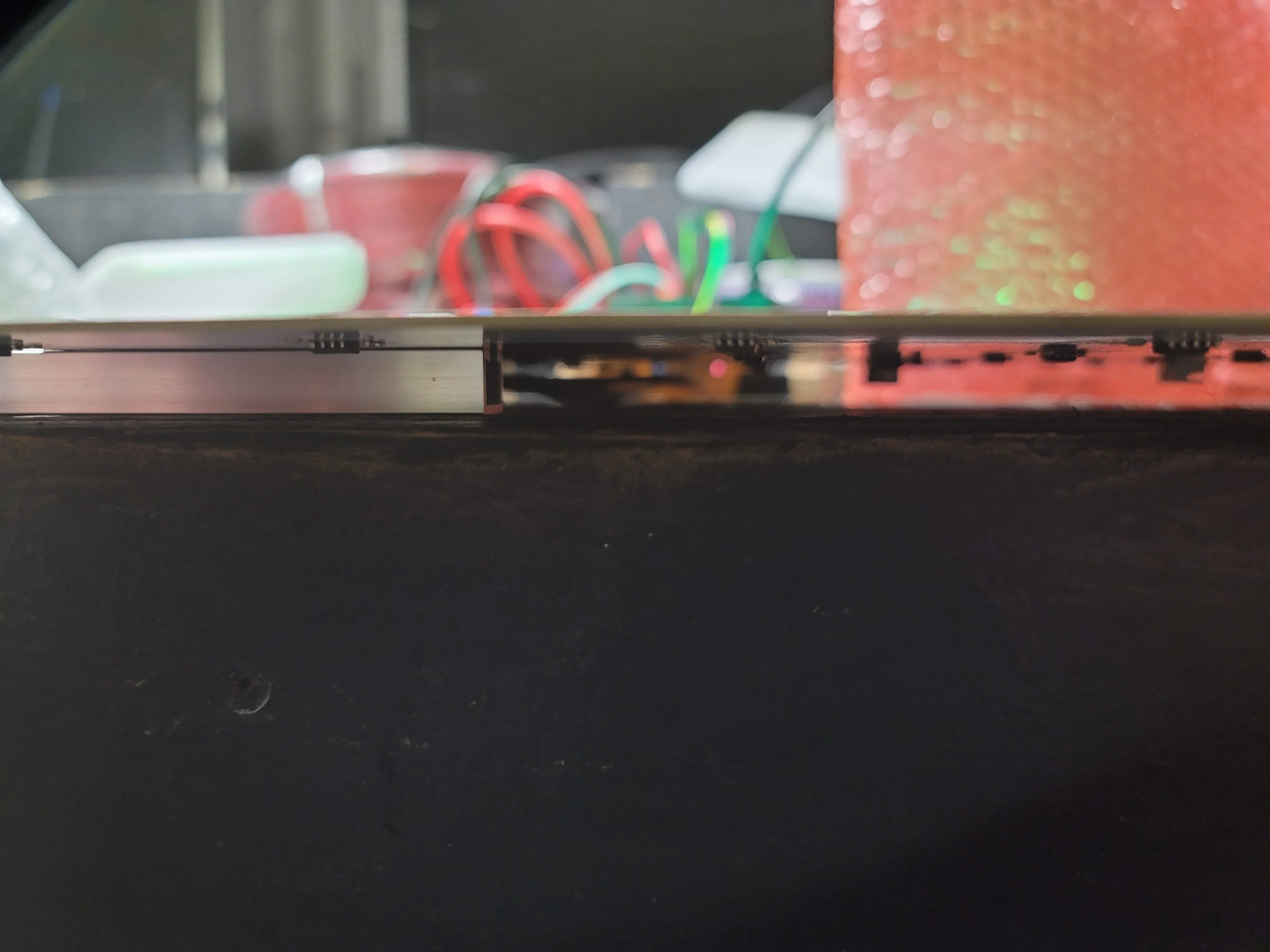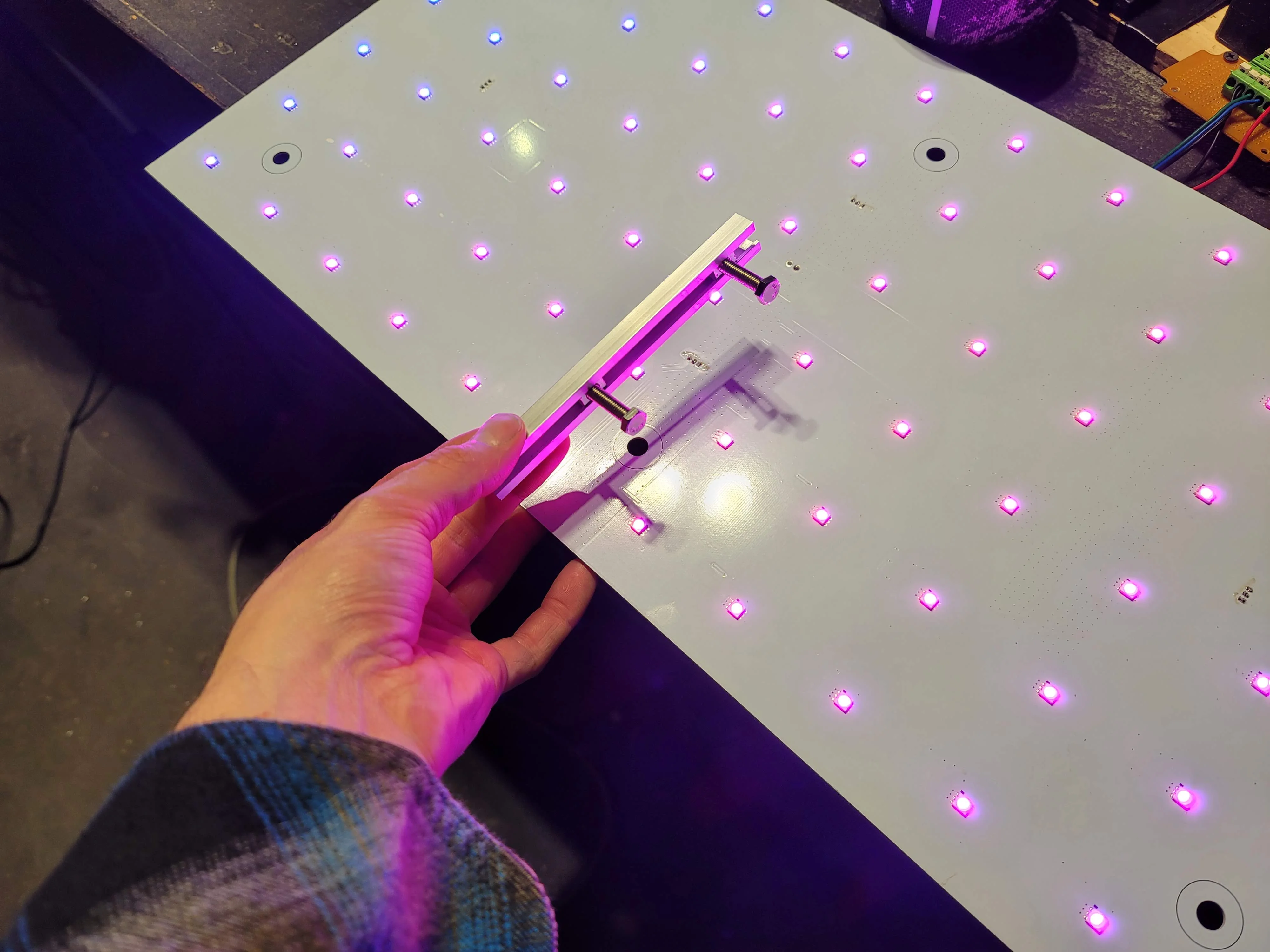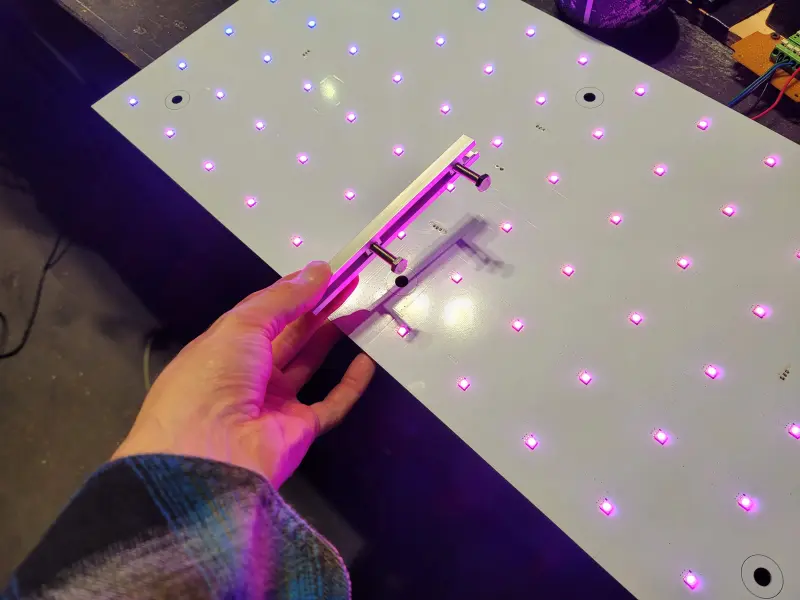
With eight feet of clearance, we bolted altered dancefloor boards to aluminum track to build an array under an inch thick.
About the project
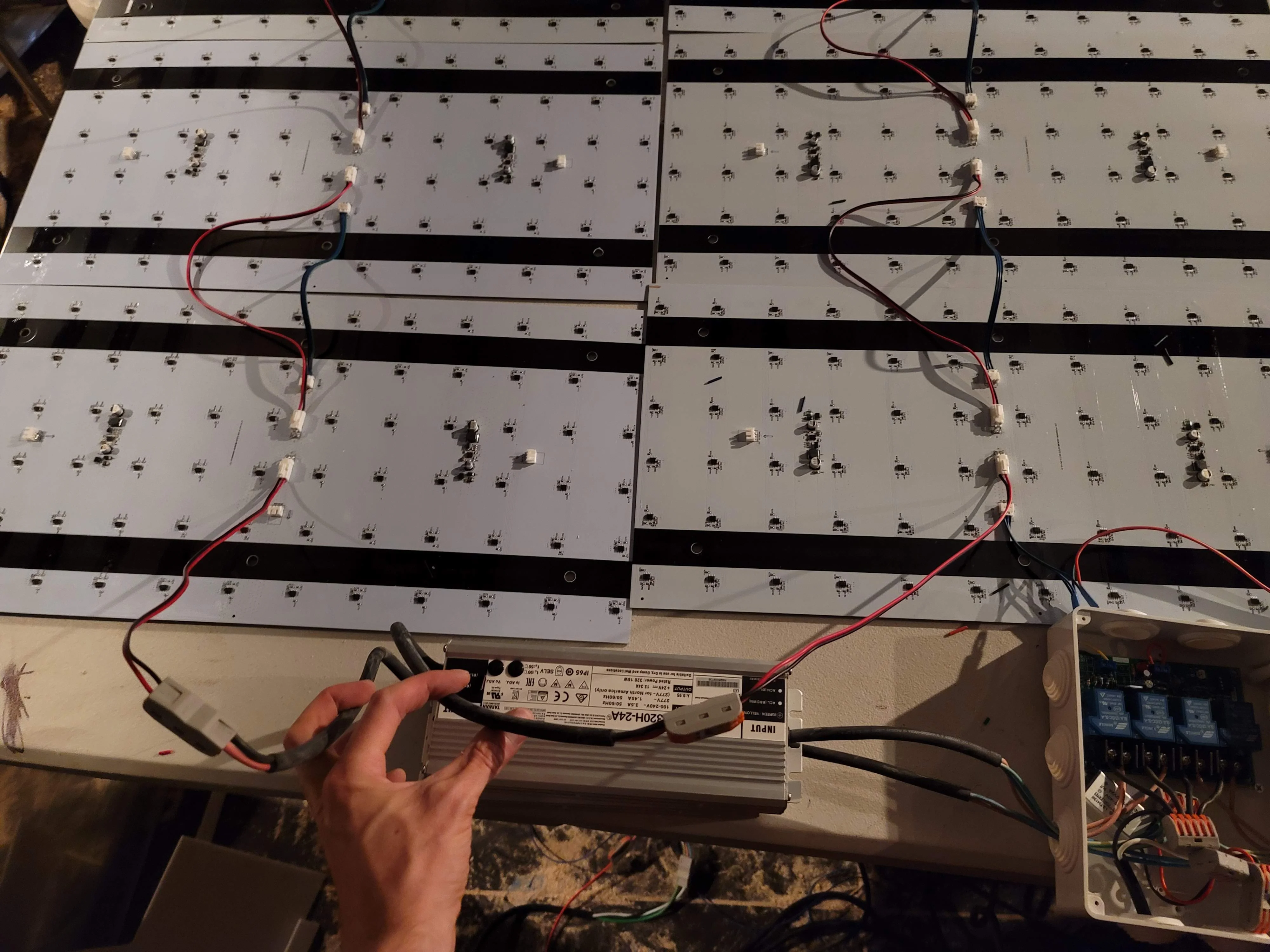
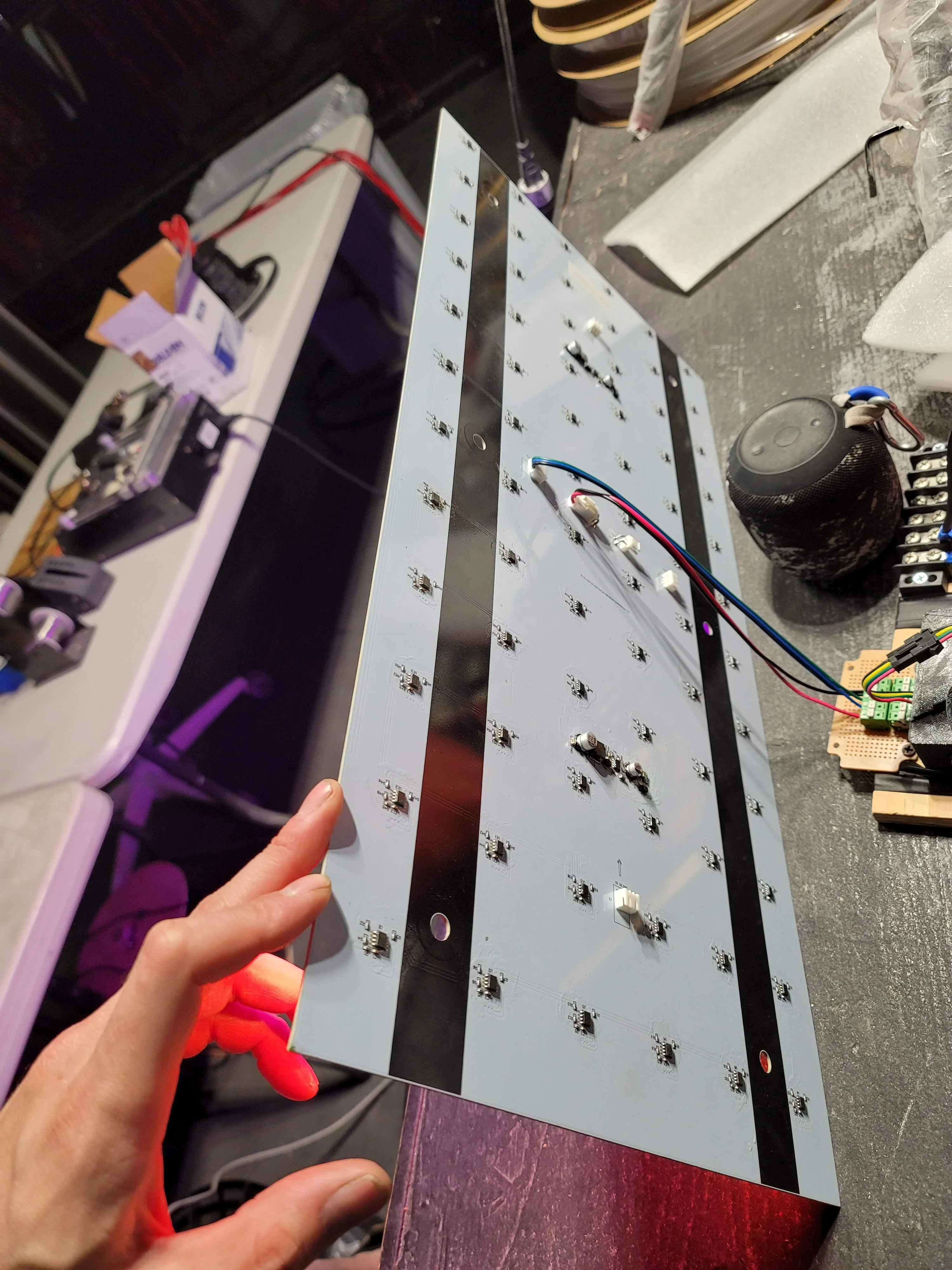
LED strips droop, and wiring them overhead is a mess. We needed a rigid, identical grid that could hold a diffuser at an even distance without sagging. Large, cheap PCBs were the answer. I took standard LED dancefloor boards and had the manufacturer alter the pixel spacing, enlarge the mounting holes, and swap in 90-degree headers.
The basement gave us exactly eight feet from the floor tile to the bottom of the wooden joists. Every quarter inch mattered. We ripped out two layers of drywall and rerouted the fire suppression system just to buy breathing room. Half the joists were broken, so I had them fixed and restructured to push the electrical, data, and HVAC runs to the edges of the room, leaving the center clear.
We bolted the custom boards straight into aluminum T-track, compressing a 24-volt WS2818 pixel matrix into a vertical profile under an inch. I never actually saw it powered on overhead. By the time the basement was ready for the hang, I had left the company. I pixel-mapped the array flat across a sea of road cases, proved the hardware worked, and handed the plans off to my crew to lift into a ceiling that refused to give us another inch.
- SPI
- Lighting Design
- Custom Fabrication
Gallery