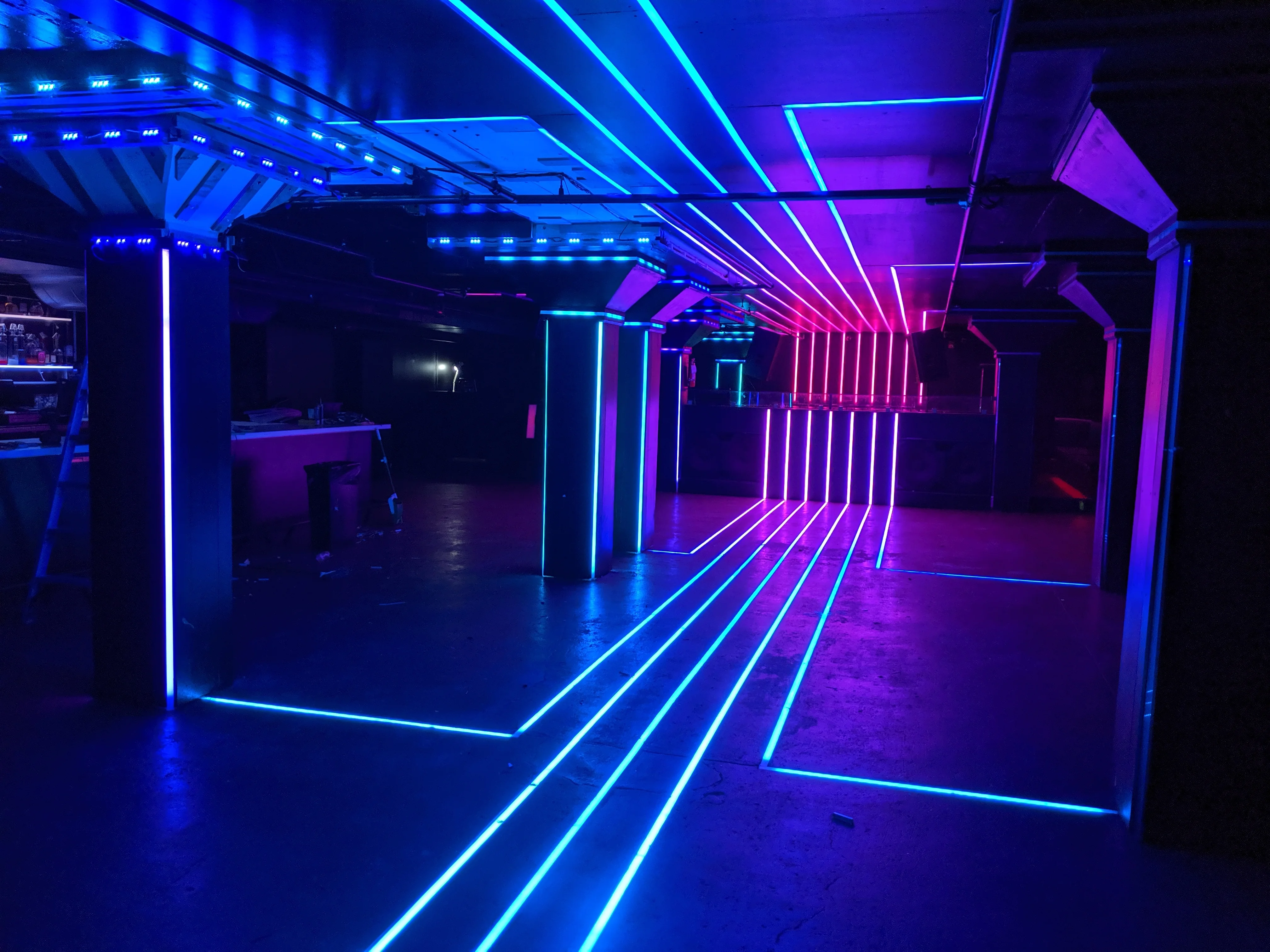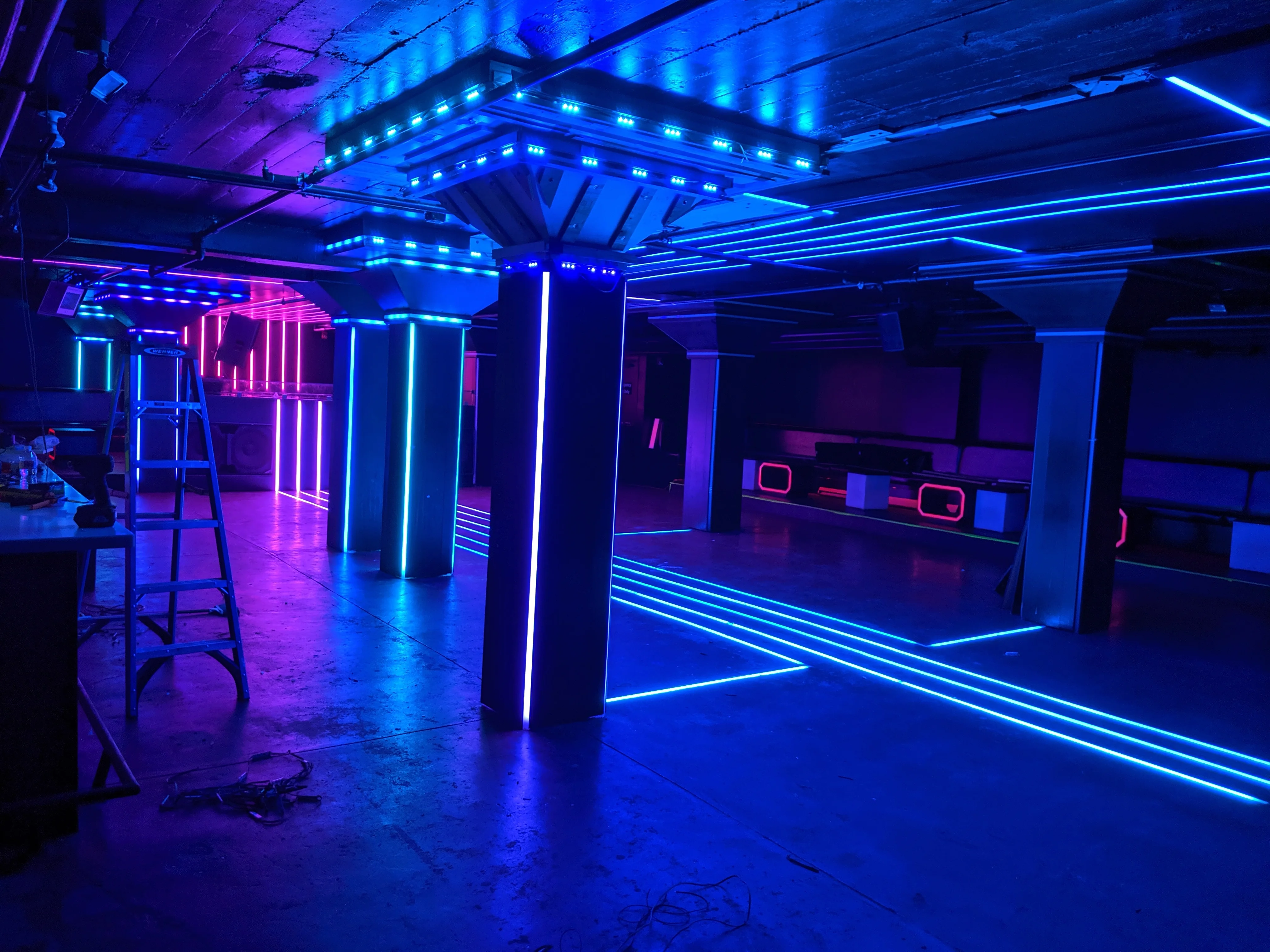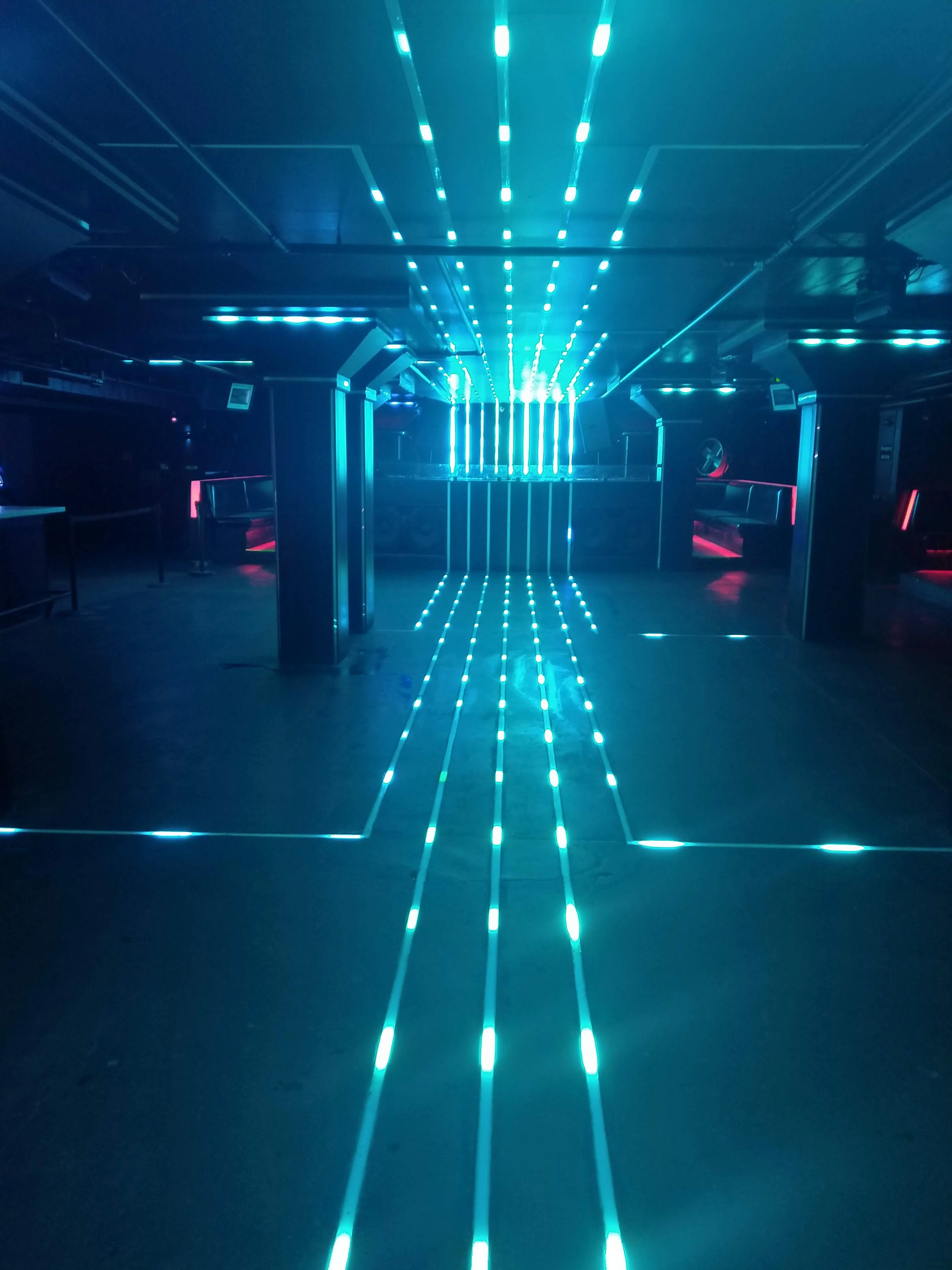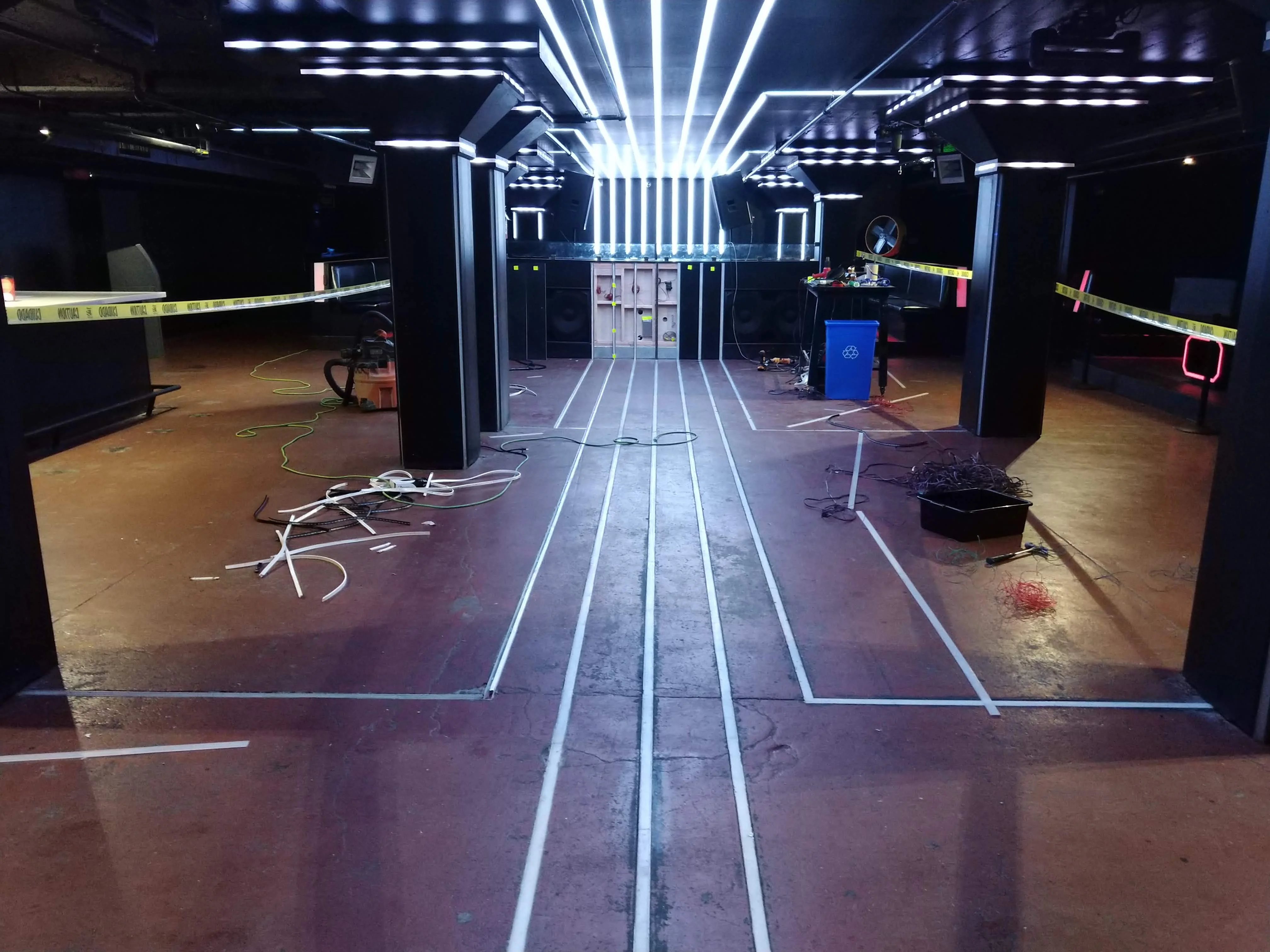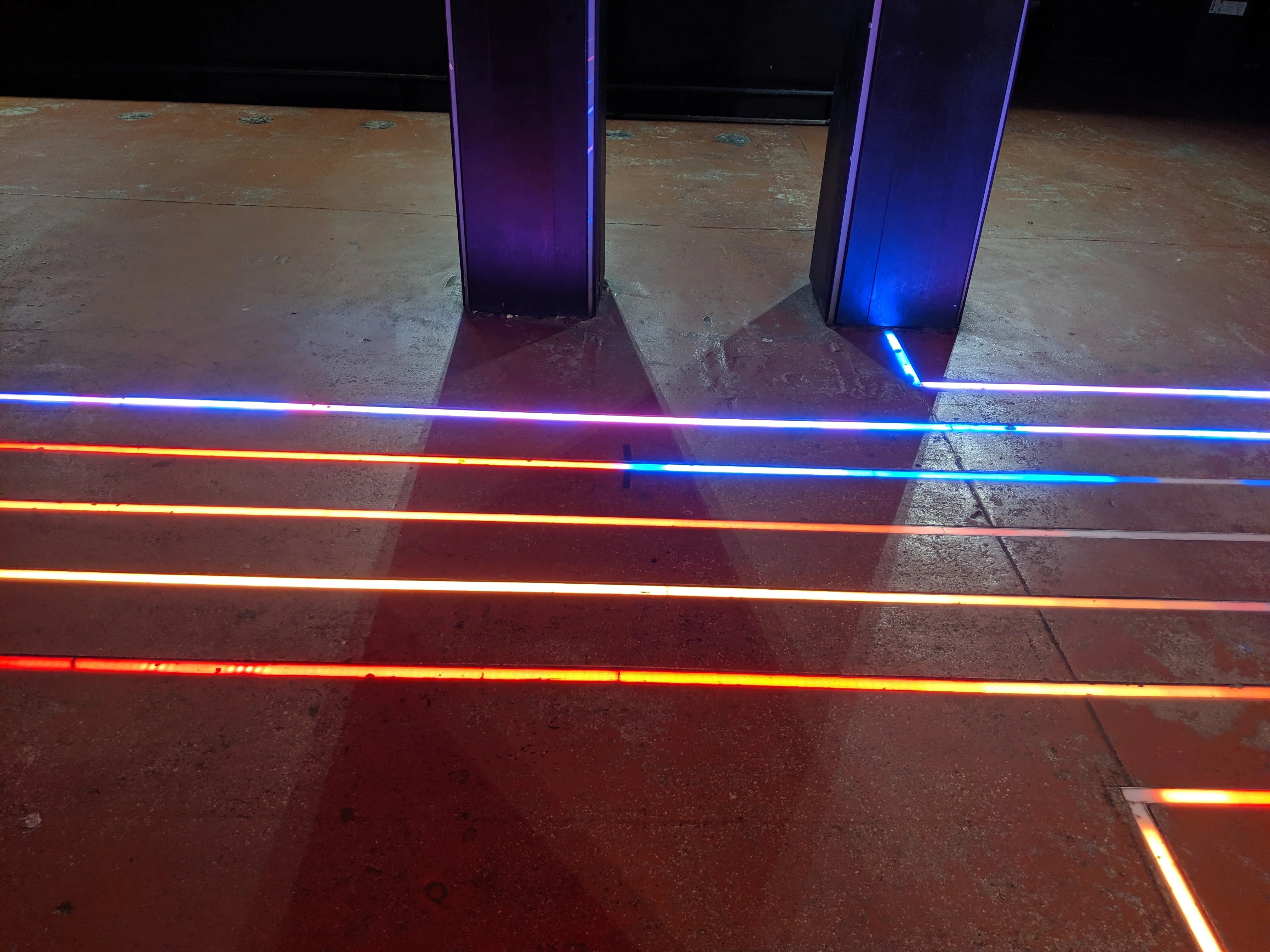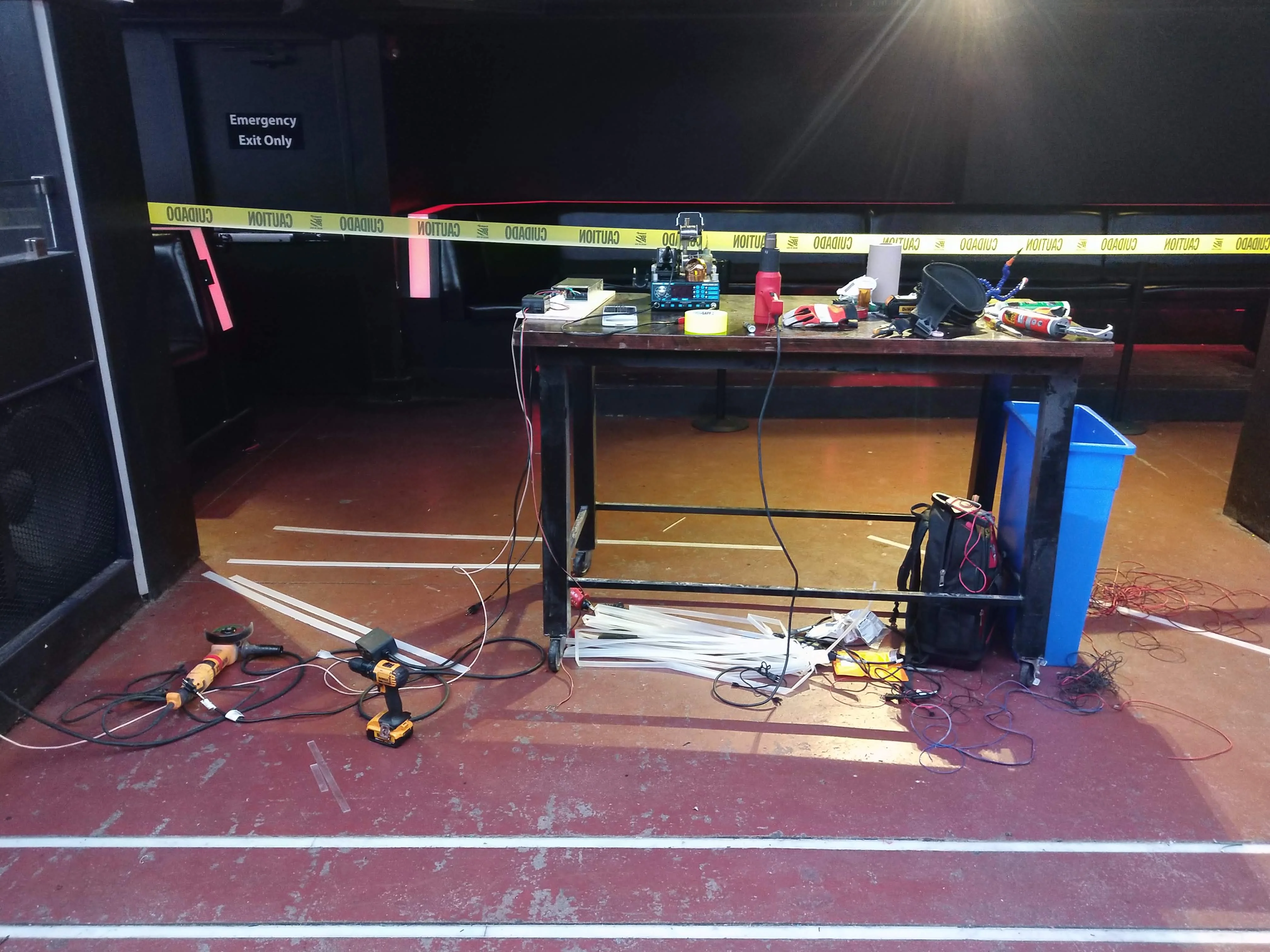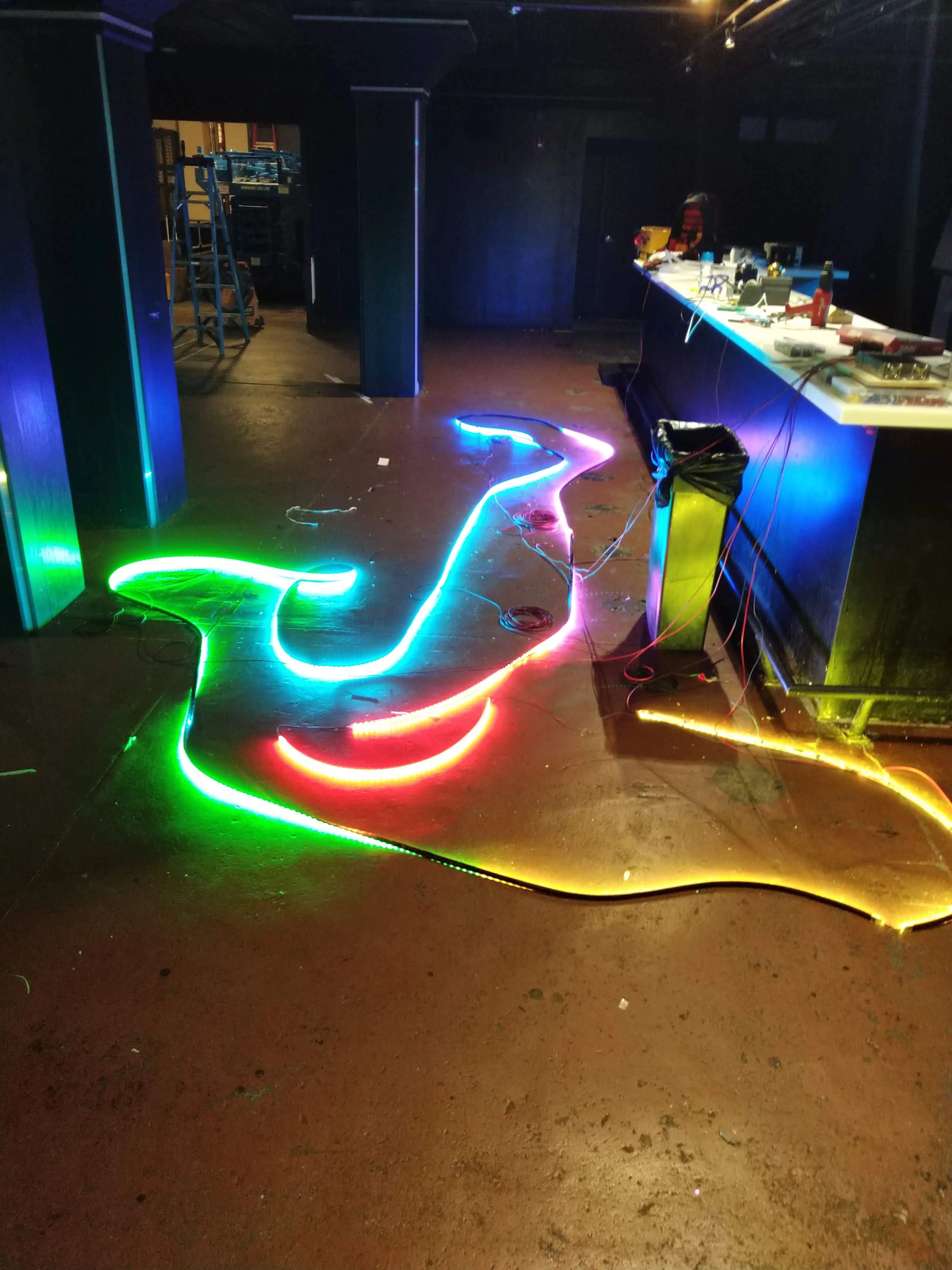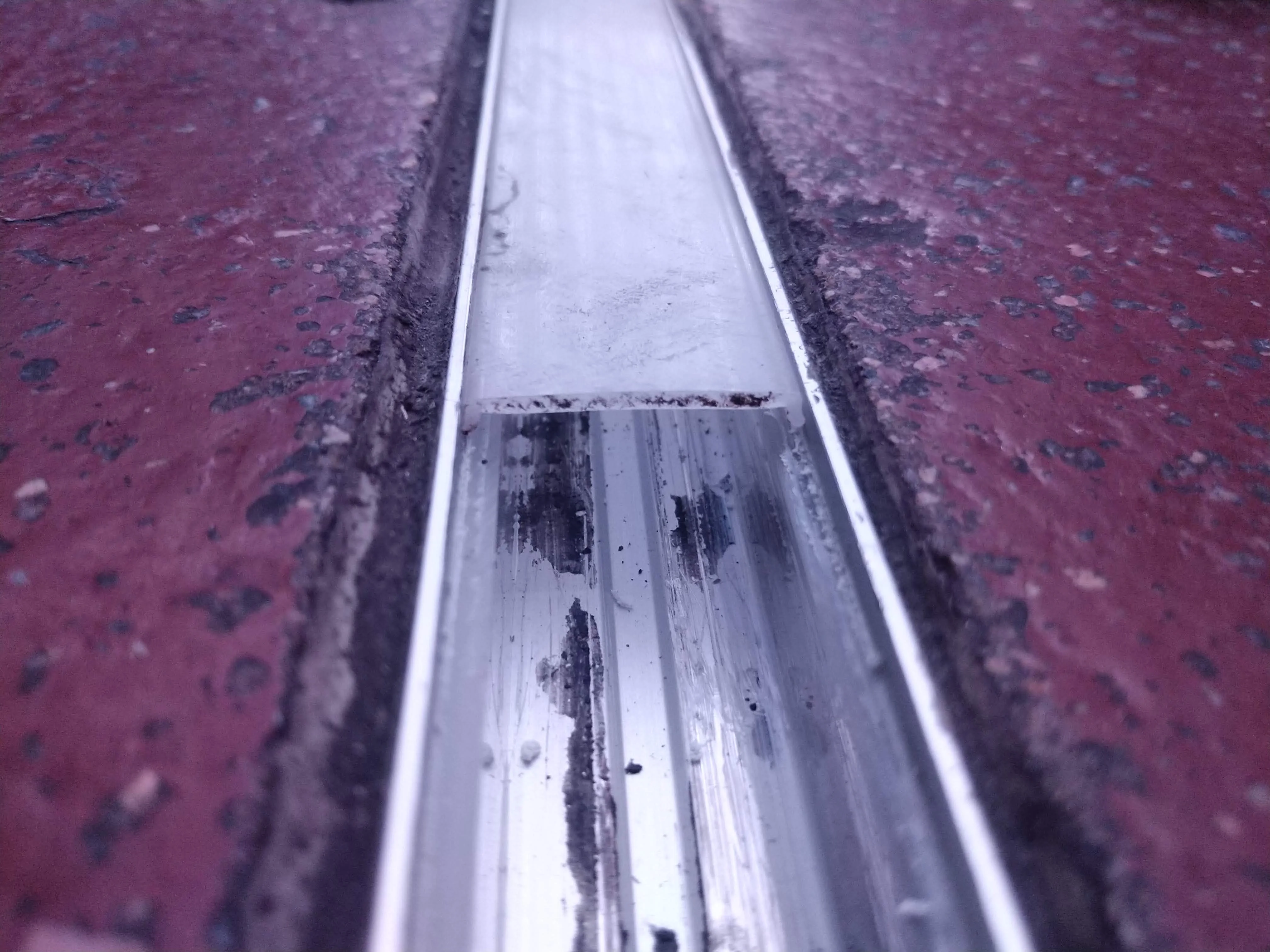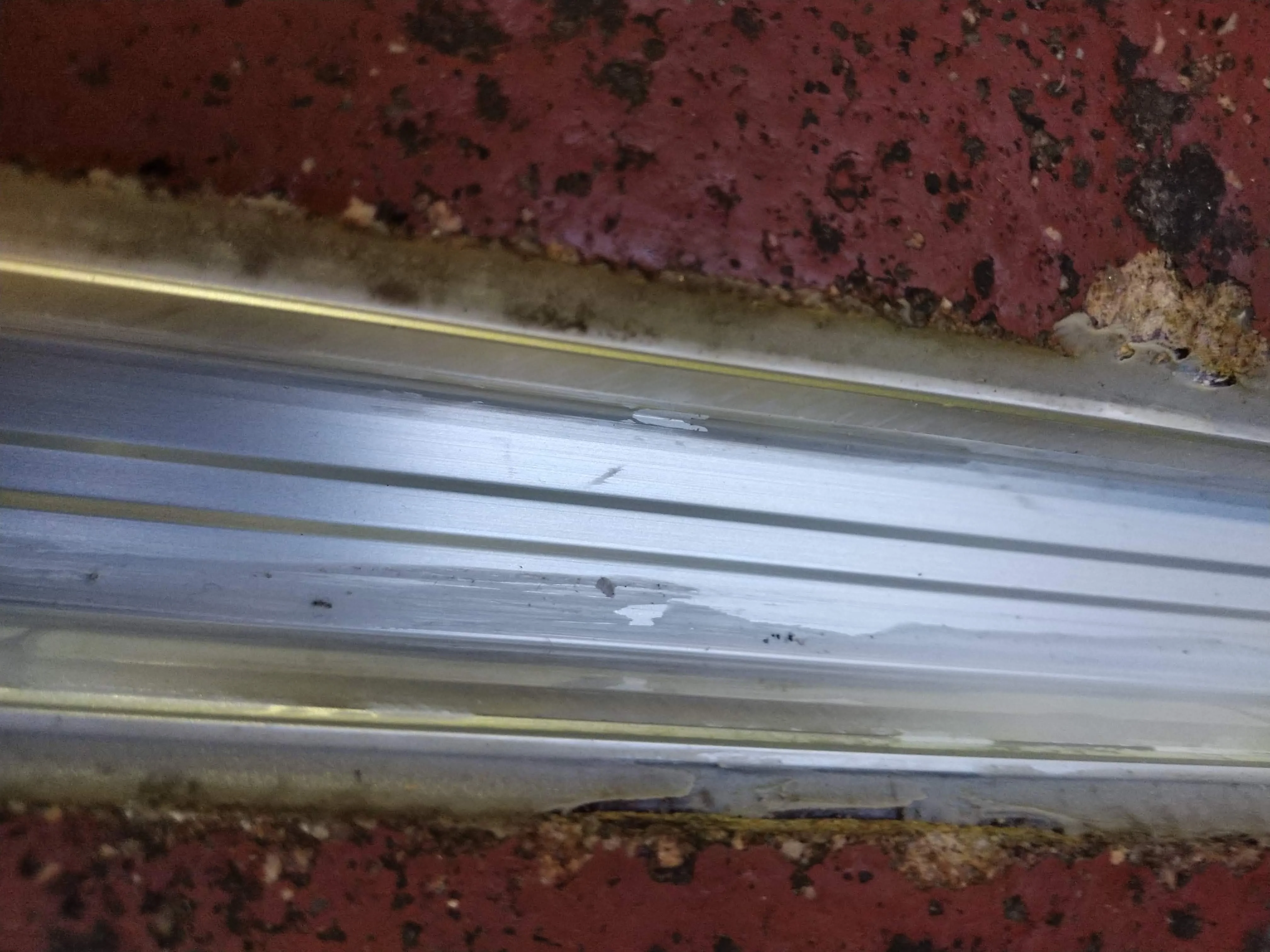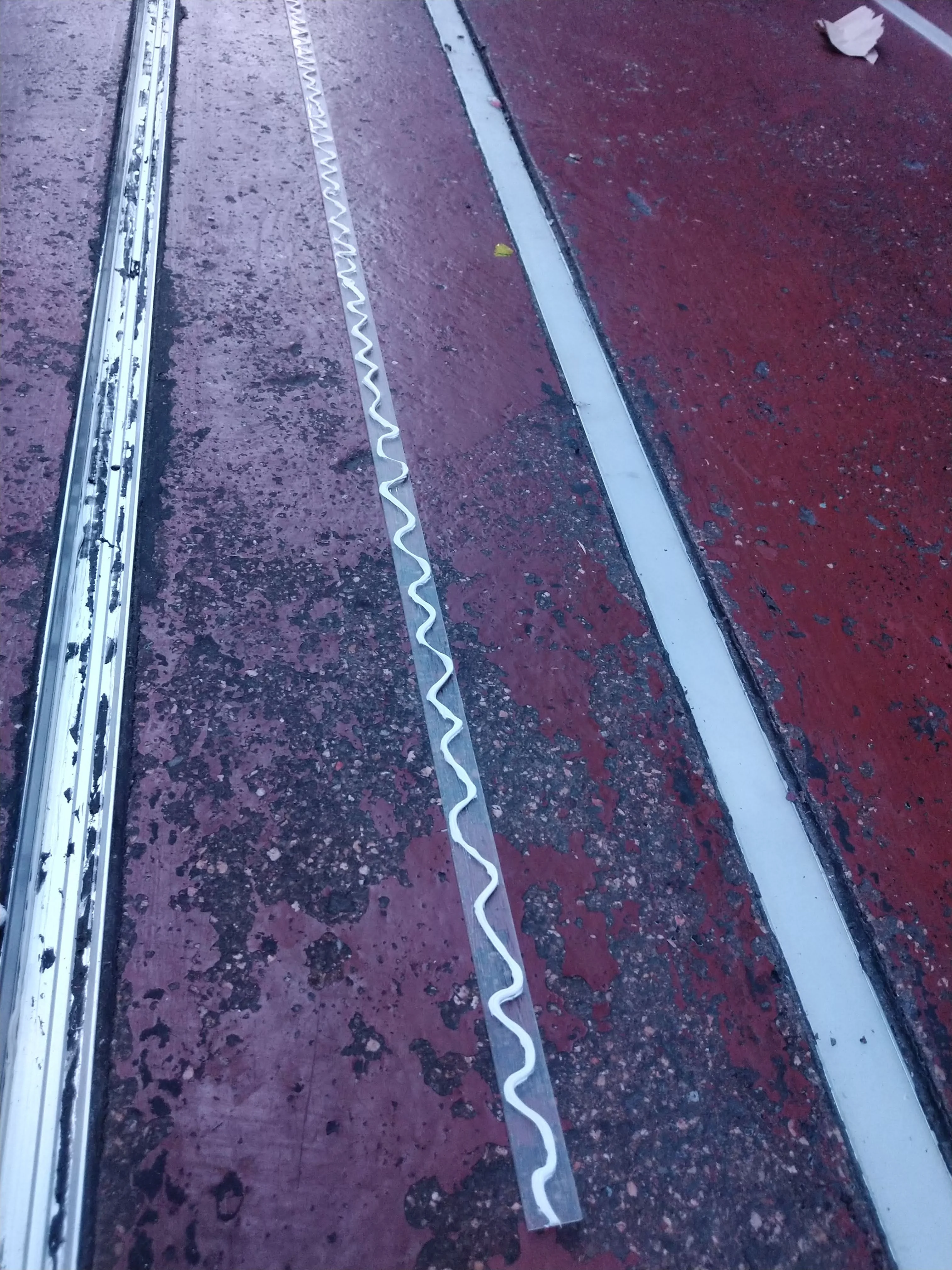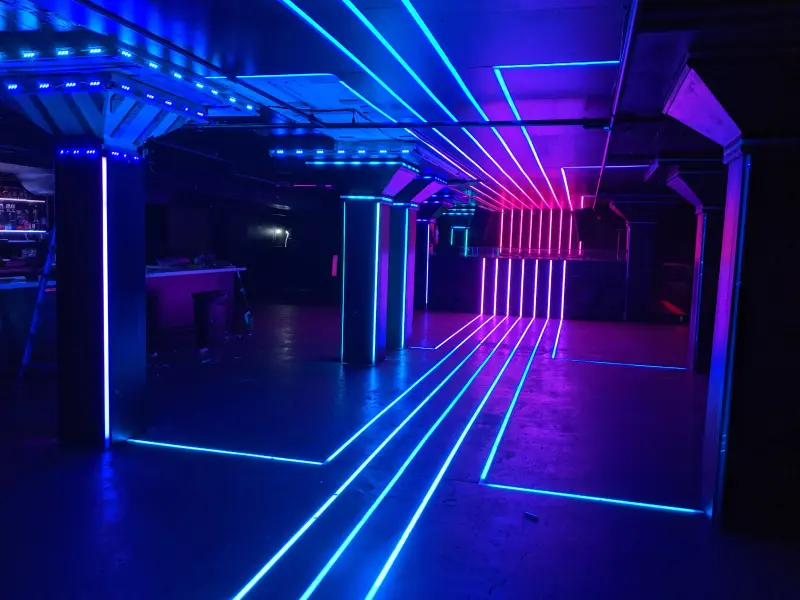
Floor channels set on wood inserts. Months of spilled drinks swelled them until the diffusion caved in. The tape was worth saving.
About the project
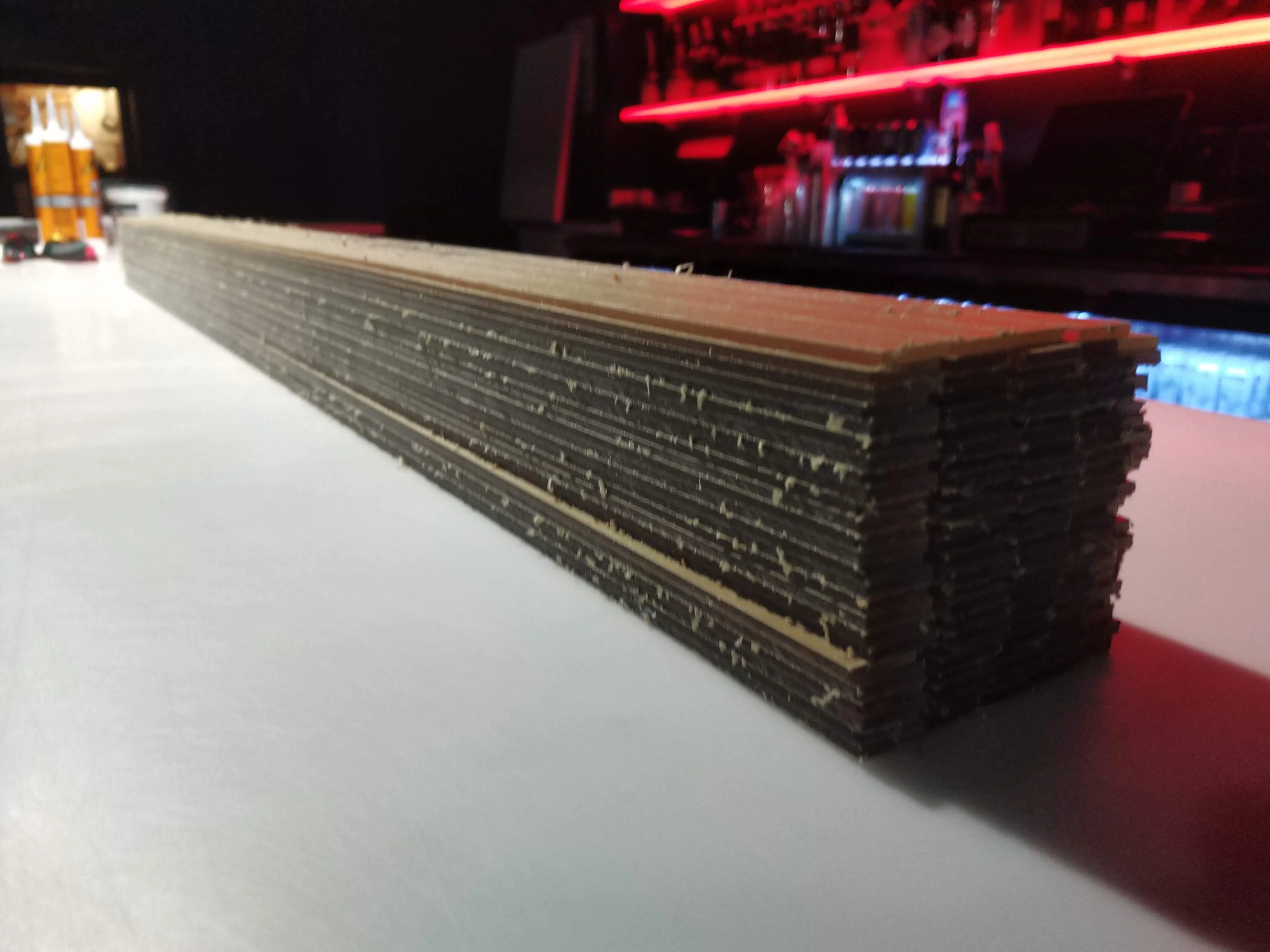
I needed custom acrylic support strips for floor pixels because the existing channels were construction-adhesived into the floor and refused to come out. Someone had installed unsealed tracks using wood inserts. The wood absorbed months of spilled drinks, mop water, and sewage backups until the diffusion caved in and shattered. Even the foam tape holding the strips smelled like club funk. The pixel tape itself was expensive and salvageable. I cut out the shorted sections, scrubbed the tracks, and built new supports out of acrylic. I knew the plastic would survive if the silicone seal ever broke again.
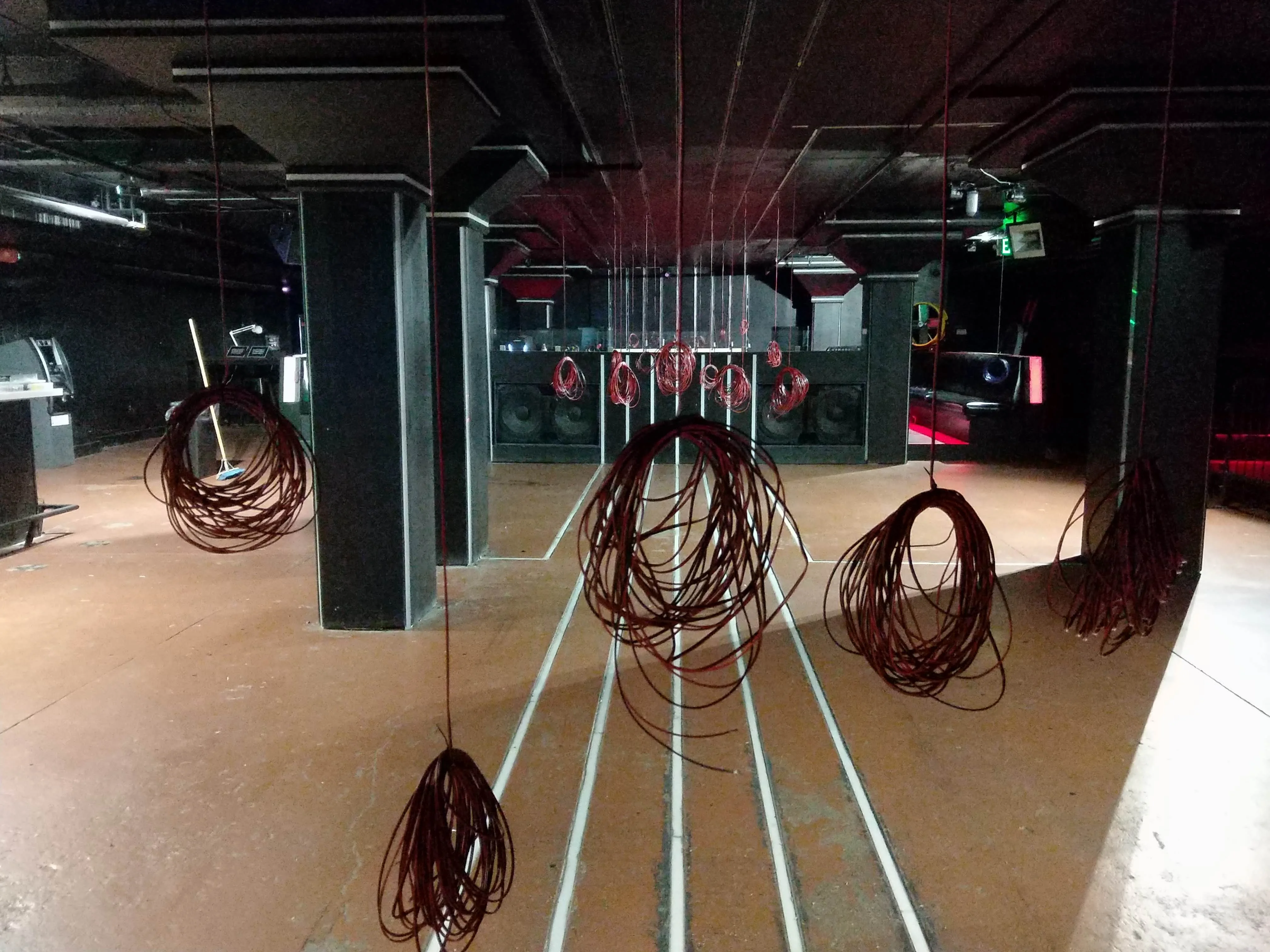
Wiring sixteen strip runs across the room required heavy power injection to stop voltage drop. My first attempt was unstable. I ran DC wire in parallel and tied the negative leads together back in the supply room, which triggered ground loop flicker across part of the system. The fix was coupling the negative leads close to the pixels above the dancefloor. The pillar modules also fought me because of undersized wire, so I added more injection points and ground jumpers until the signal stabilized.
Once the power and data lines behaved, I mapped the floor, pillars, and ceiling into a 3D voxel setup. The room runs almost entirely on those pixels. Now the control system drives spatial sweeps through the room, and the floor channels can take a direct hit from a spilled drink without shorting out.
- Pixel Mapping
- Madrix
- Hand tools
- Power tools
- ArtNet
- MIDI
- TCP/IP
- SPI
- Repair
- AC/DC Load Calc
- Power Distribution
- Lighting Design
- Wire-to-Board Soldering
Gallery