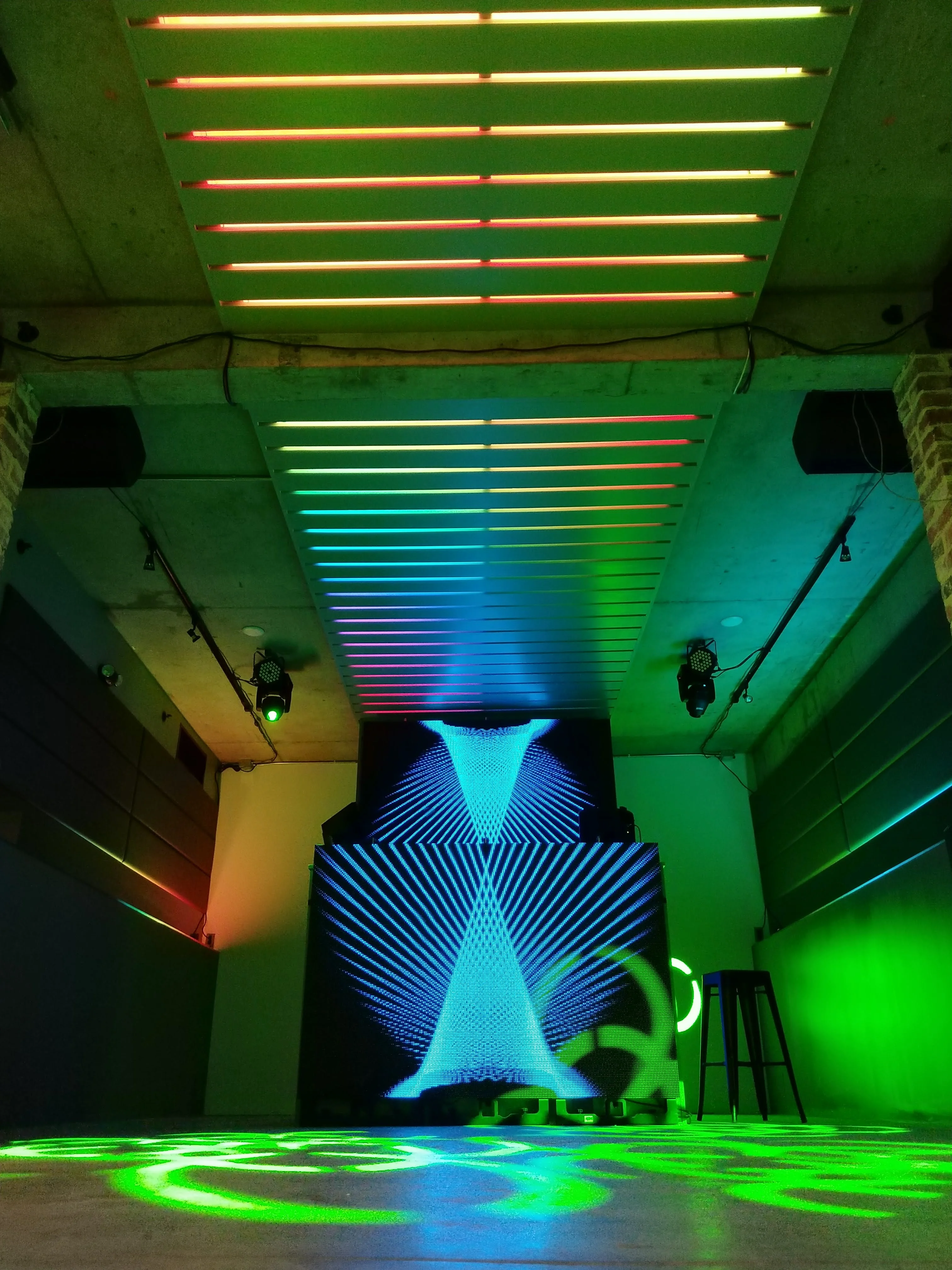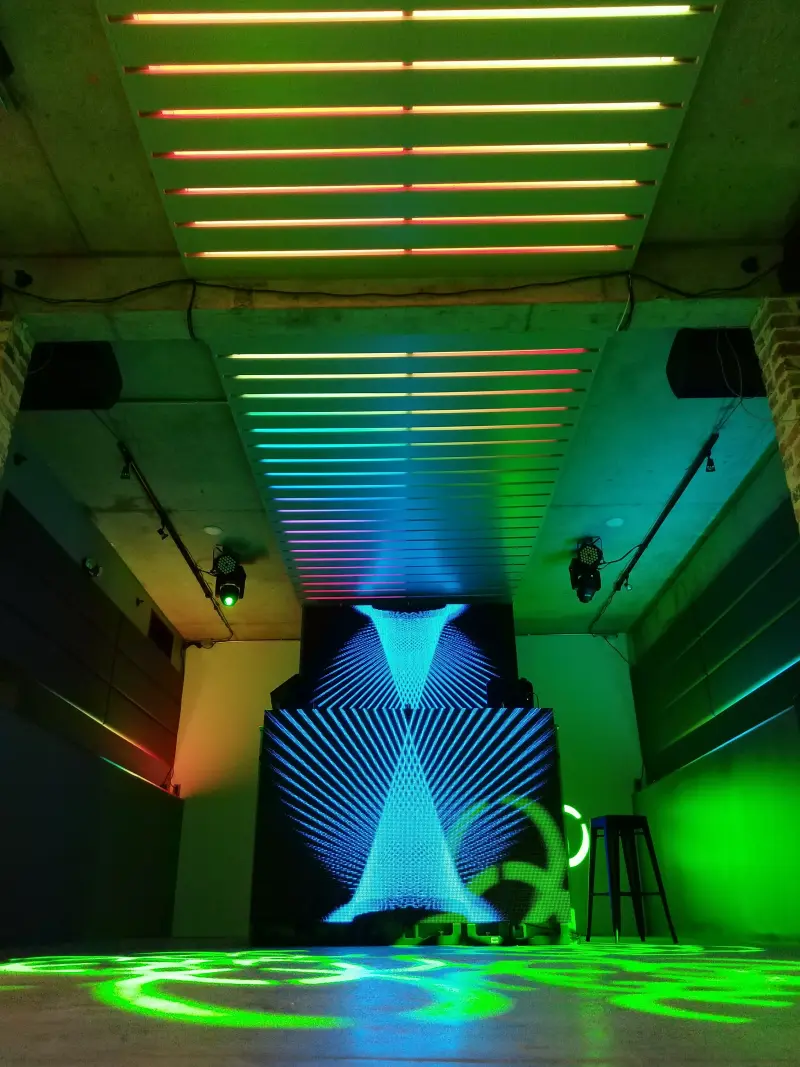
I really don't like looking straight at a light source. Sixty-two slats, four inches under bare concrete, every strand aimed up.
About the project
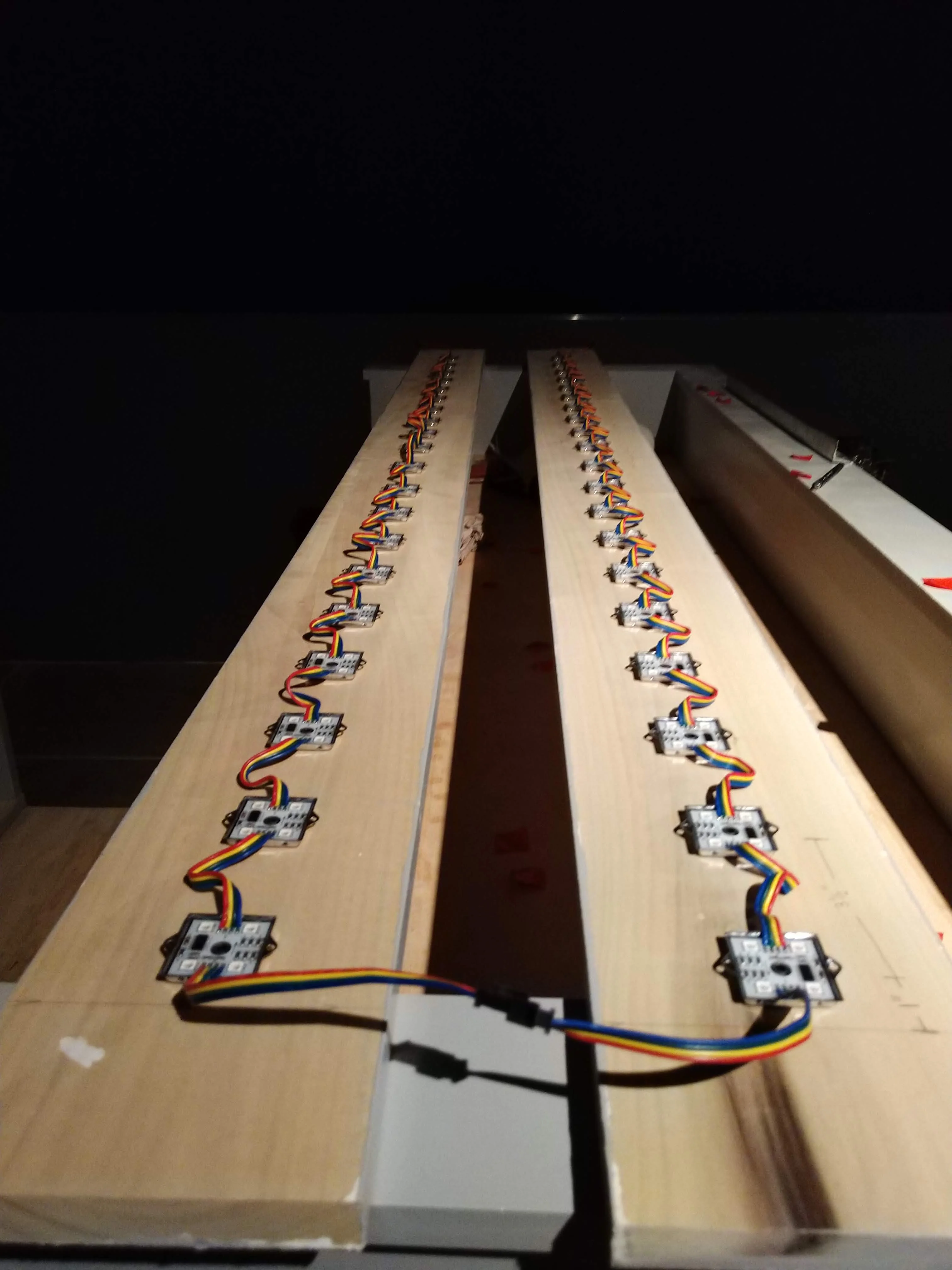
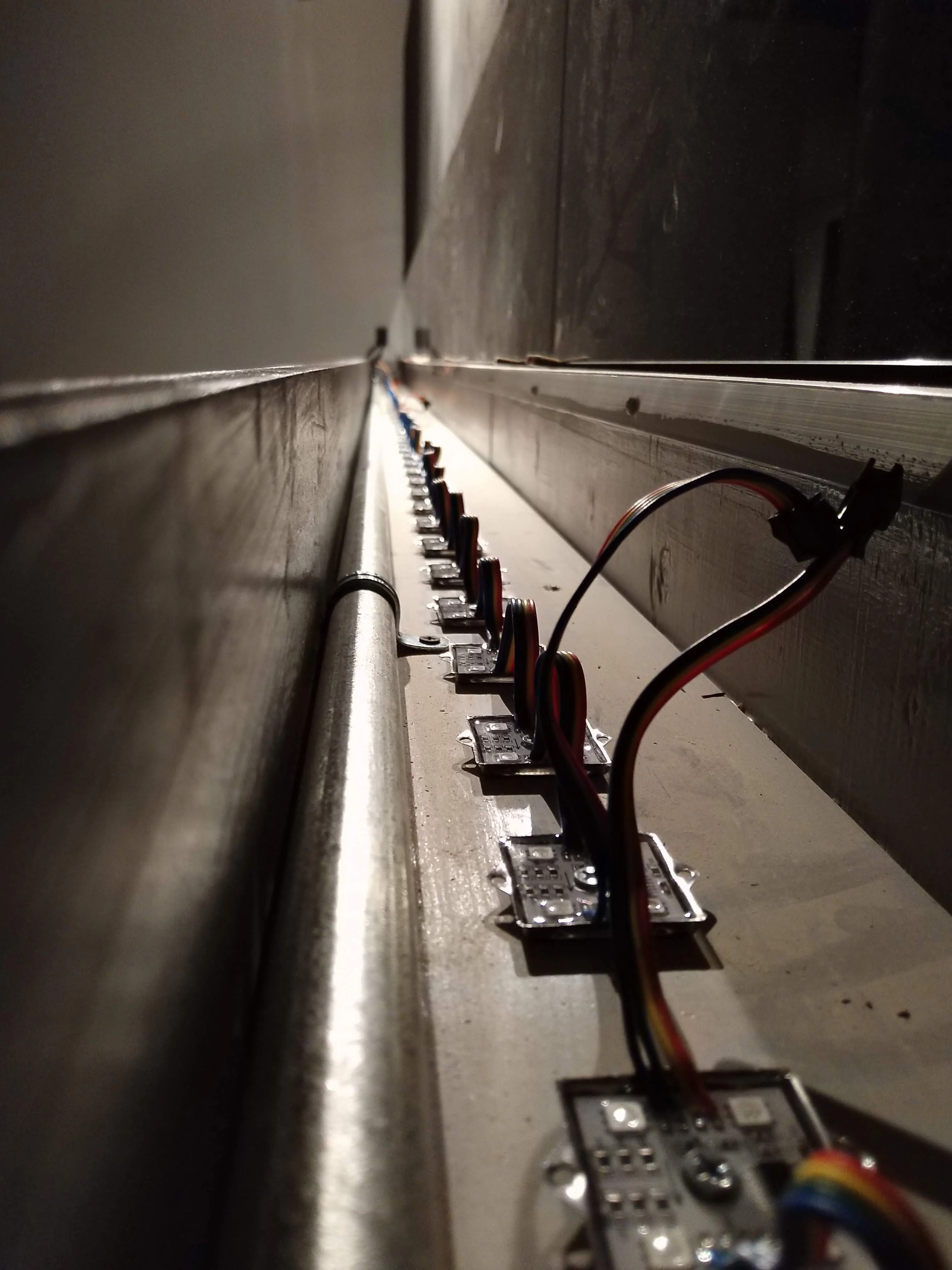
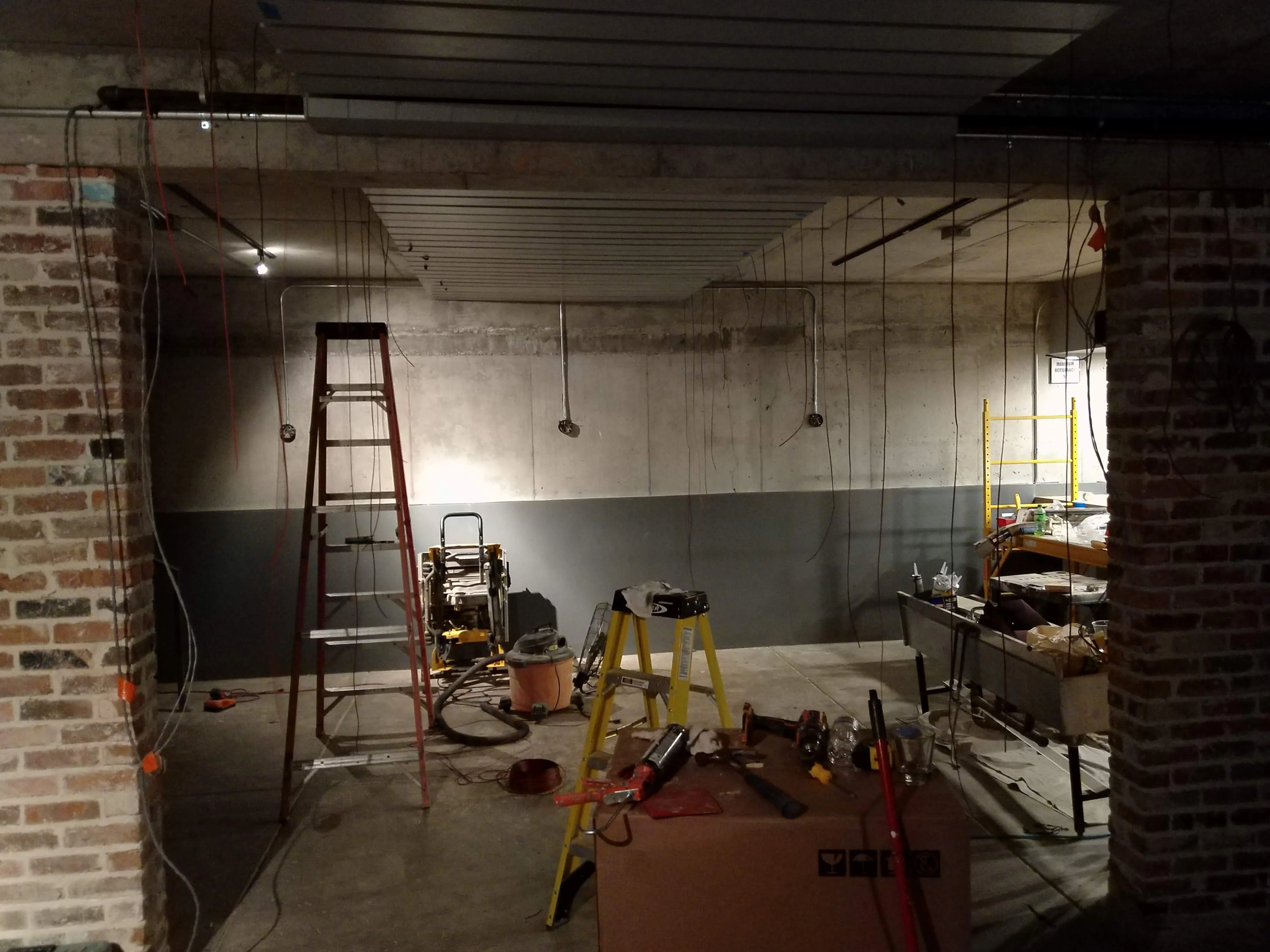
The basement at Triangle had a concrete ceiling at 10ft high. I despise looking directly at bare light sources. Instead of covering an overhead array in standard diffusion, I decided to bounce the light. A carpenter hung 62 slats under the concrete, leaving a four-inch gap. I mounted a 20-pixel strand on top of each slat, pointing straight up.
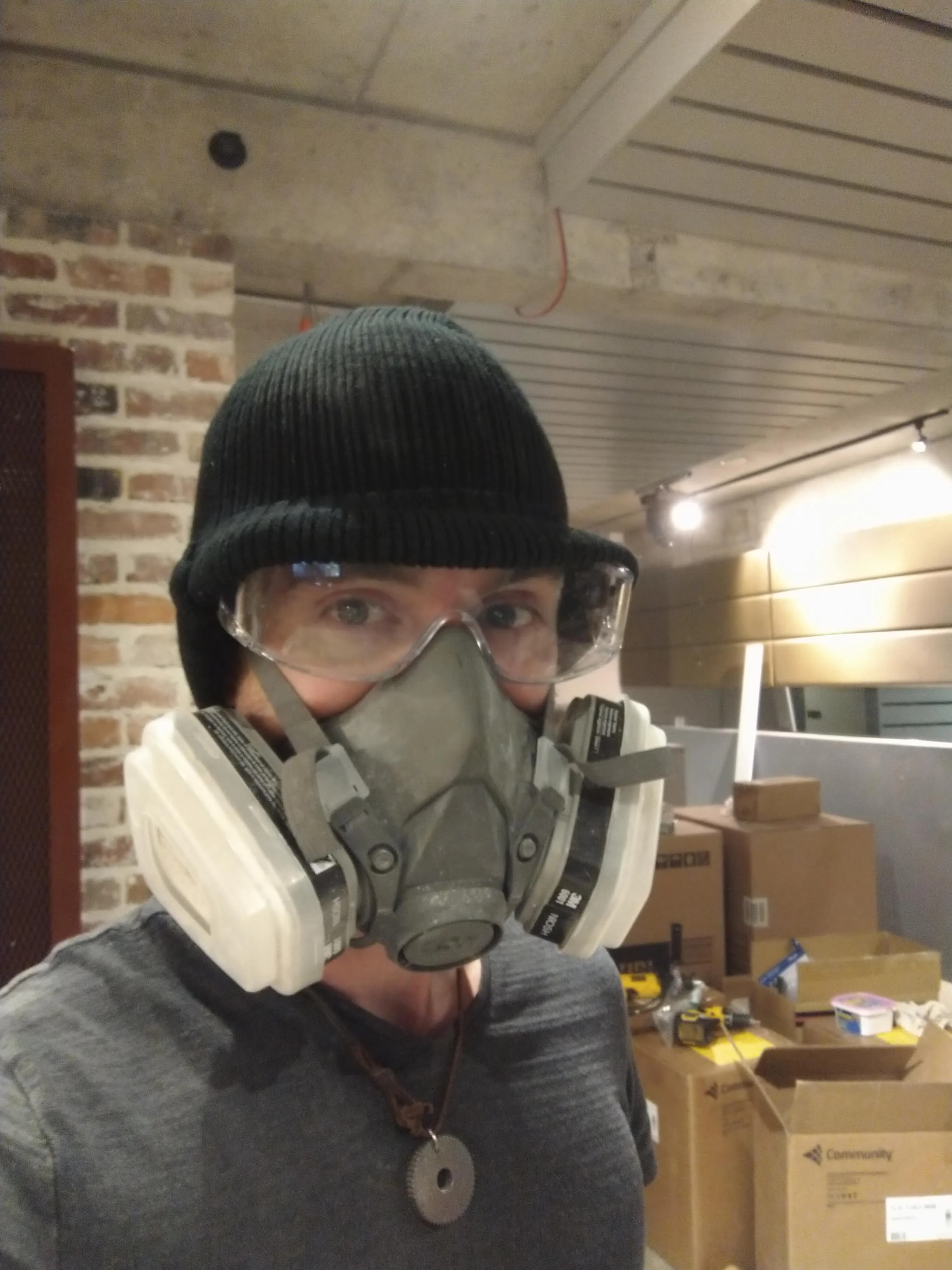
I prepped the strands on the ground and wired them as the carpenter worked. I also hung moving lights in the remaining space. That meant rotary-hammering strut channel directly into the ceiling. You get really good at working one-handed when you have to balance on a ladder, hold a fifteen-pound fixture, and thread a bolt. During testing, a loose connection caused the ground to drop and the pixels to flicker. I had zip-tied the wiring tight. With only four inches of clearance, I couldn't squeeze my hands in to pull the cables down. I had to pry the slats back off the ceiling to fix the joints.
I isolated the power supplies in an adjacent room. I didn't know fanless supplies existed then, but the quiet room made programming easier. When the rig ran, you never saw a source. The reflected wash bled through the gaps and filled the negative space. It took fluid and fire effects perfectly, and hiding the hardware kept a low room from feeling crowded.
- AC/DC Load Calc
- ArtNet
- DMX
- Hand tools
- Lighting Design
- Pixel Mapping
- MIDI
- Power tools
- Power Distribution
- Resolume Arena
- SPI
- TCP/IP
- Video Mapping
Gallery