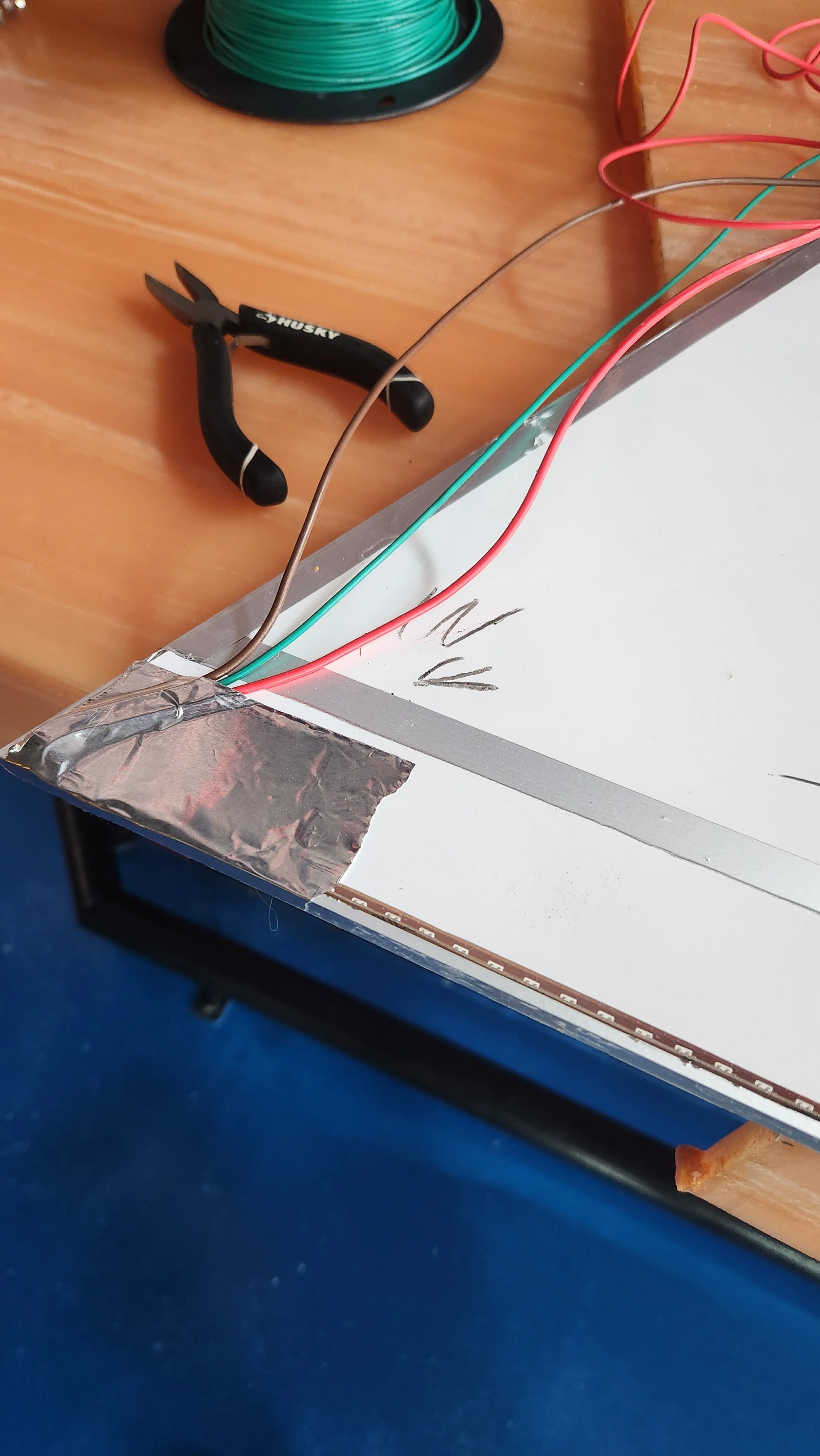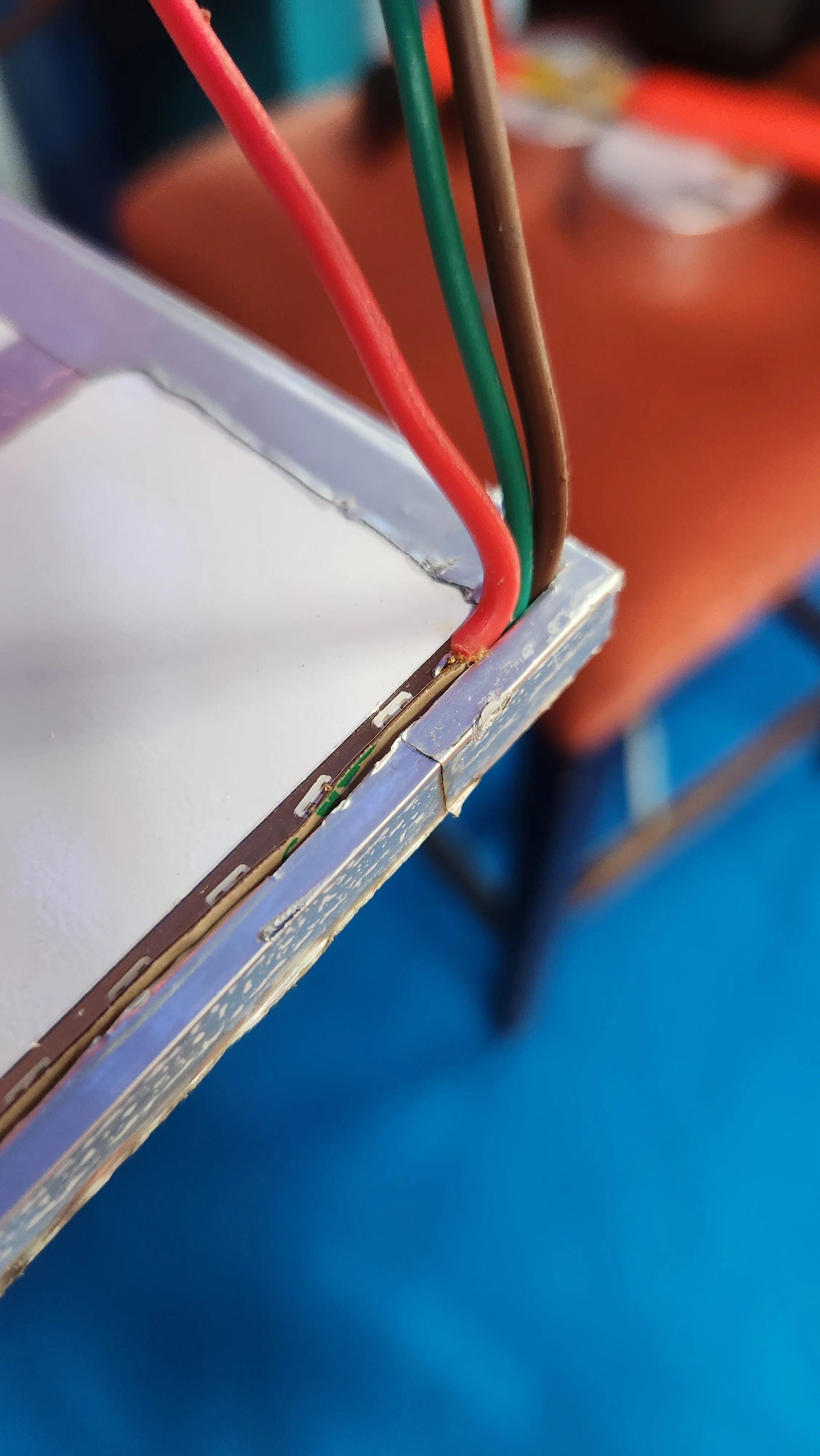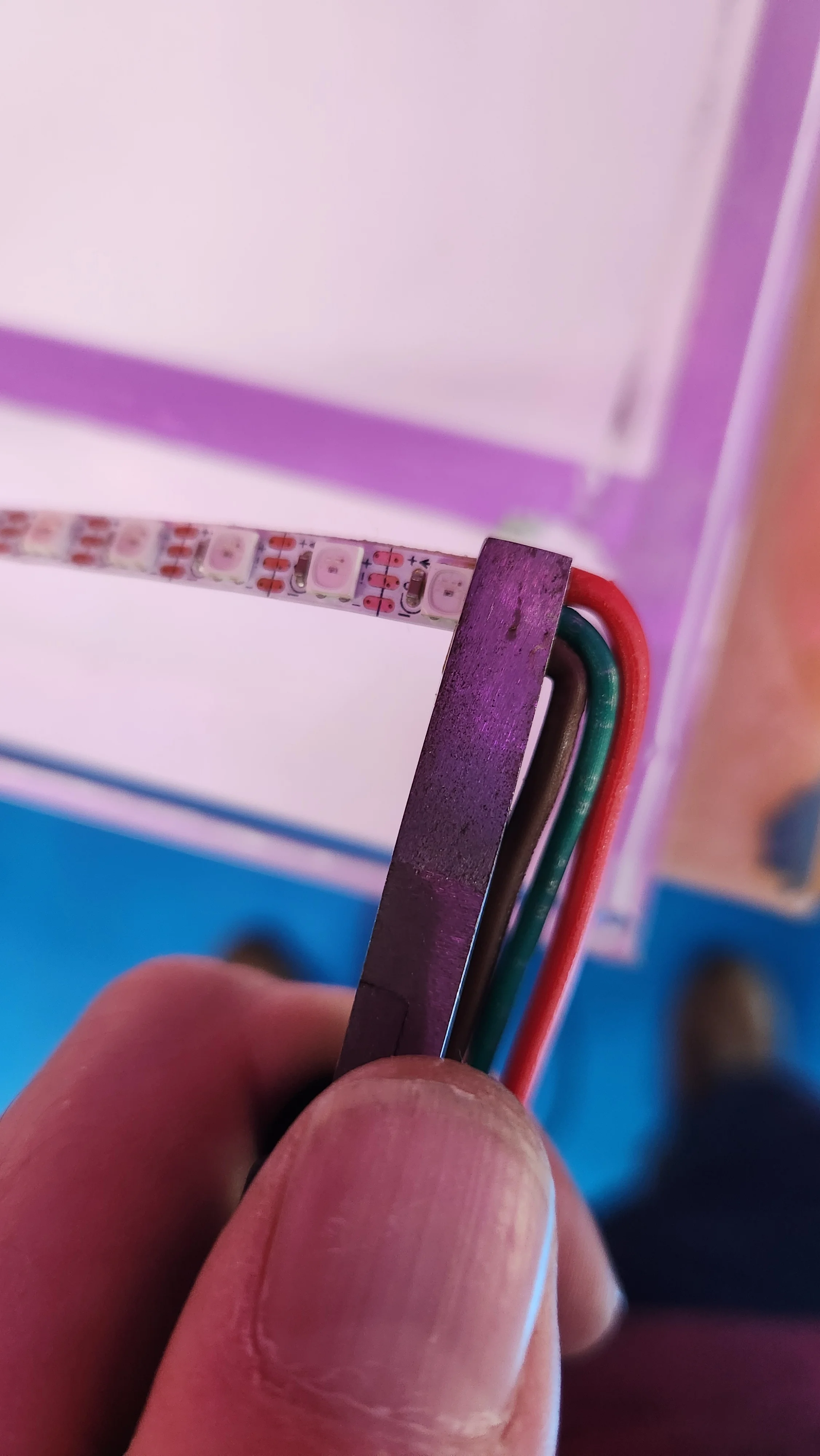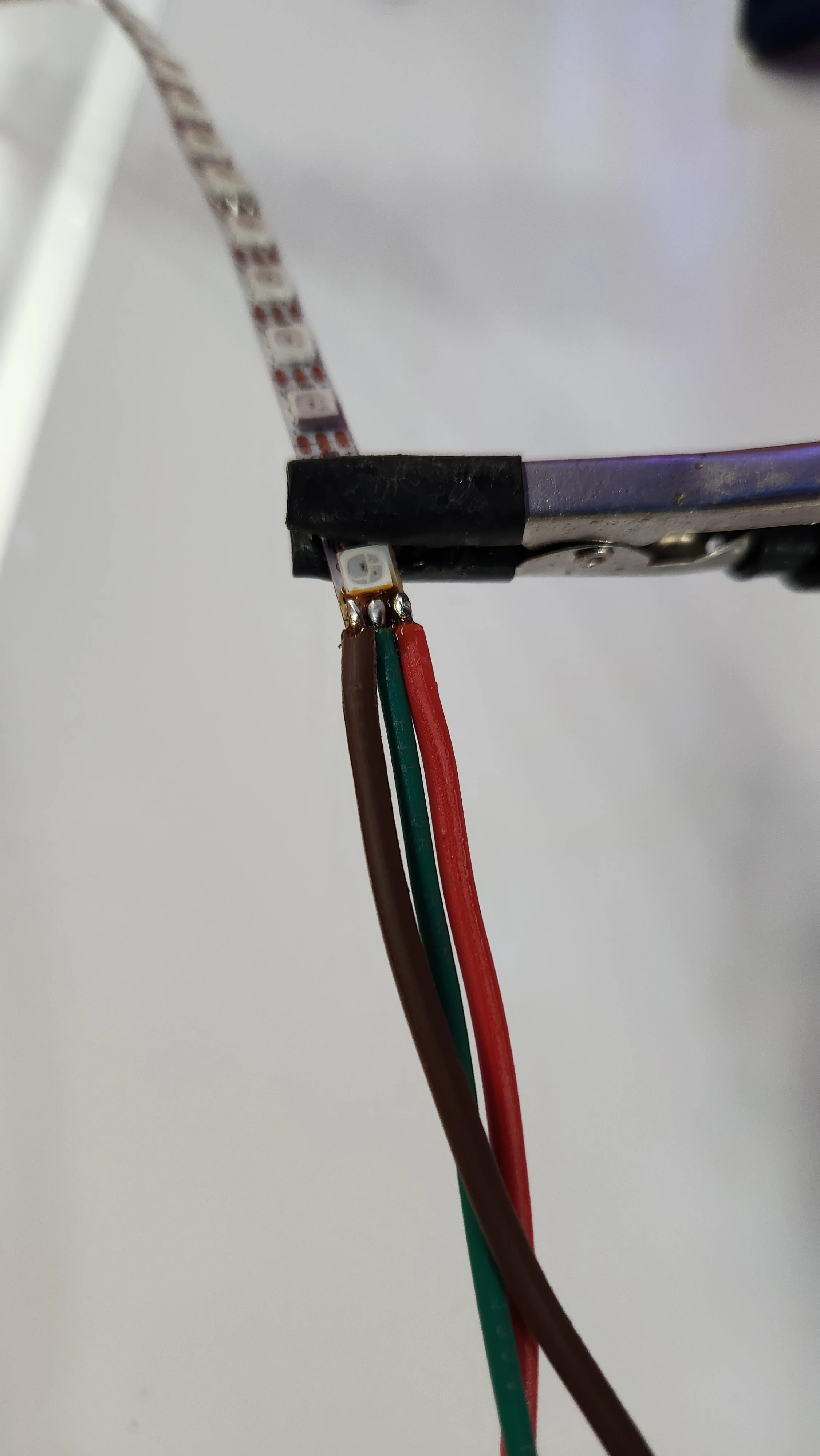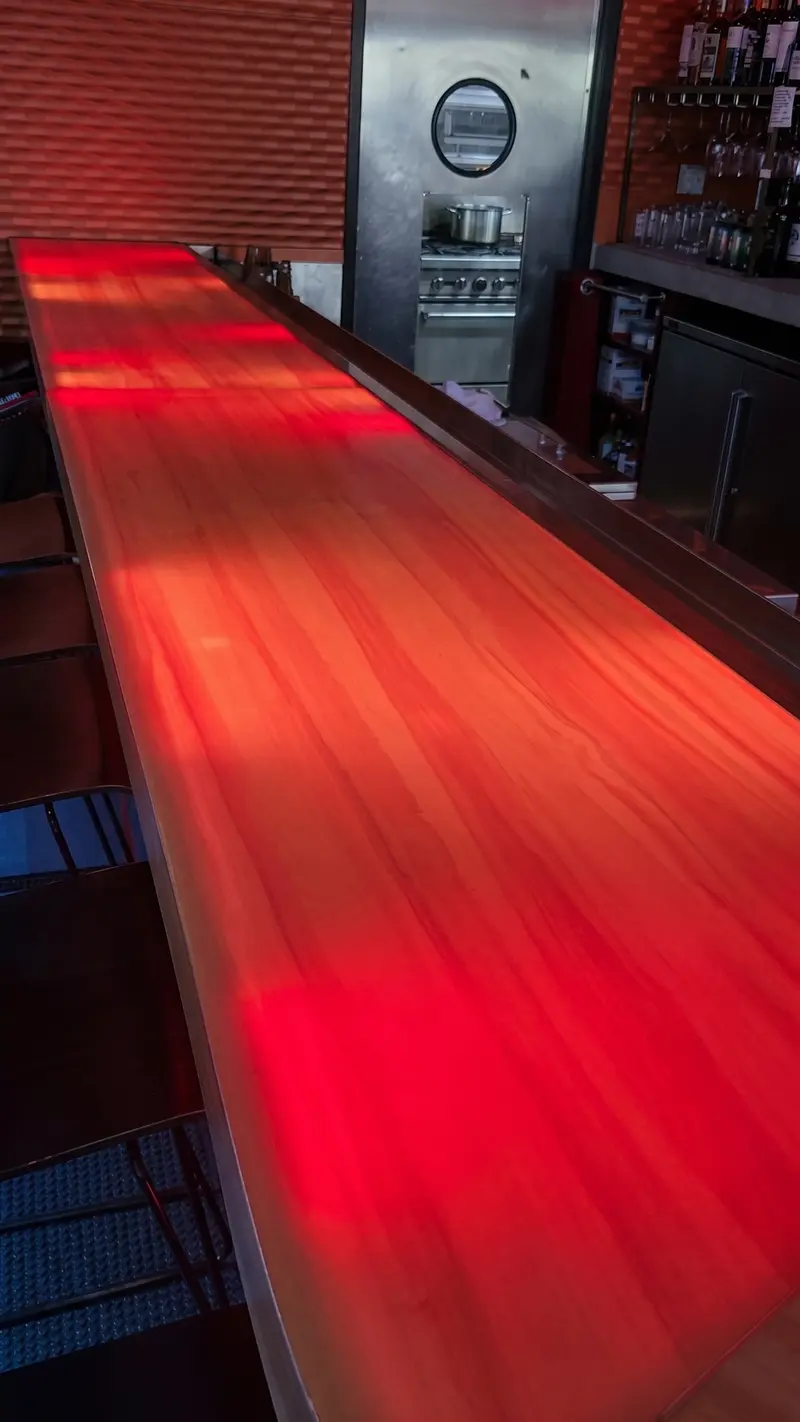
Six hours each morning to lift the stone, wire new pixels, and seal it back down before the bartenders arrived.
About the project
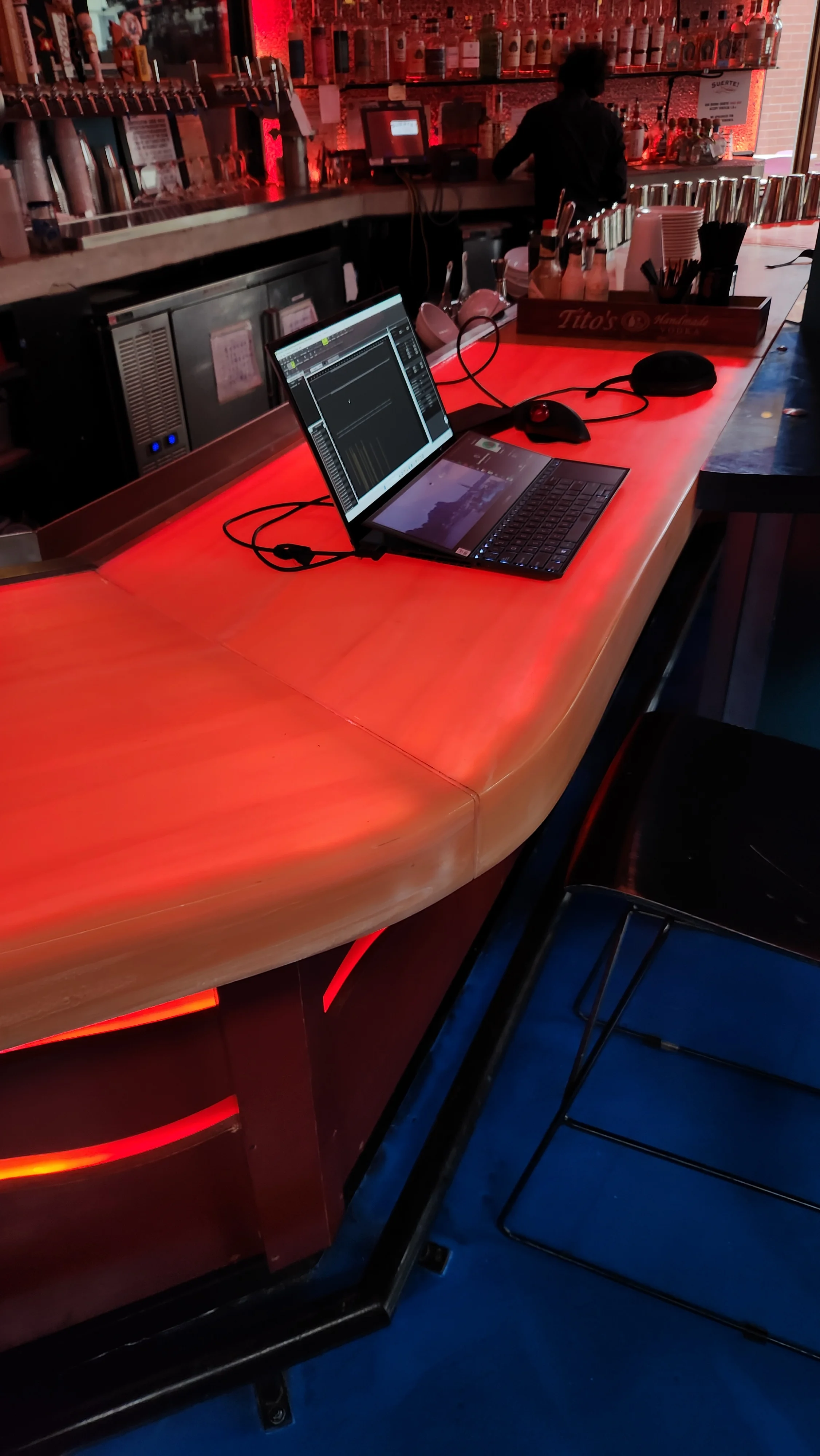
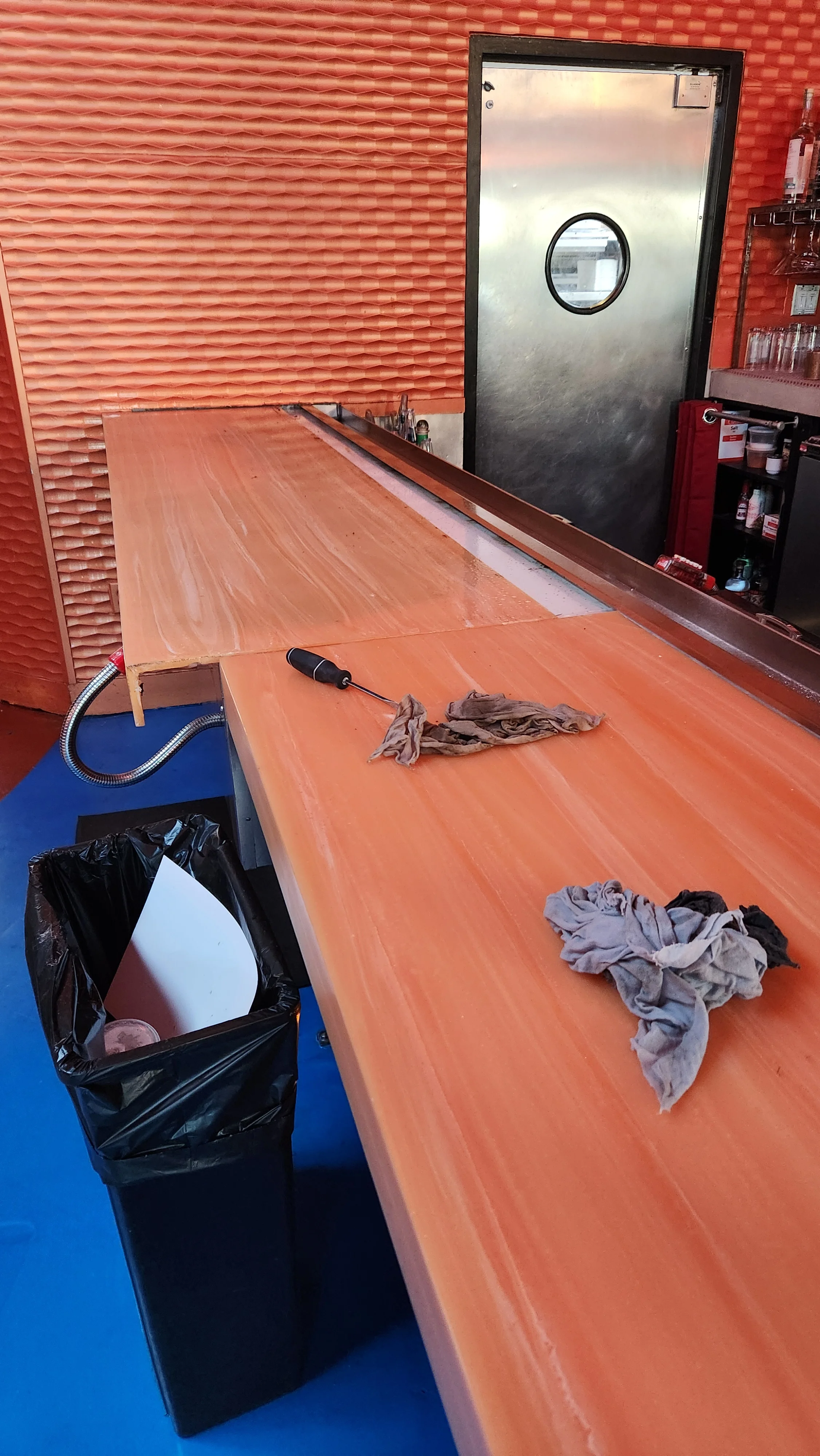
The main bar at Que Bueno Suerte! runs the length of the dining room under vaulted ceilings. The top is solid alabaster. The original contractors wired the low-voltage LEDs using wire nuts. The connections failed, leaving dead spots across the stone. I wanted to install addressable pixels, but the venue doesn't close. I had a six-hour window each morning to finish one section before the 3 PM open.
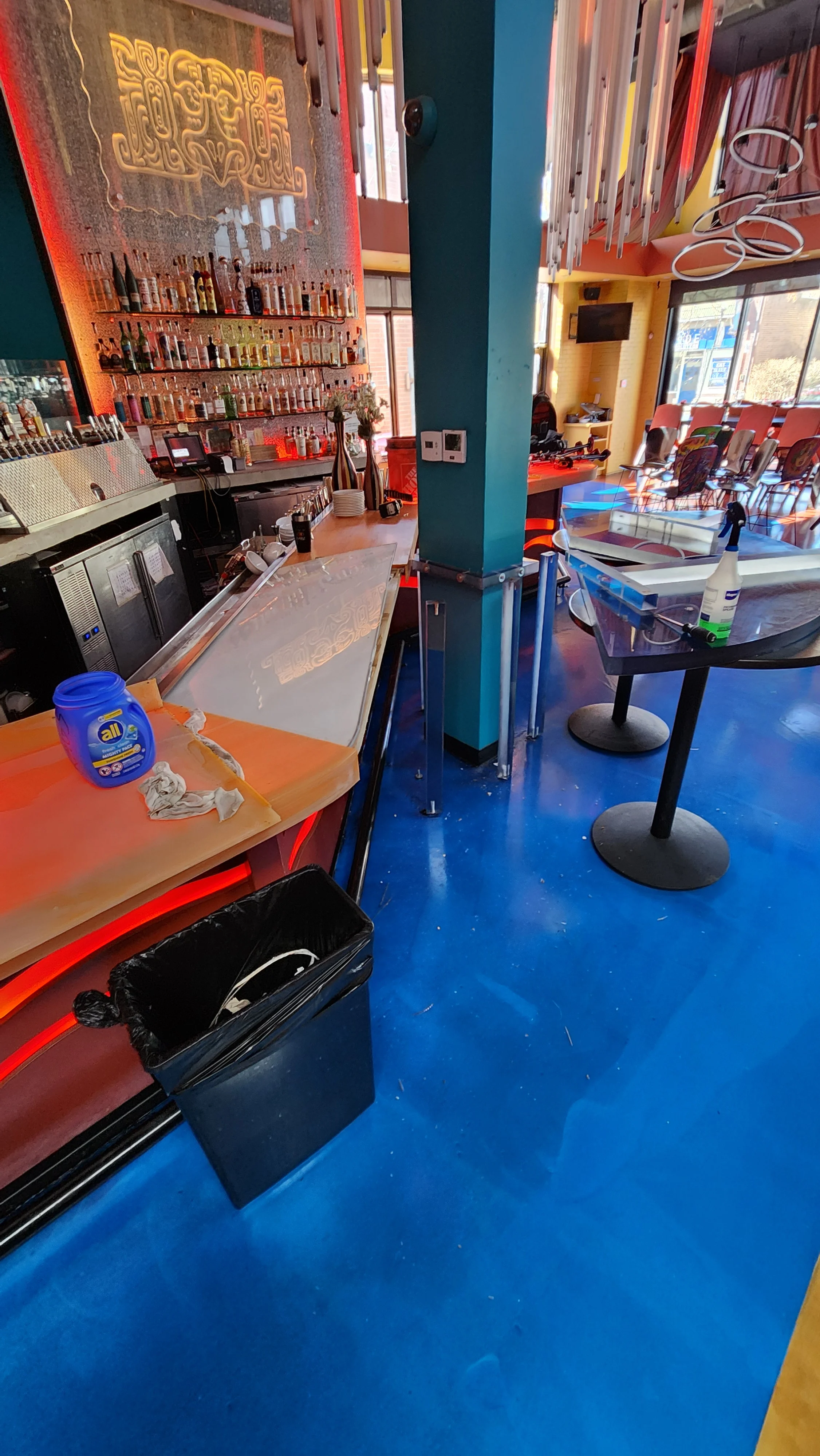
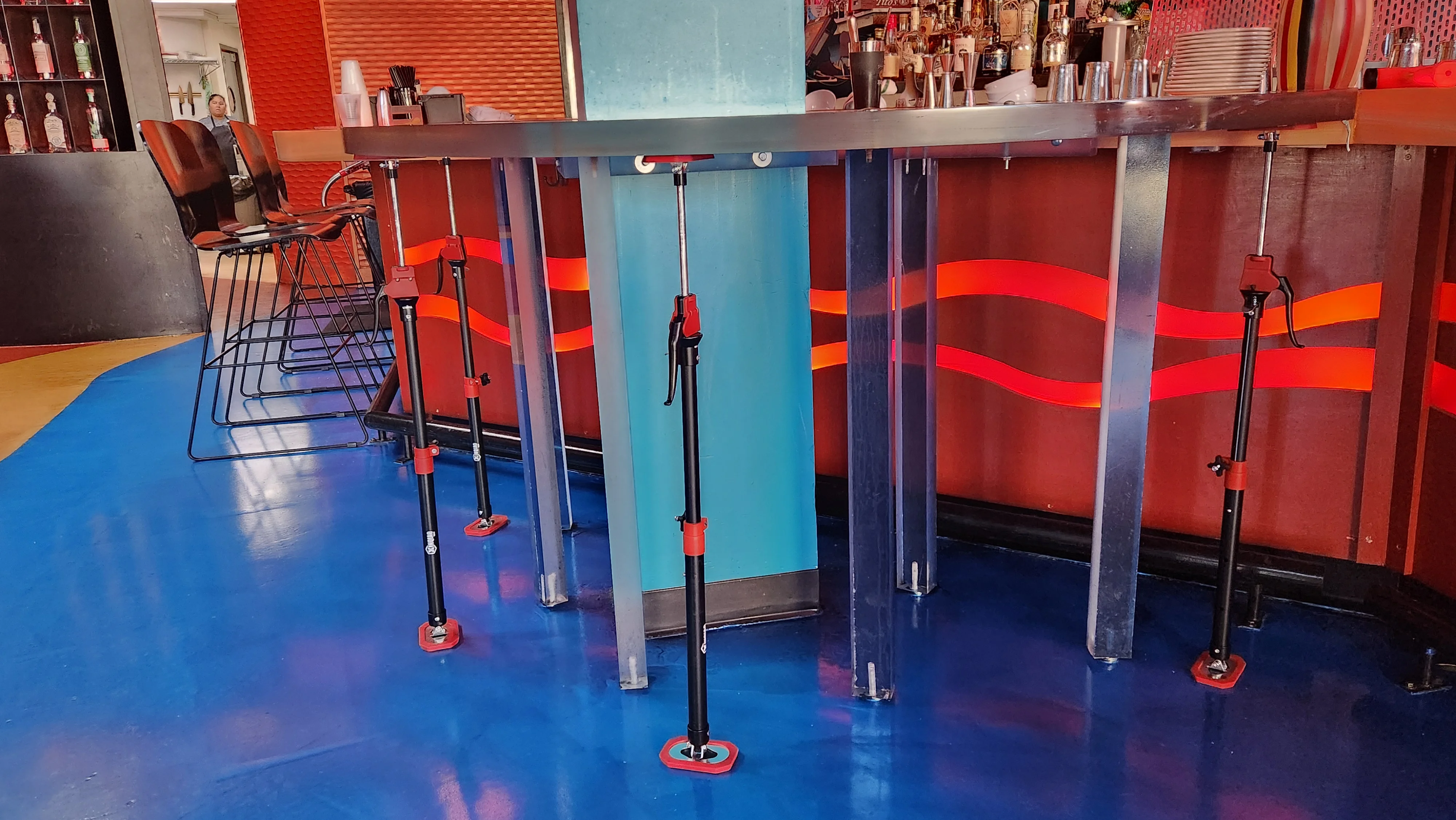
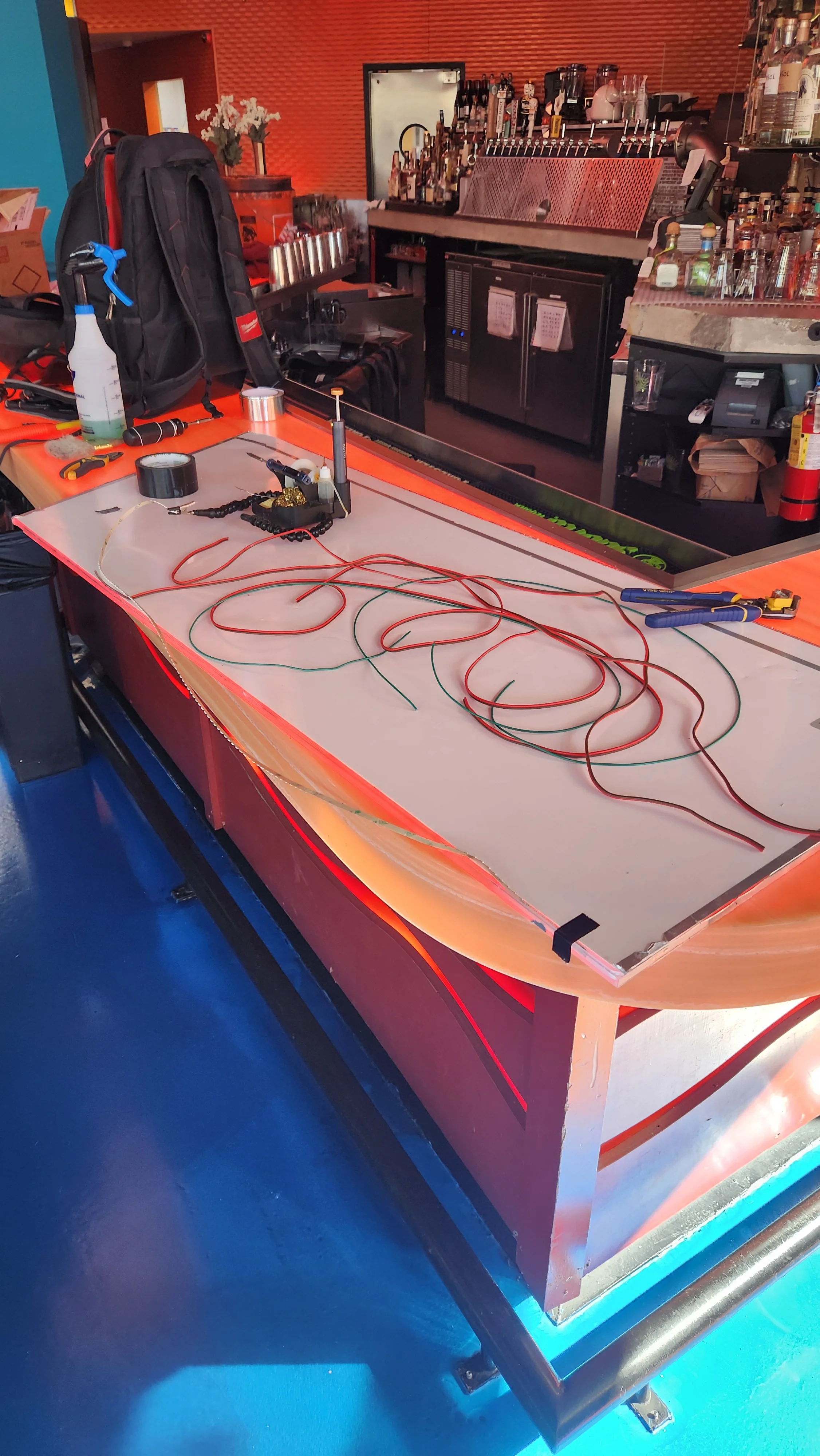
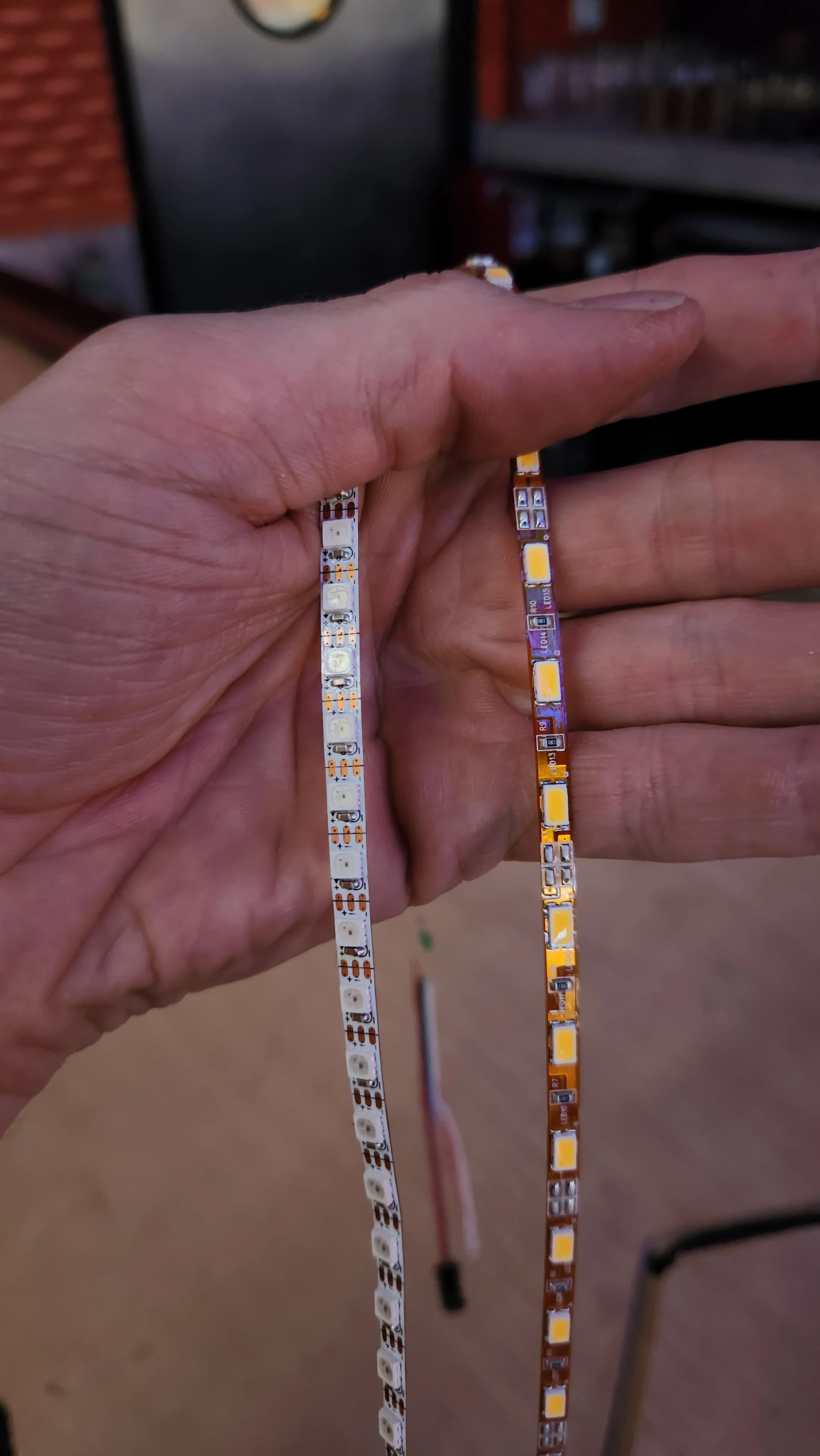
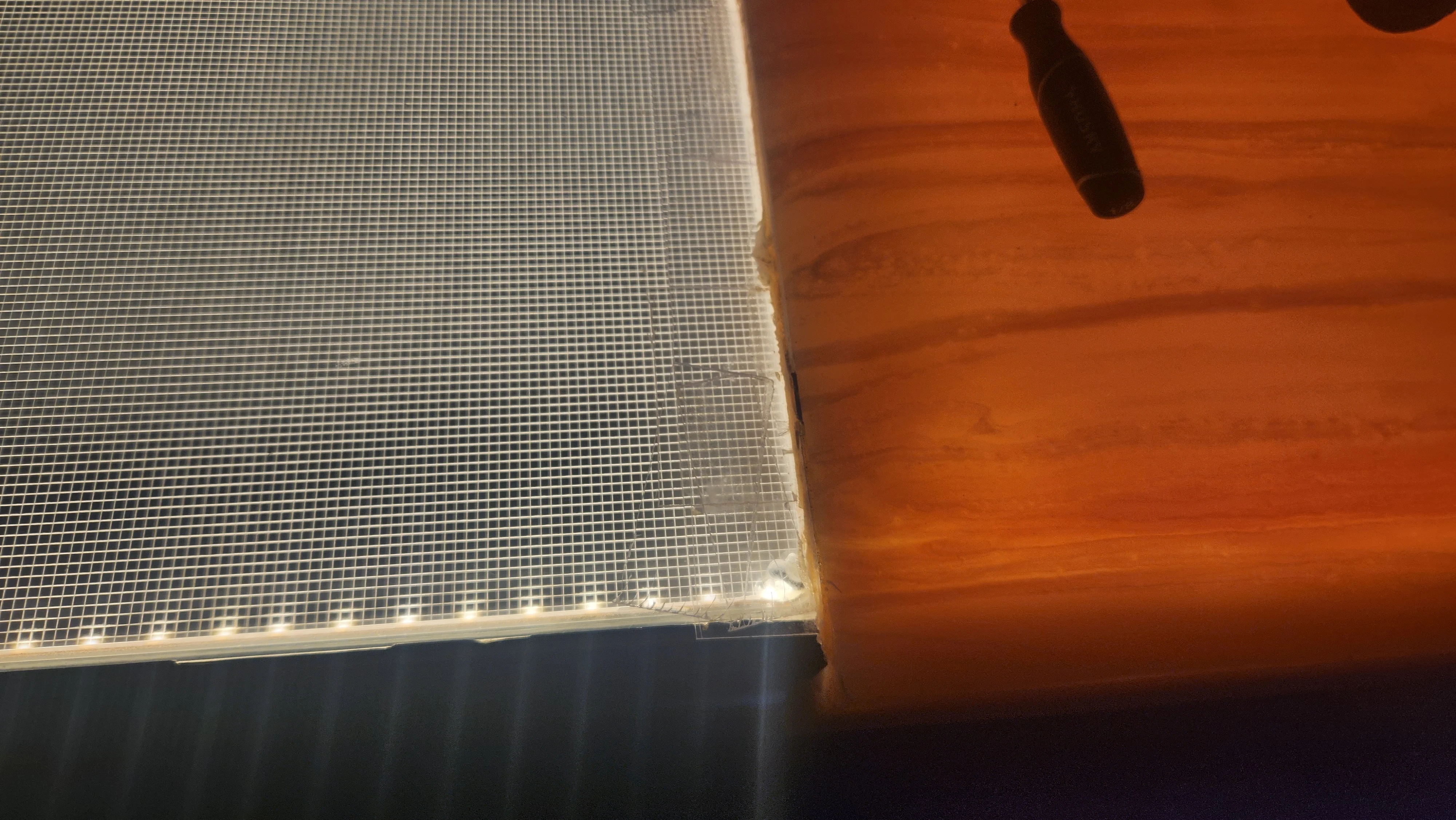
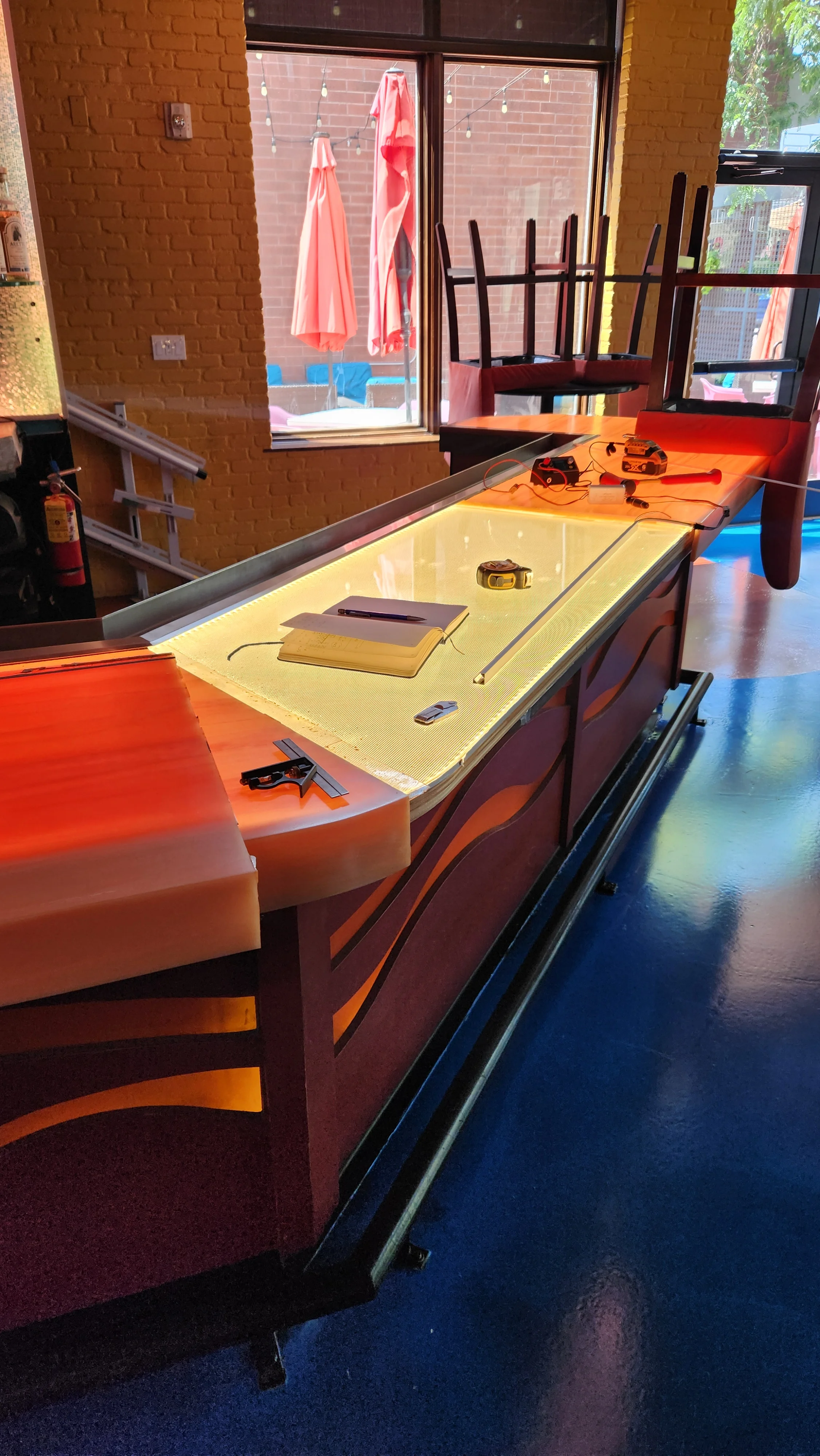
Every day, I sliced the old adhesive and lifted a piece of stone. I stripped the dead tape, installed narrow 12-volt pixels along the edges, and sealed the alabaster down with quick-dry silicone just before the bartenders arrived. The center section was worse. A 200-pound acrylic table wrapped around a support beam. I used spreader bars to lift it, unbolted the legs, and slowly inched the acrylic onto an adjacent table so it wouldn't crack. I ran new DC wire through the sheet metal studs and hid waterproof power supplies behind the kickers.
For weeks, I locked the finished sections to a static warm white to hide the construction. When the bar finally came online, my Madrix patch wasn't wide enough for a continuous 1500-pixel sweep. I stacked the strips in Z-layers and used fluid effects with mirroring to hide the seams. The alabaster was originally meant for a uniform white. Hitting it with dynamic color created deep internal gradients across the stone.
- AC/DC Load Calc
- Hand tools
- Lighting Design
- Madrix
- Pixel Mapping
- Power Distribution
- Power tools
- Repair
- SPI
- Wire-to-Board Soldering
Gallery