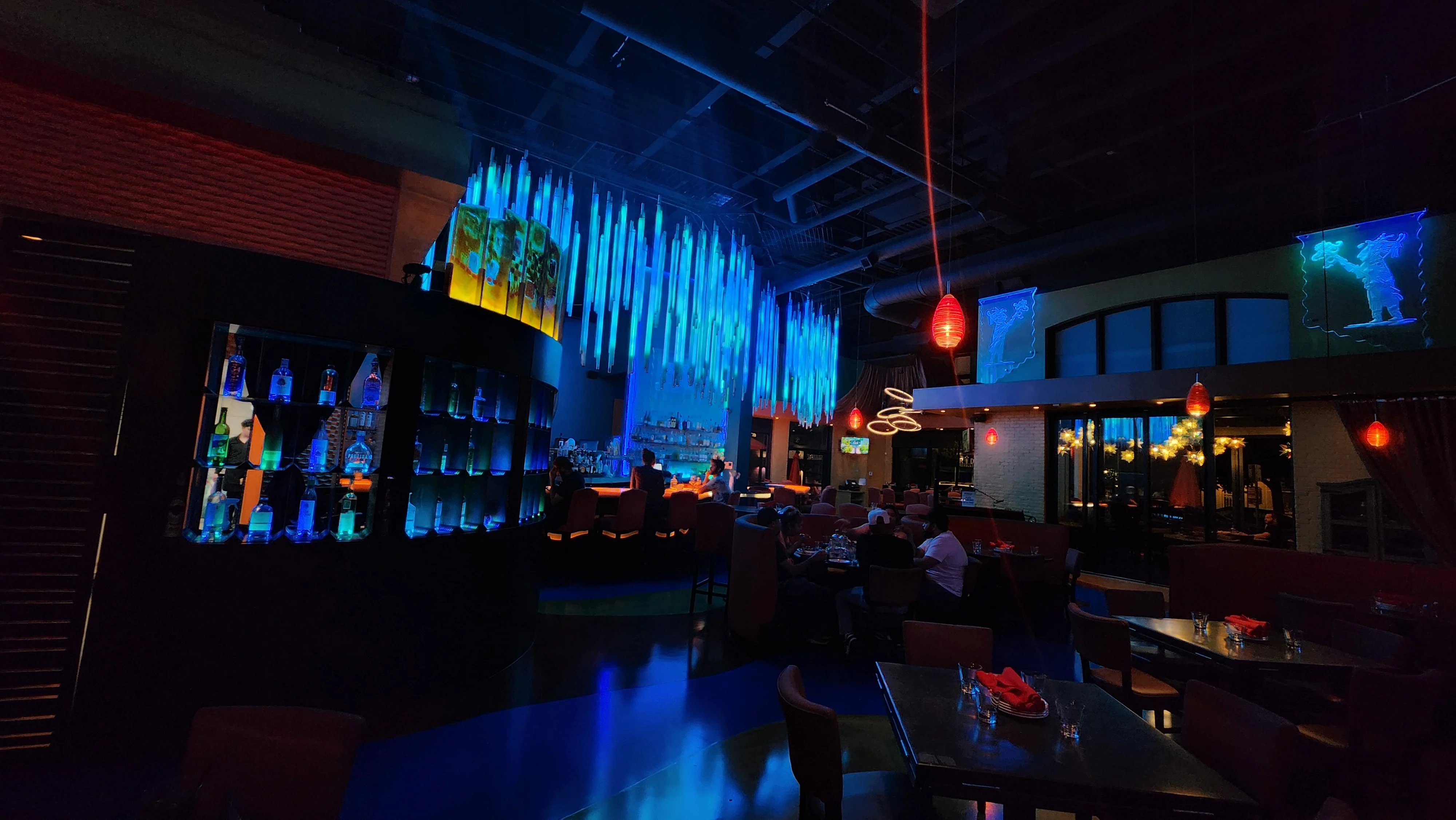
Eleven rigs, two floors, one rack. The old software could not fade the mezzanine without moving the whole building.
About the project
The first version ran on ELM on an upstairs server, and it simply could not hand the complex lighting presets I was looking for.
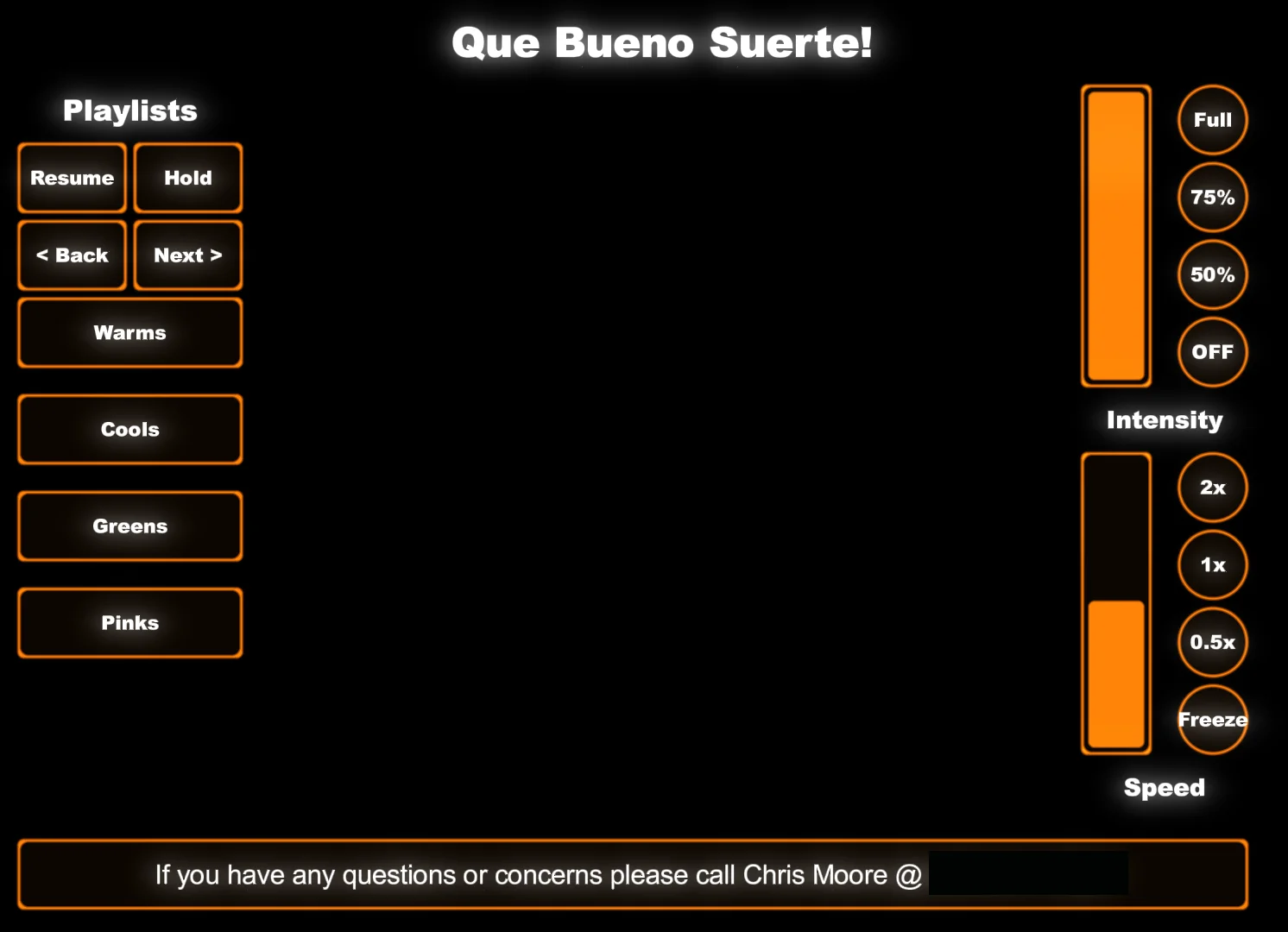
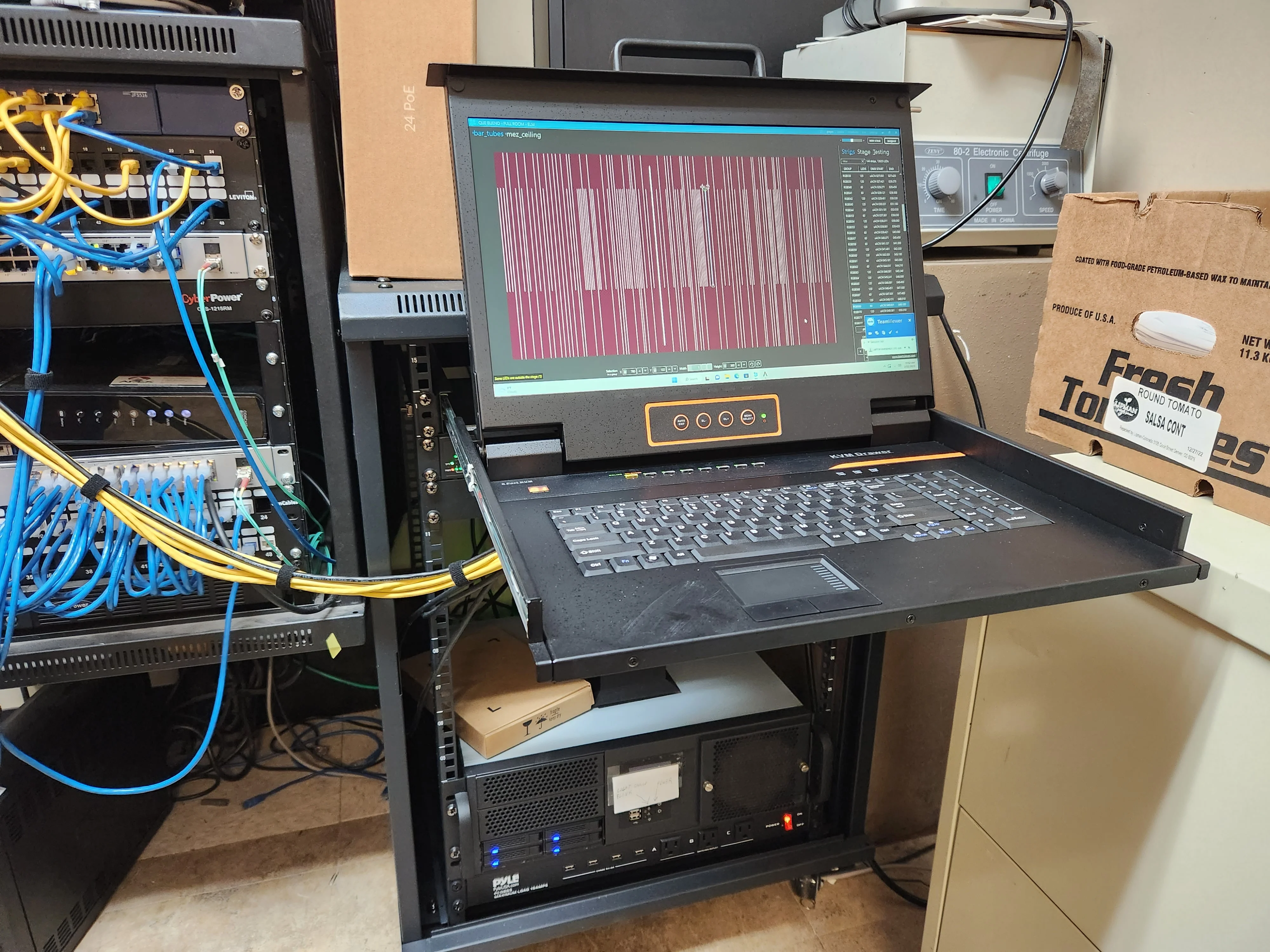
The wiring came first. I ran long-range decoders back to a single rack in the office, and the cable went wherever it had to: under bars, behind walls, above the kitchen ceiling. Retrofitting the big acrylic etchings meant climbing over dining tables while the old adhesive exploded into a fine powder that turned sticky again the second I started sweating. For control, I built an iPad remote with OSCpilot for the touch interface and Show Cockpit to distribute the signal.
The first version of that remote gave the staff too much. Speed, color shifting, individual clip selection, cross-fading. What I learned is that when something does not respond the way a person expects, they push every fader to maximum or minimum. A rig this size in a packed dining room also breaks in predictable ways. Controllers drop data and need a breaker flipped. Wireless fixtures lose signal through a dense crowd. So I locked the iPad down to a few preset playlists the bartenders could not get lost in, and I put a slide-out KVM in the rack so I could fix the routing myself.
Switching the core to Madrix is what finally made it one show. The test was standing in the dining room and watching a slow color shift start at the alabaster bar top, climb the bottle shelves, and roll across the roof liners without a seam.
- Madrix
- ELM
- TCP/IP
- OSC
- OSCpilot
- MIDI
- sACN
- ArtNet
- WLED
- Pixel Mapping
- Show Cockpit
- Custom Fabrication
- Power Distribution
Gallery