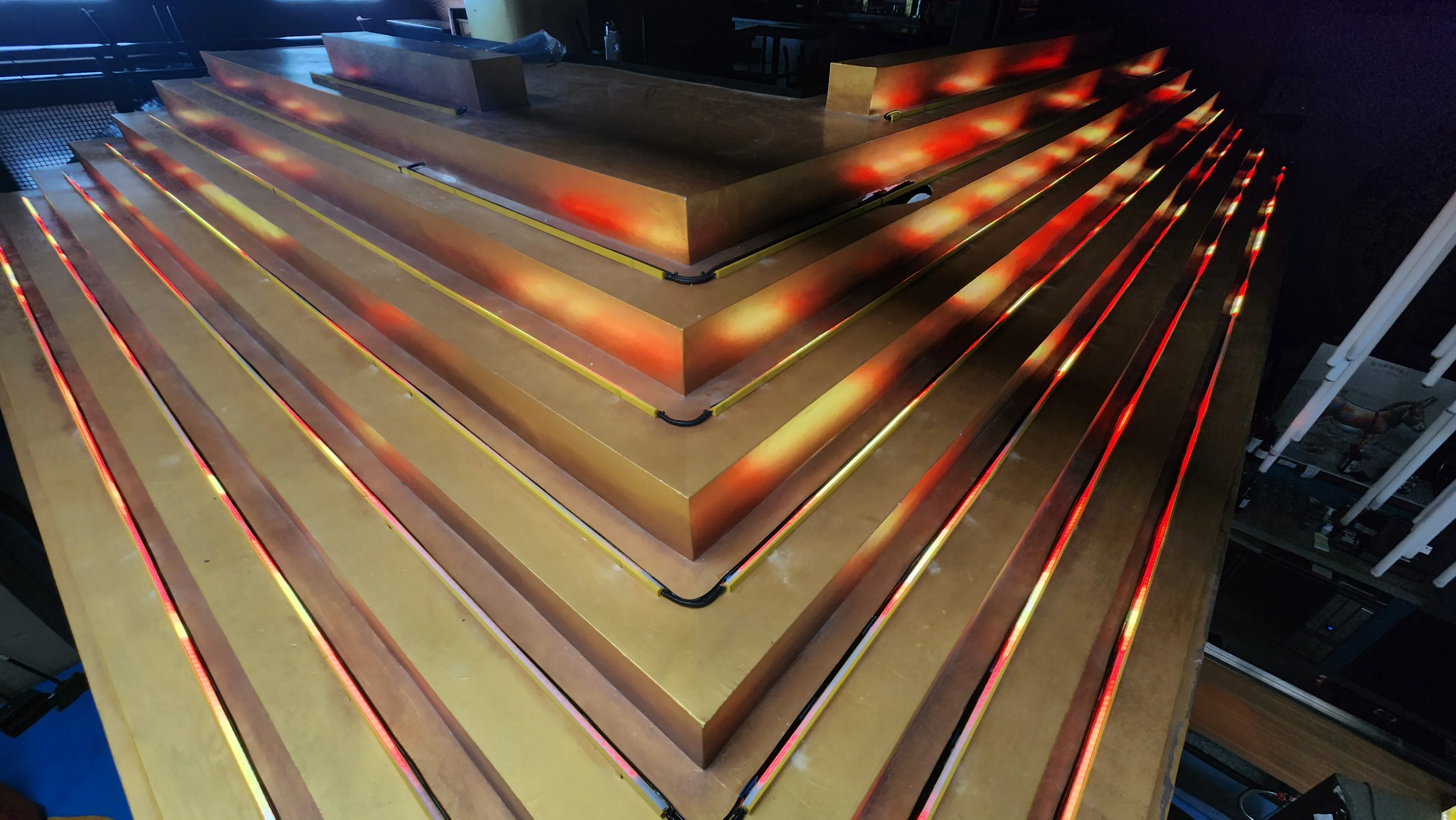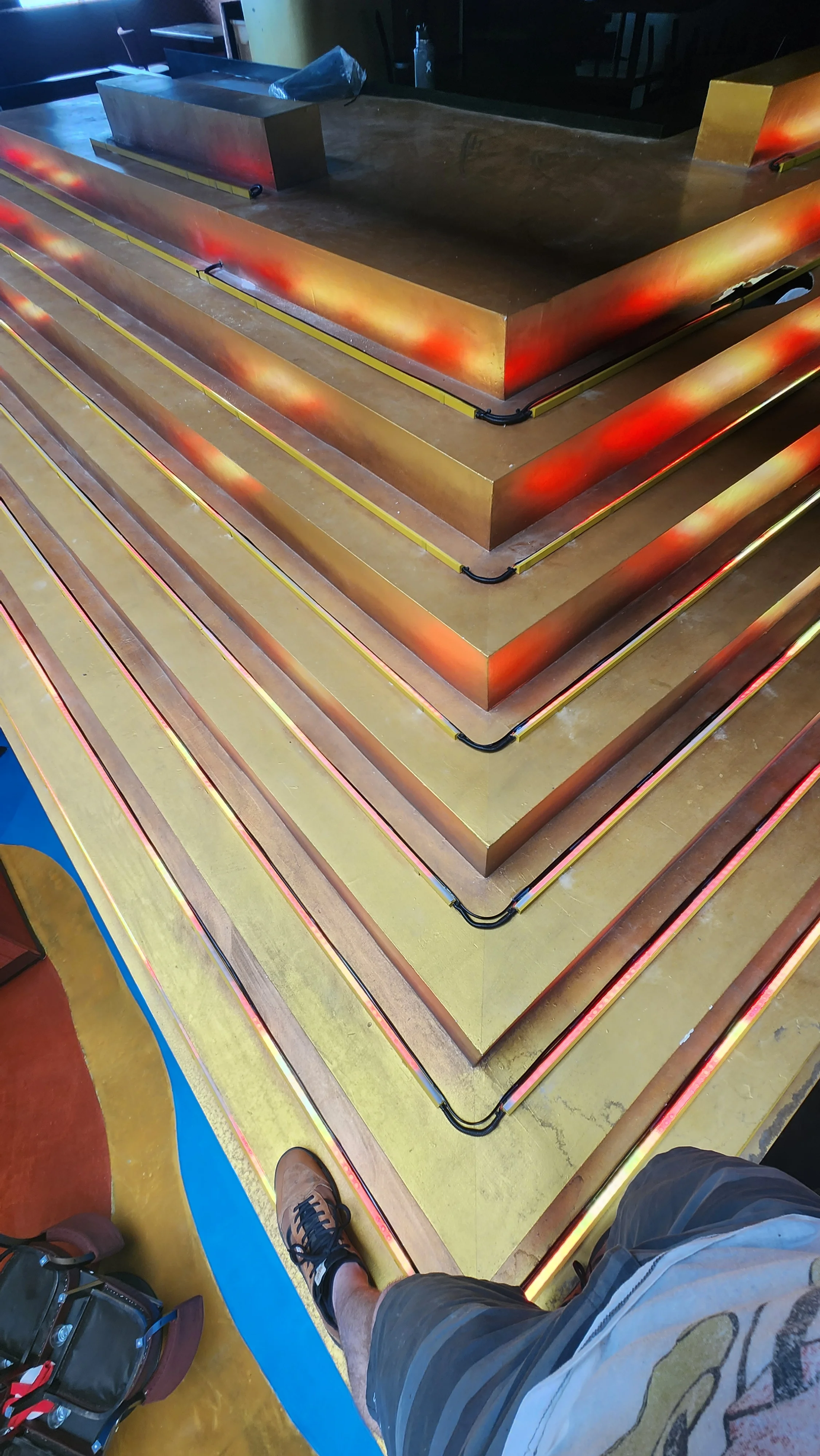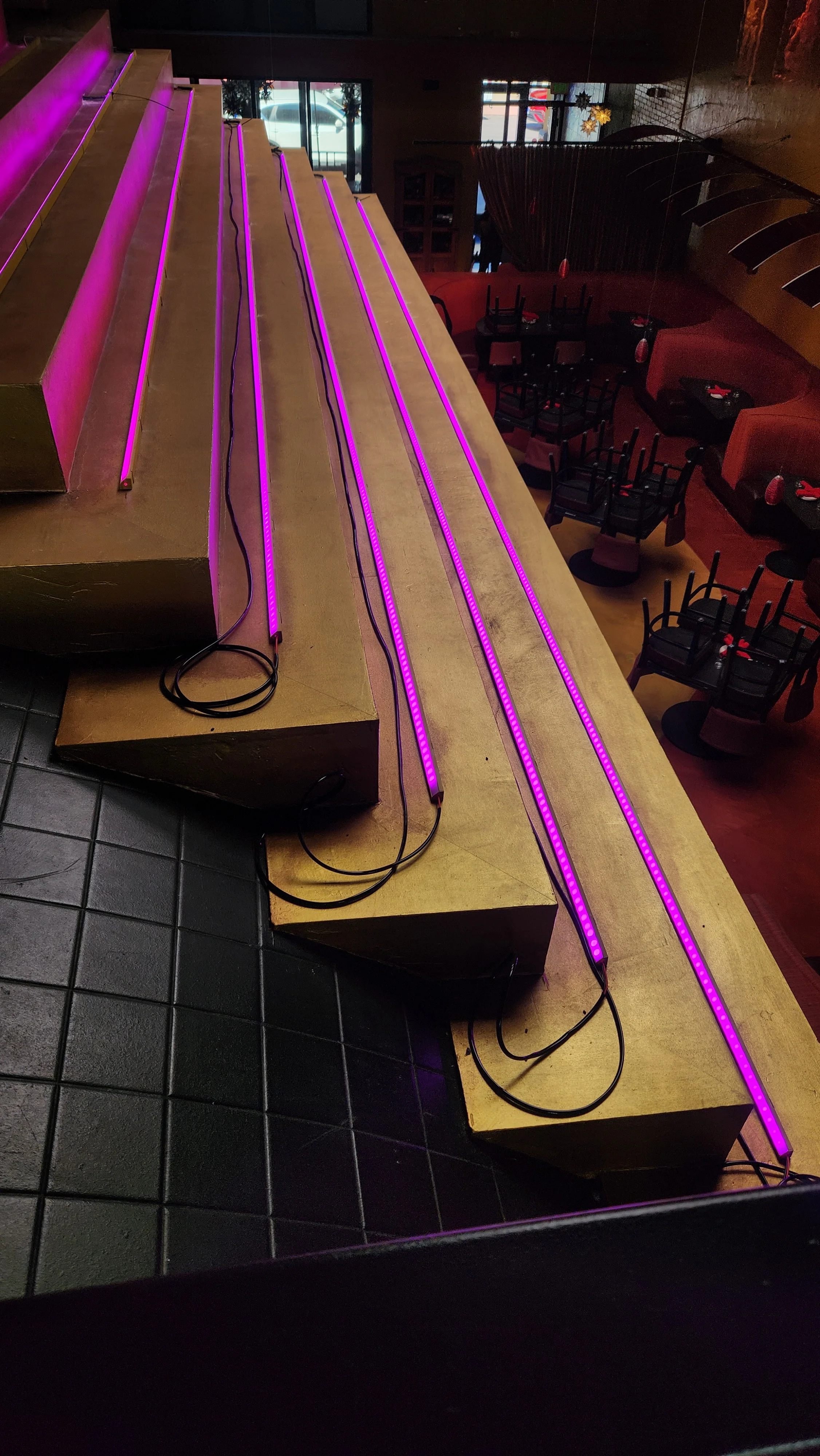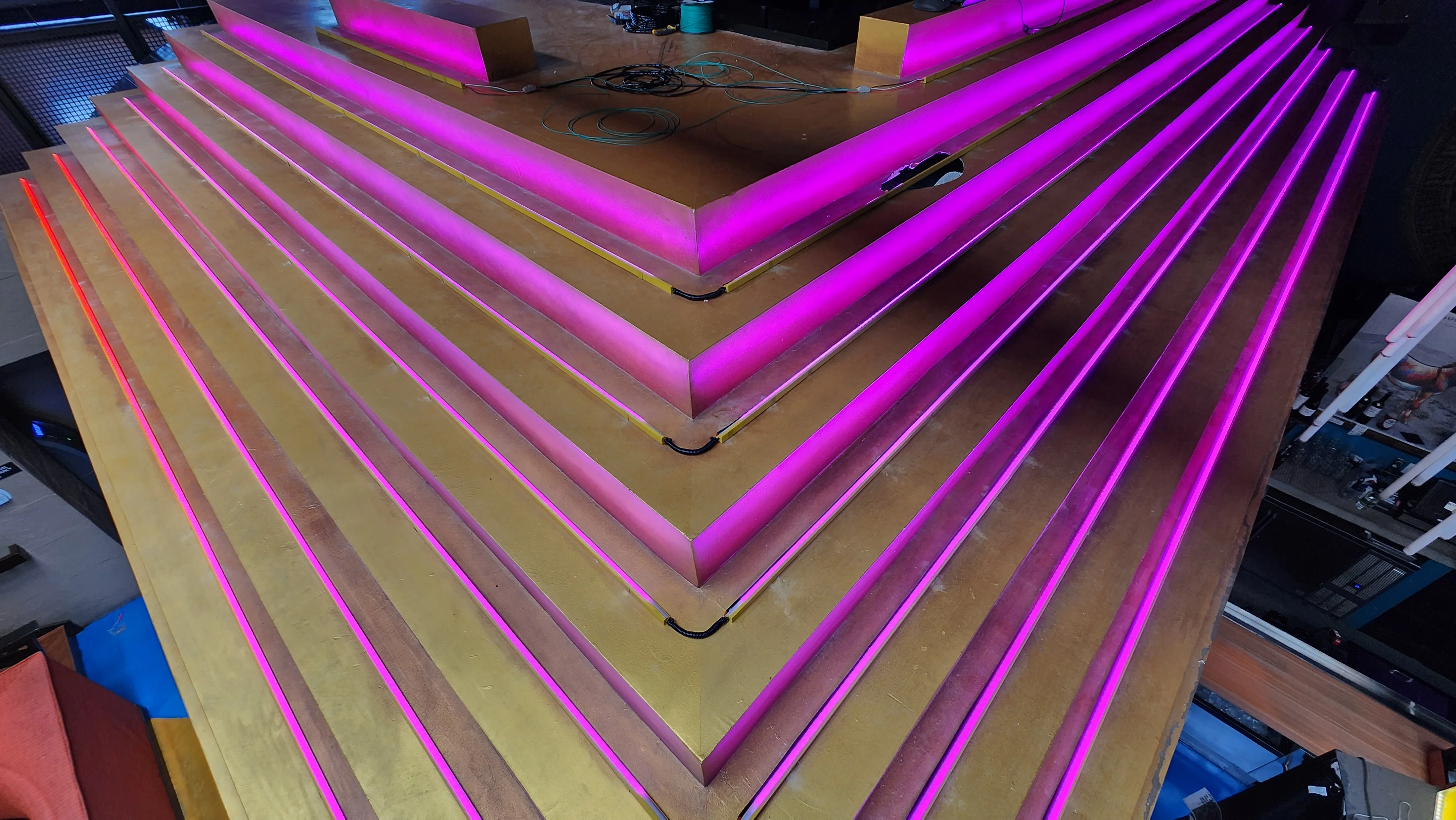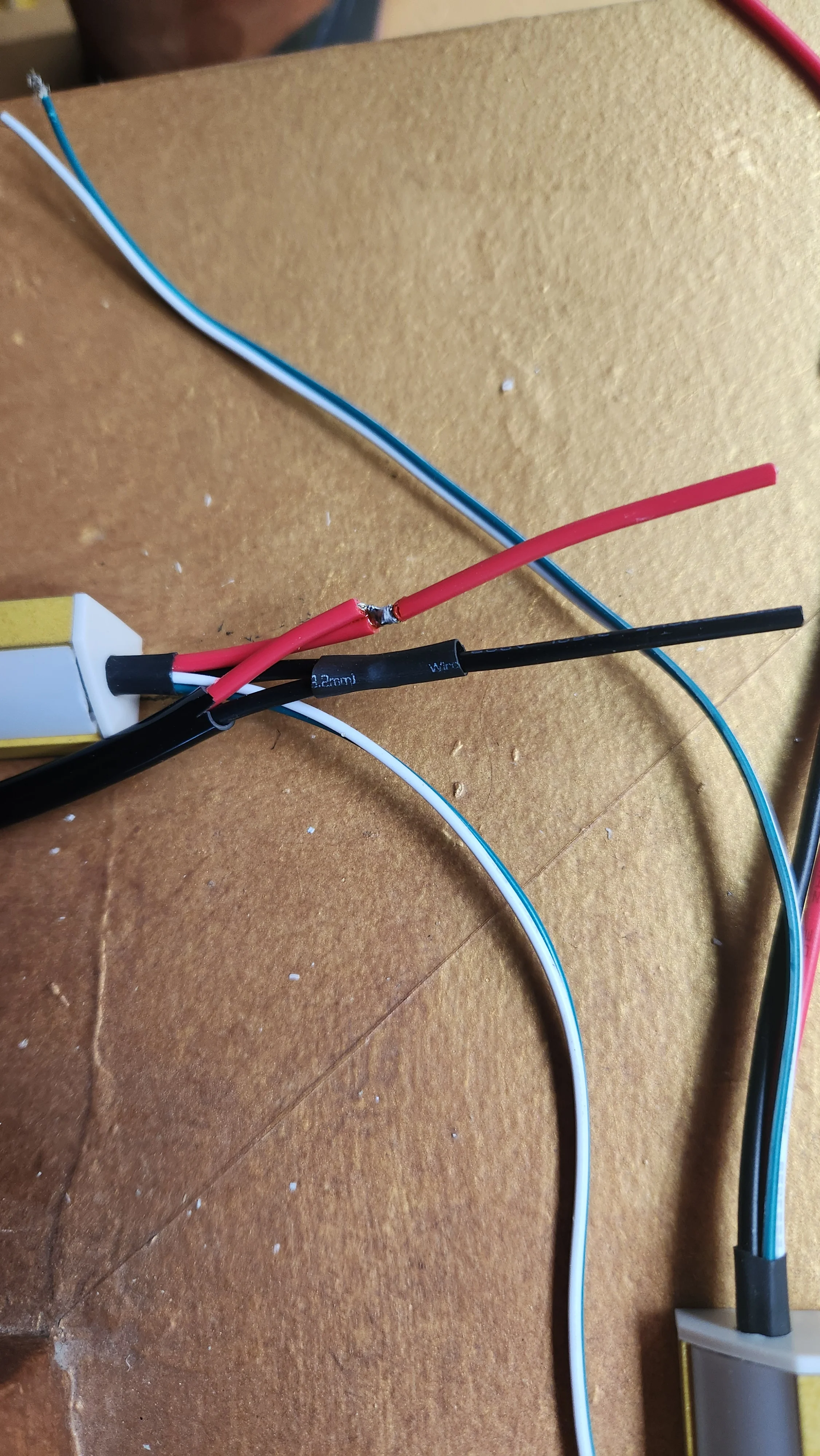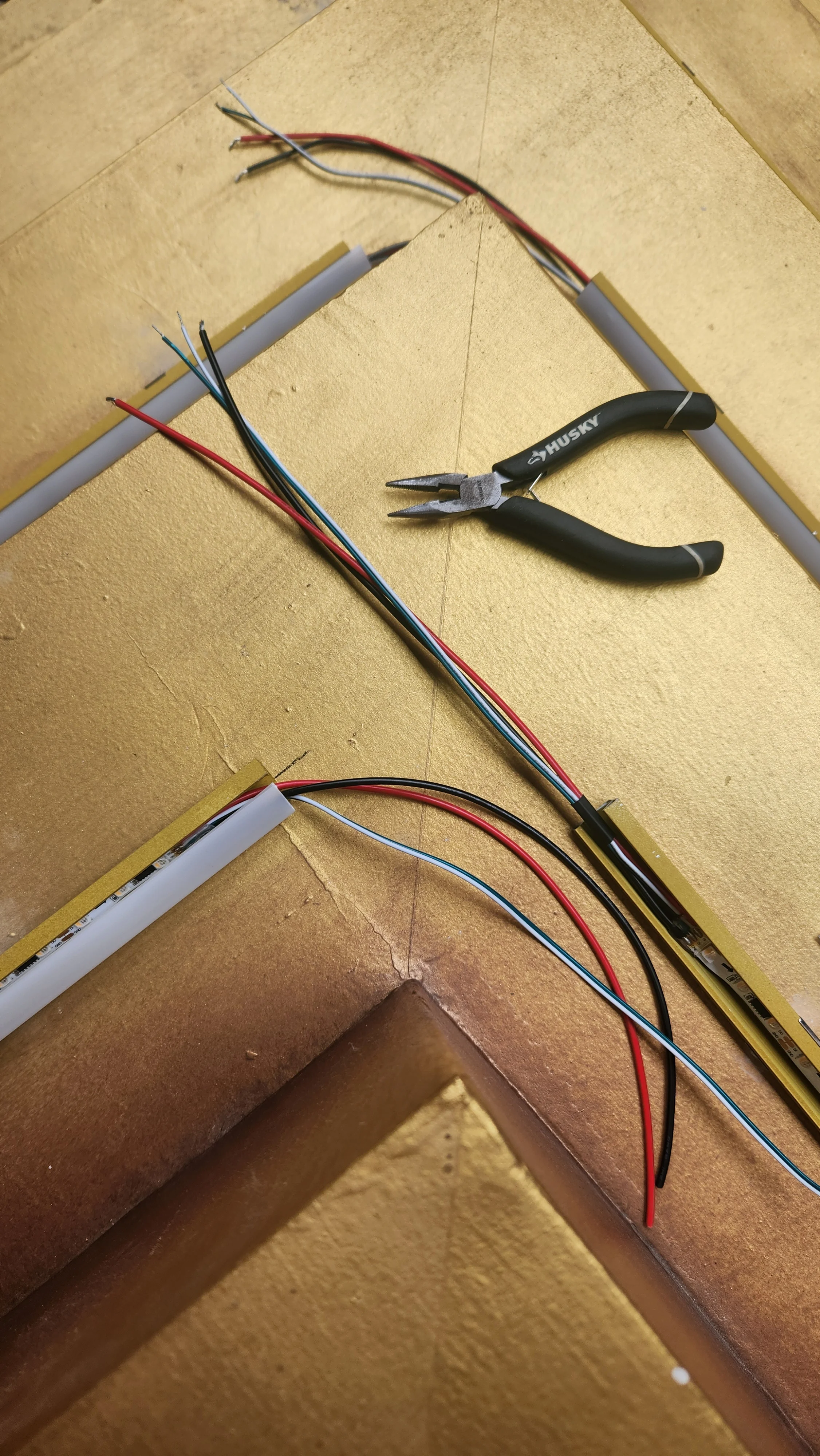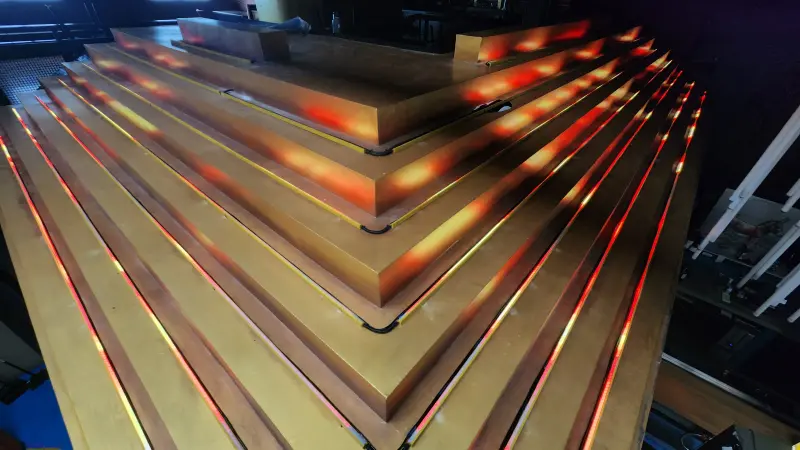
Fixing the voltage drop meant sitting on a twelve-foot ledge over the tile with a battery-powered soldering iron.
About the project
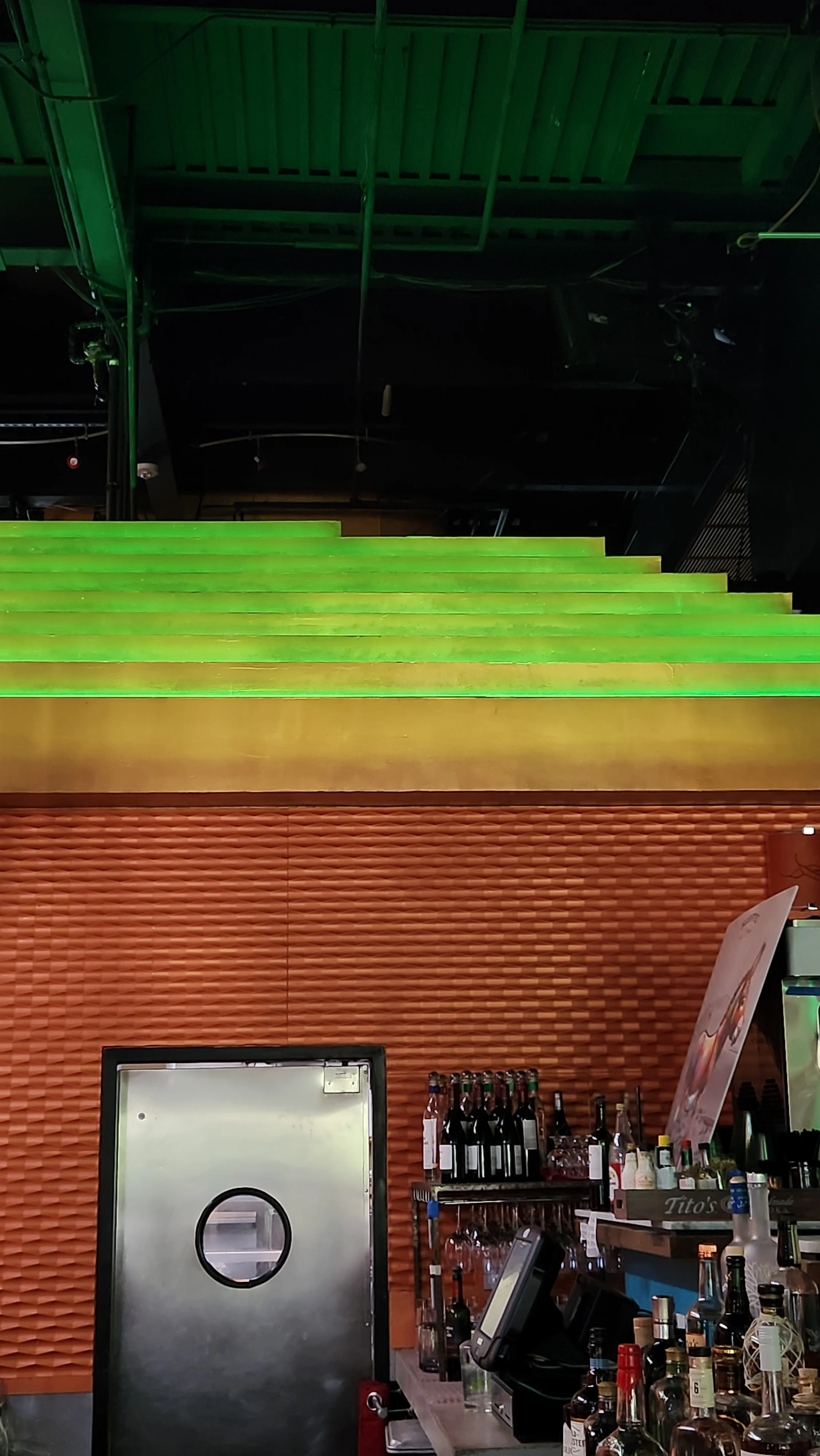
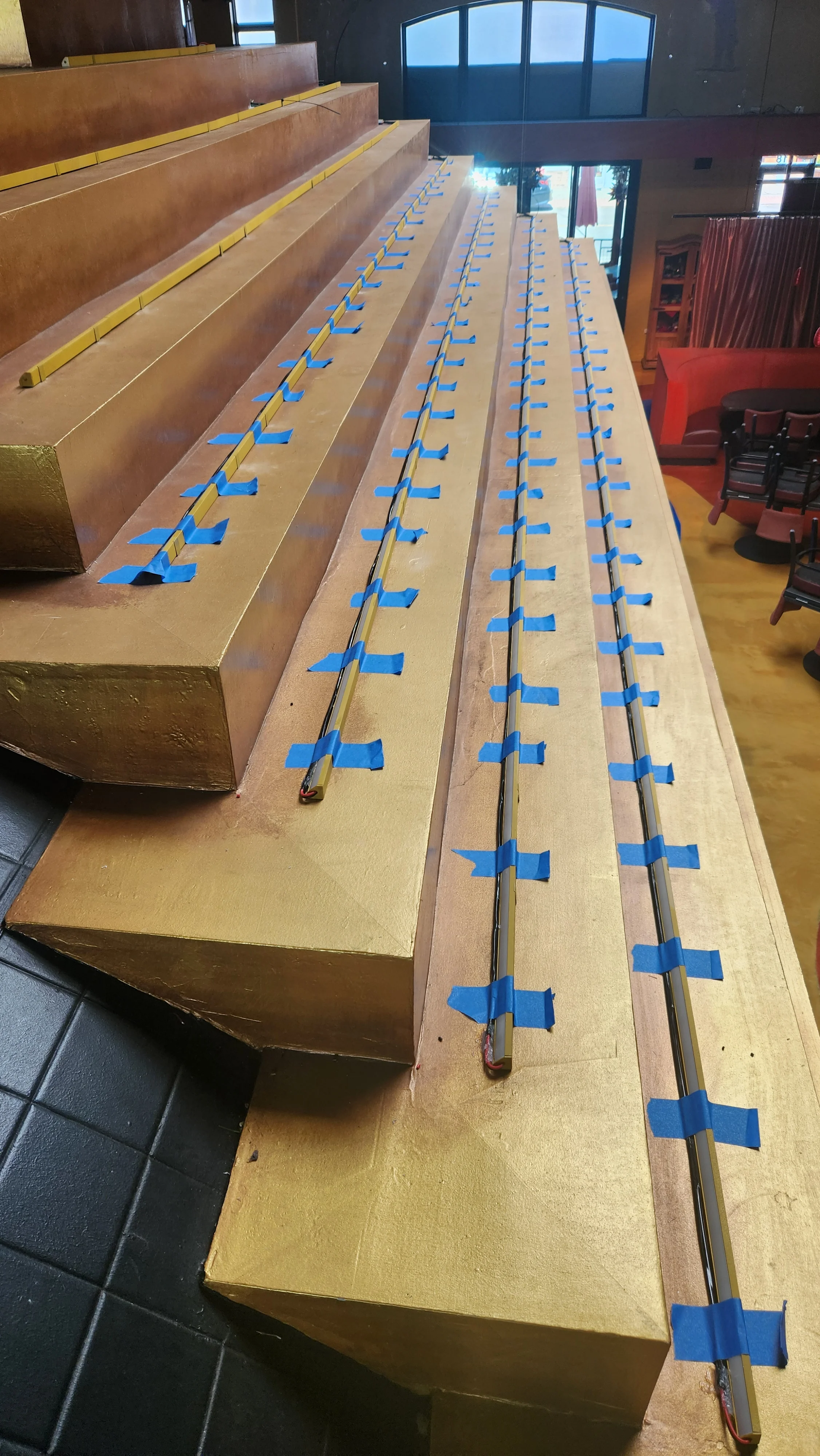
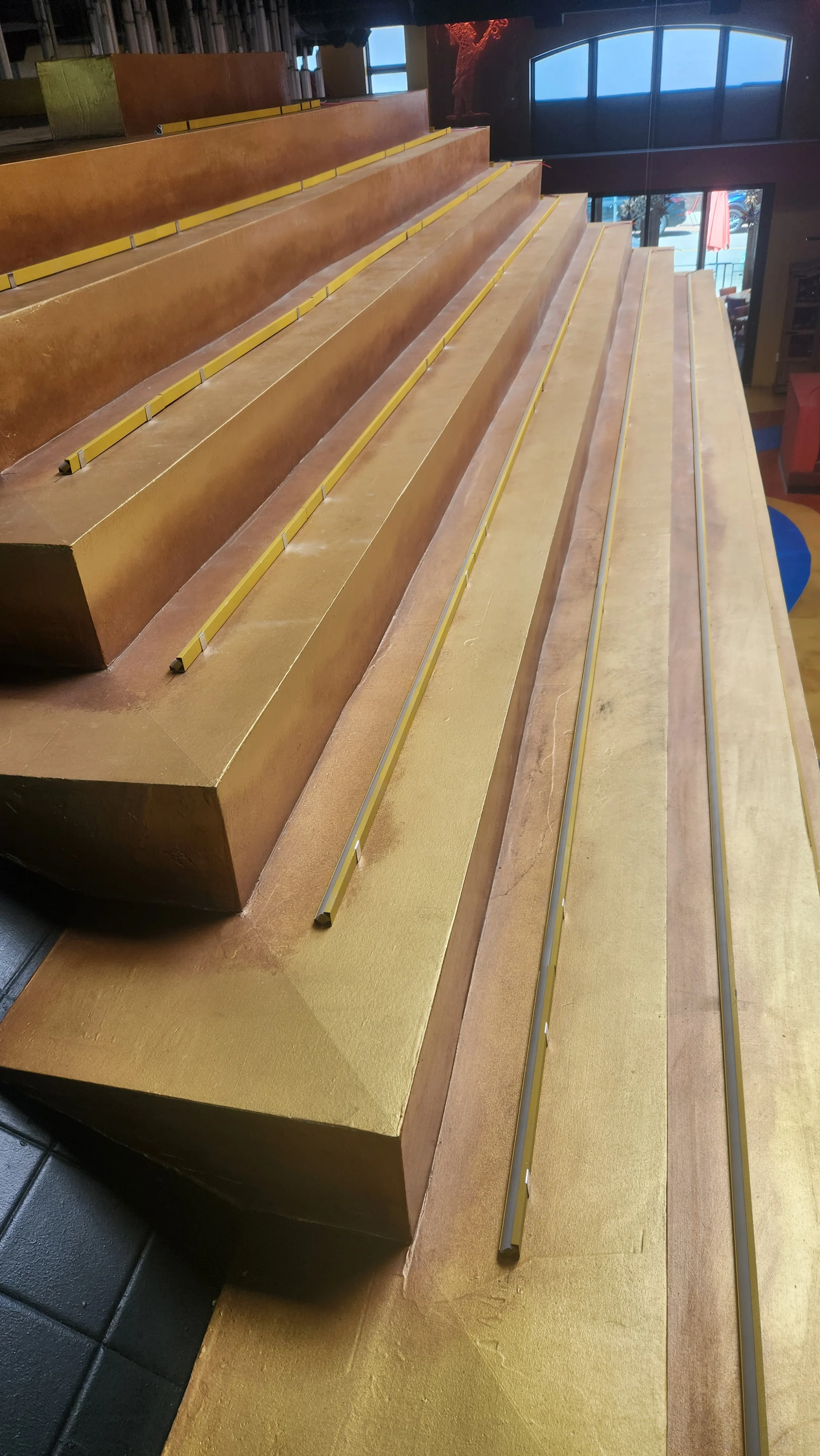
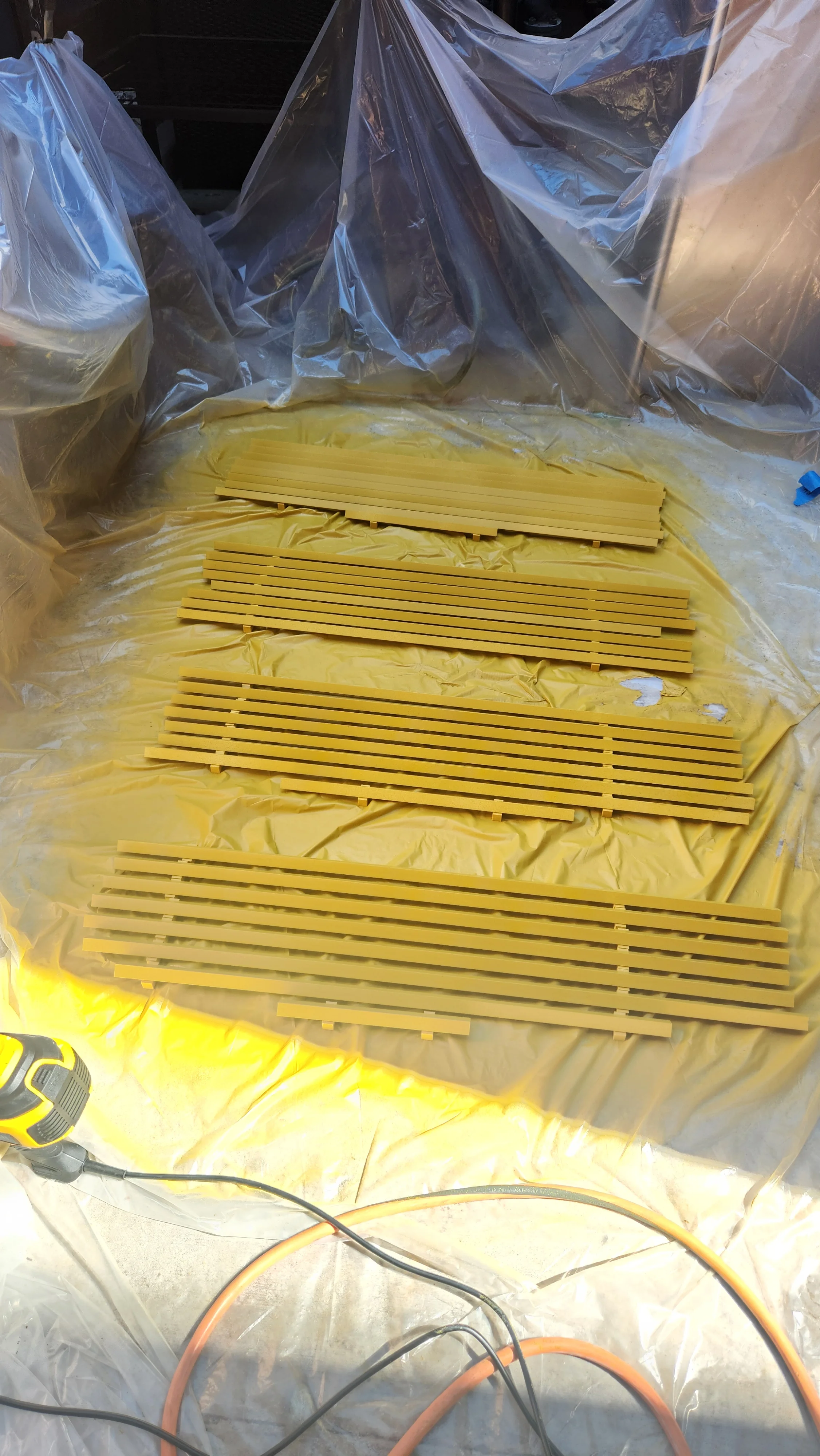
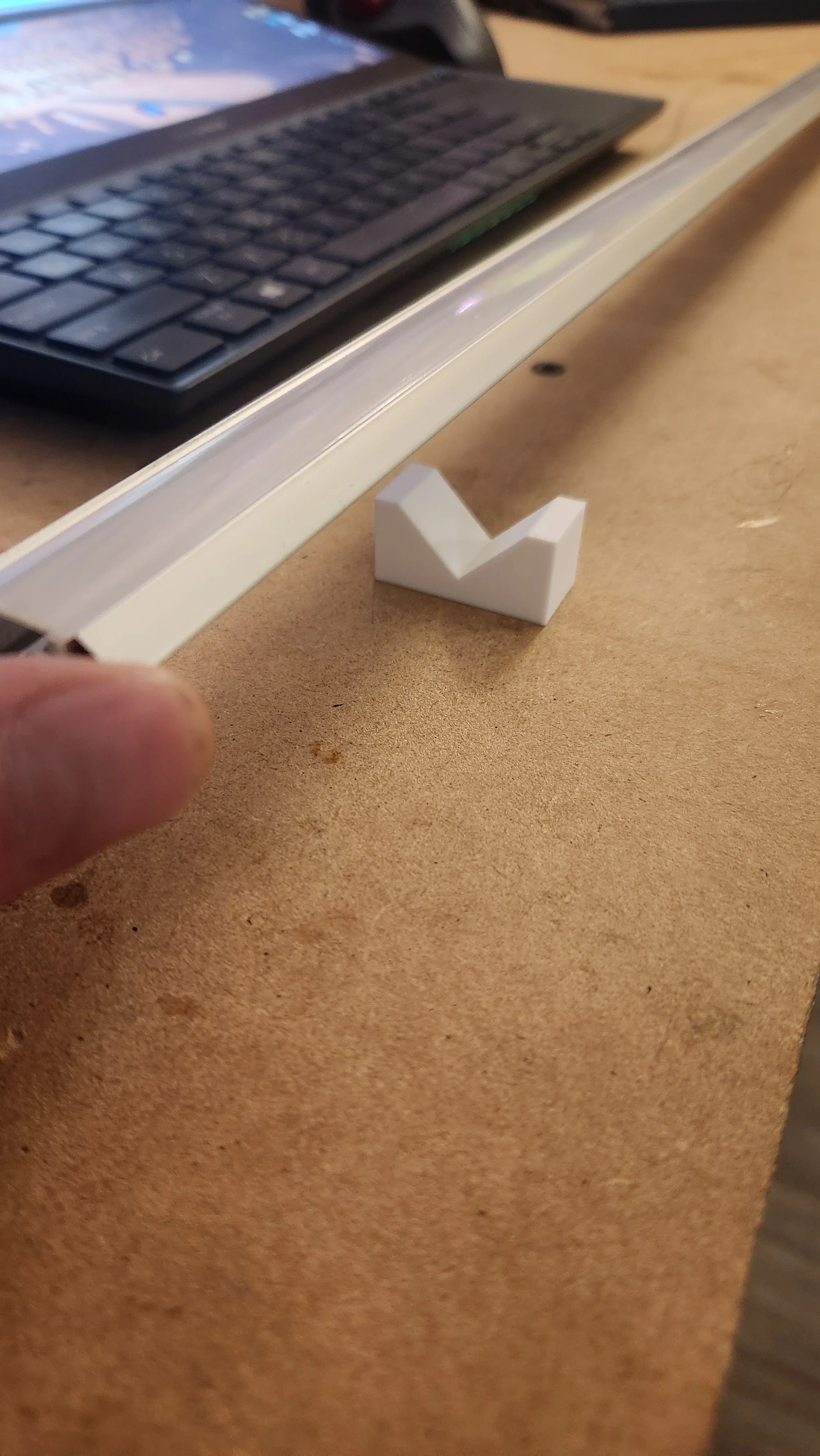
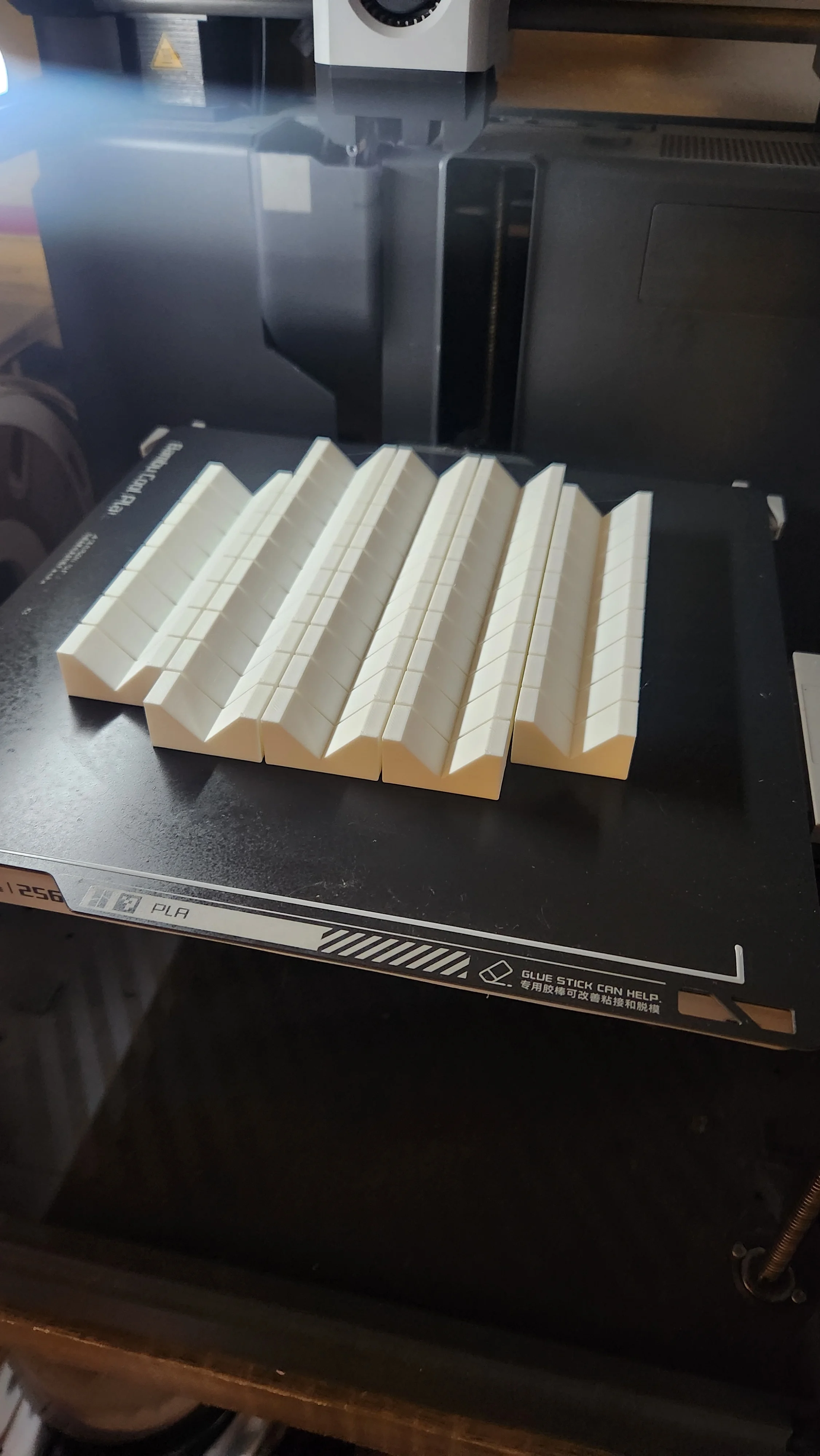
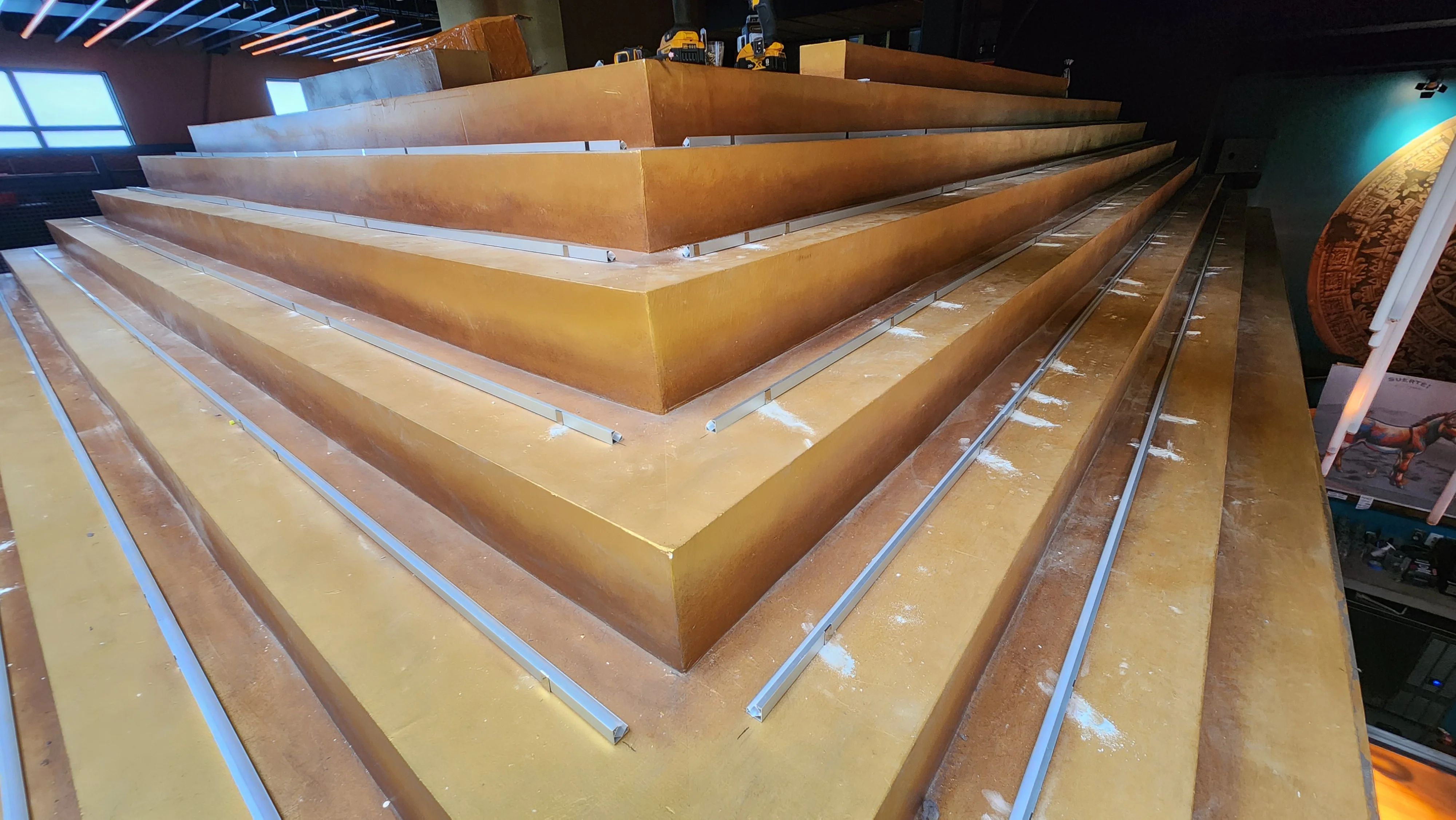
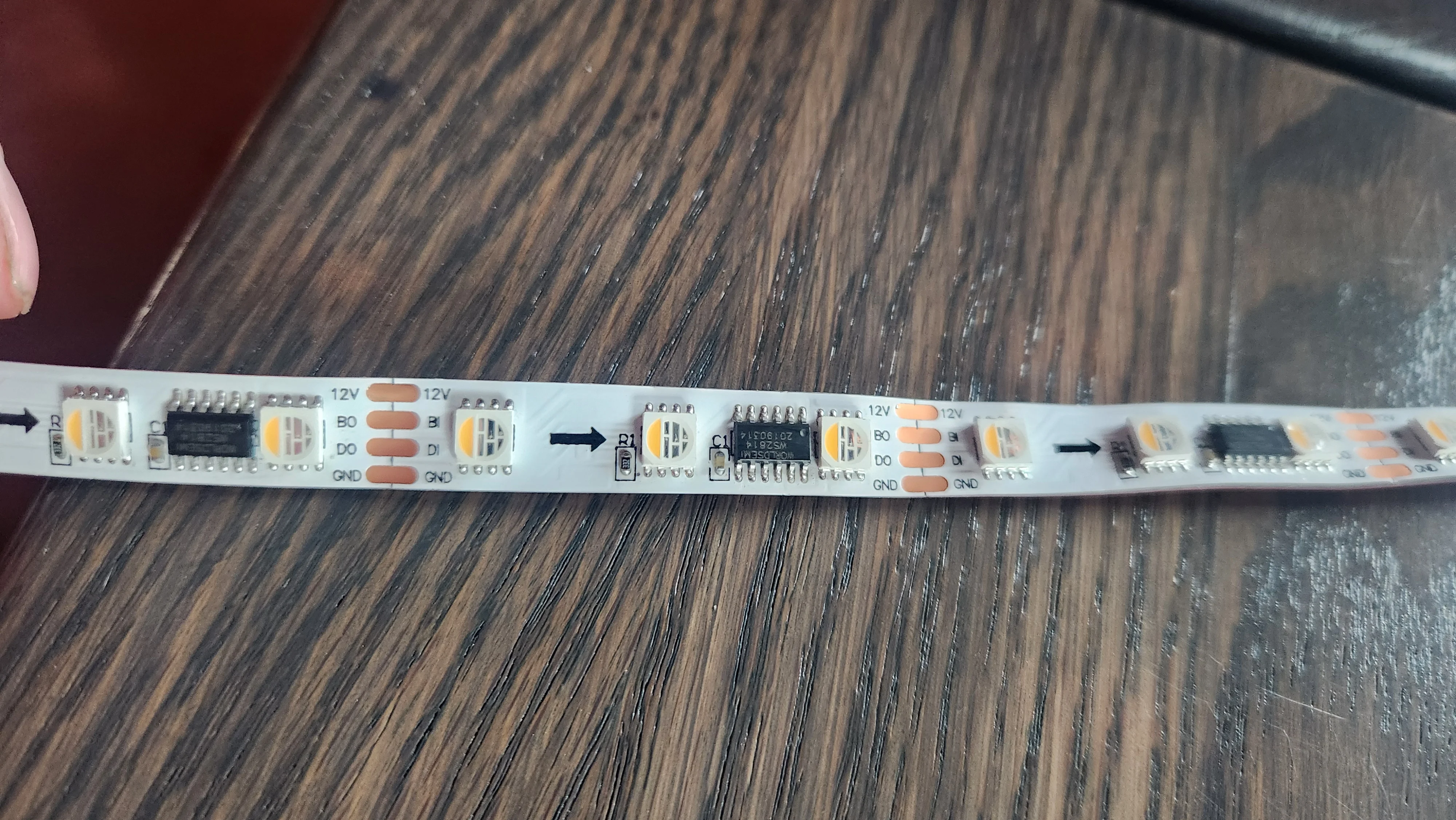
The decorative pyramid above the kitchen sat twelve feet over the dining room tile. I wanted to wash the steps with pixel tape. Guests taking the stairs to the second floor had a clear view down the side. I refused to let the hardware show during the day, but it needed enough throw for a clean wash. I mounted 45-degree aluminum extrusions under the lip of each step. To make the track disappear, I pulled a paint match with a digital sensor, printed custom jigs, and sprayed the metal in batches.
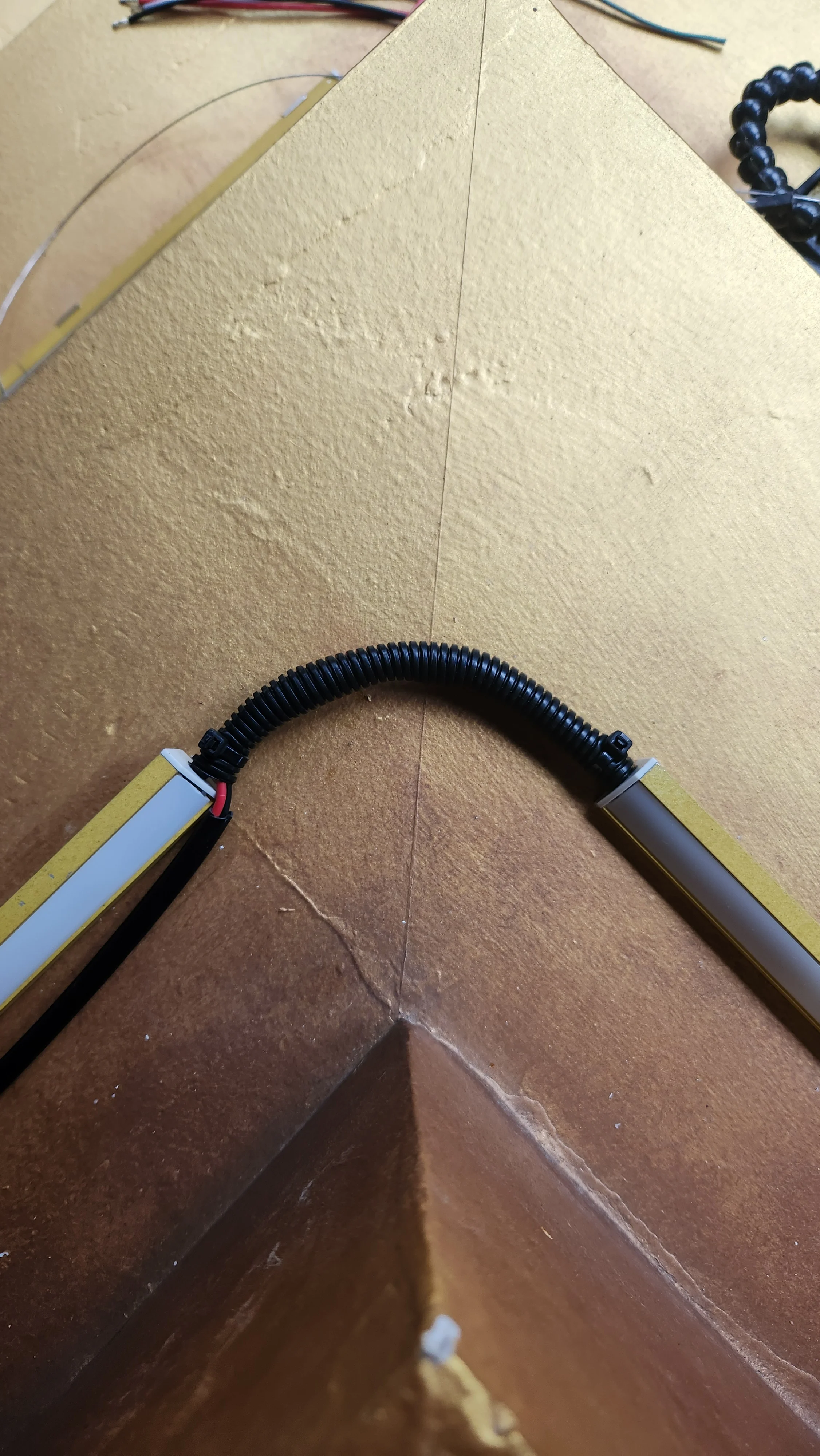
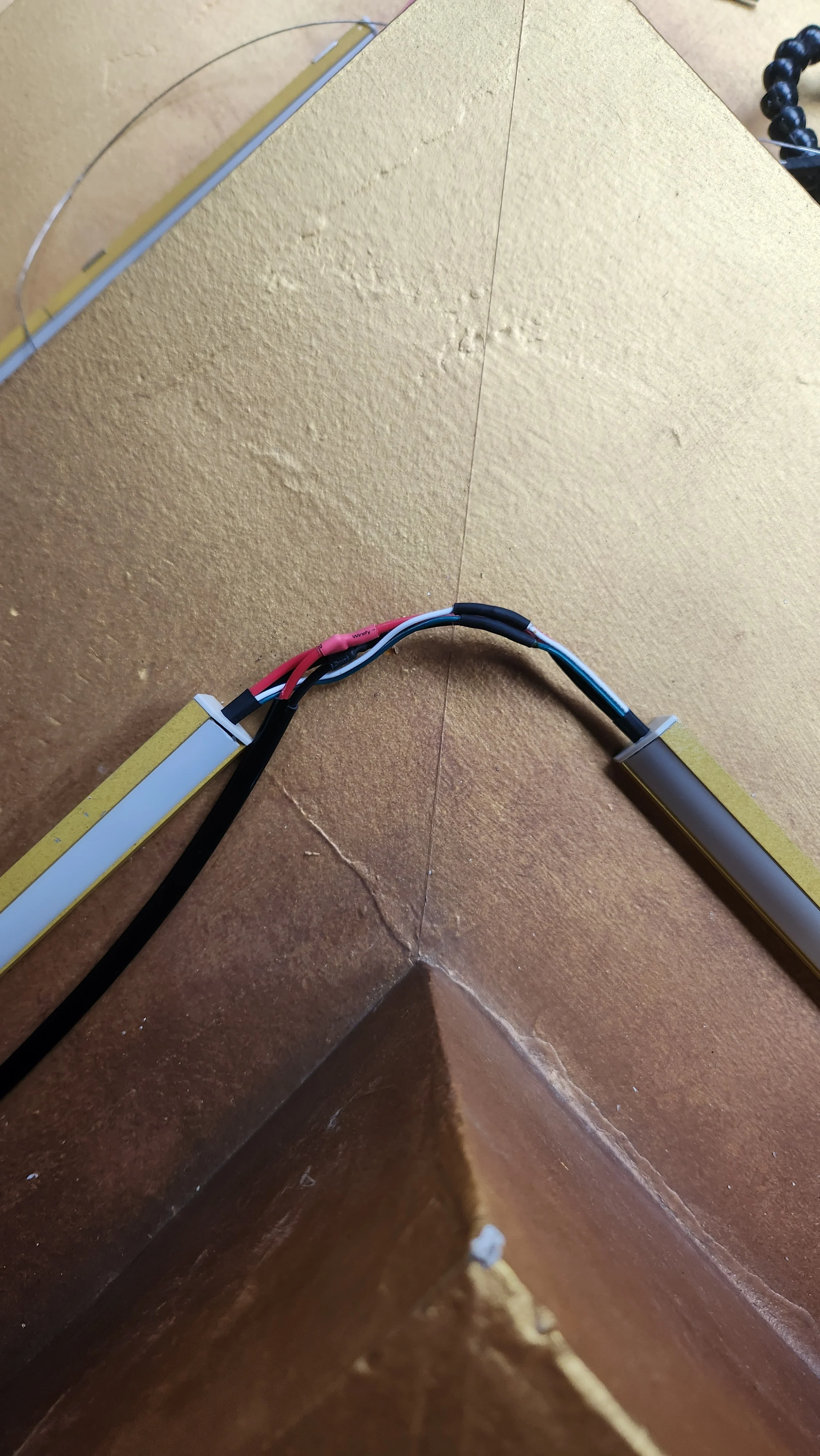
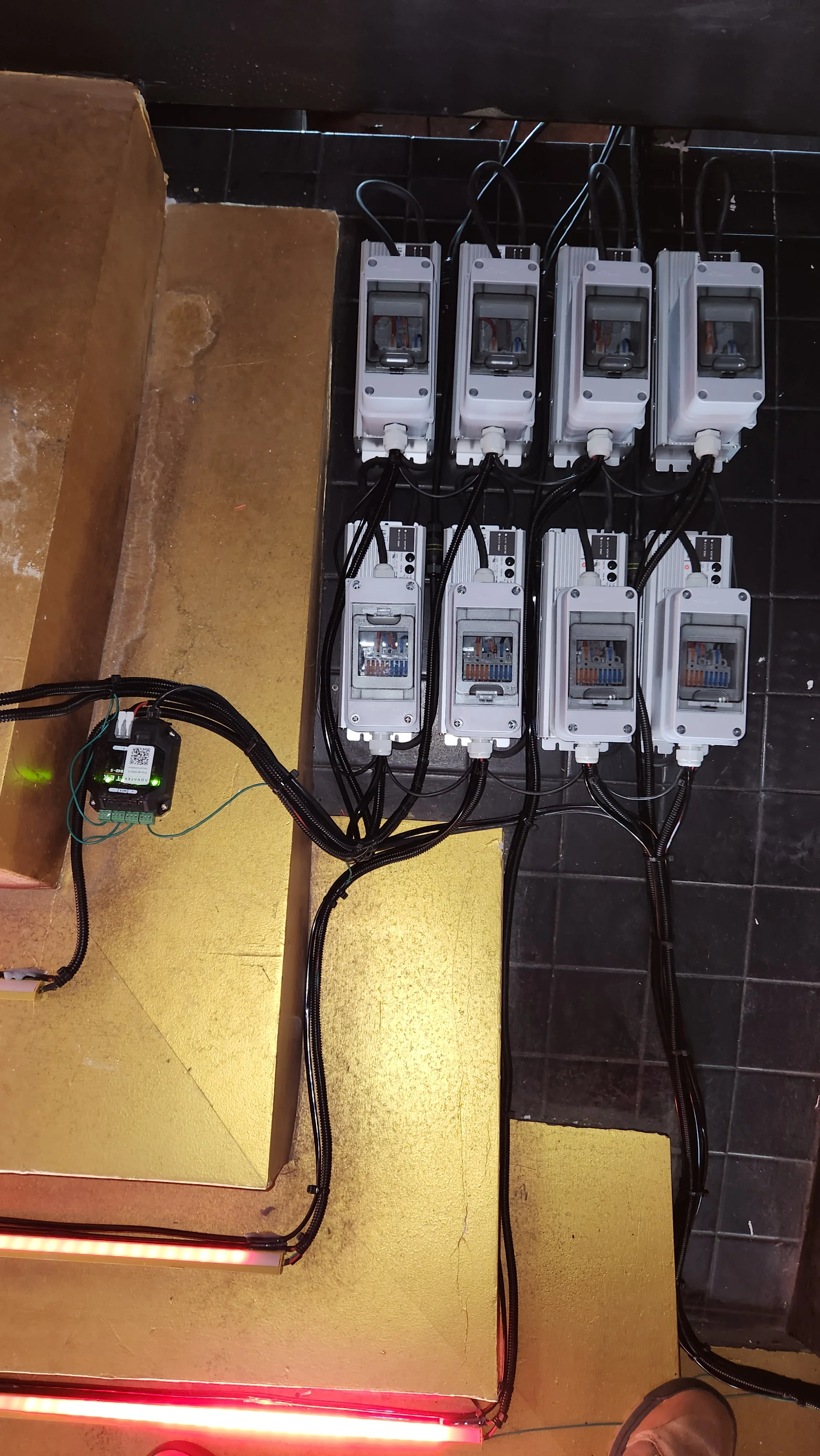
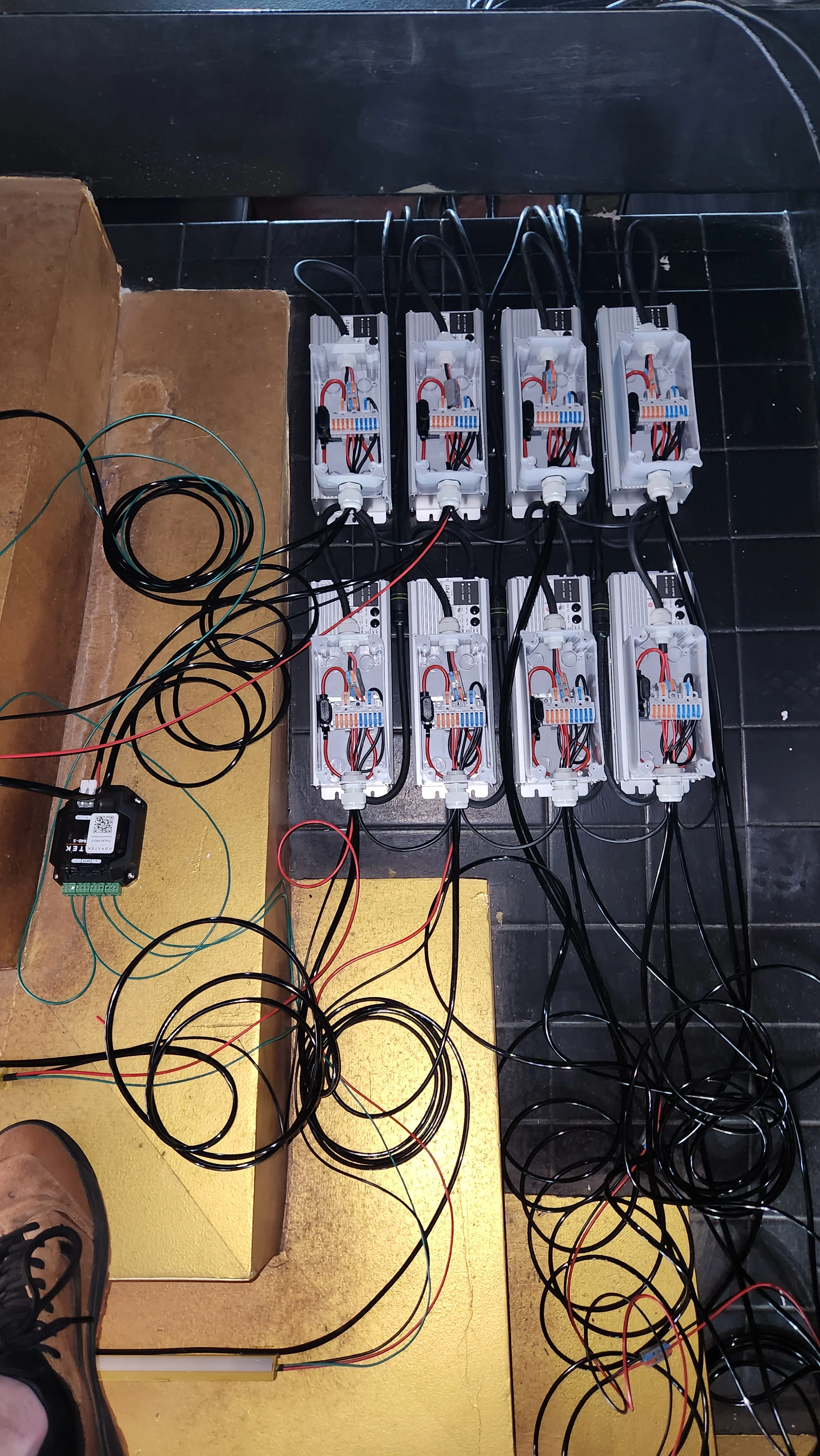
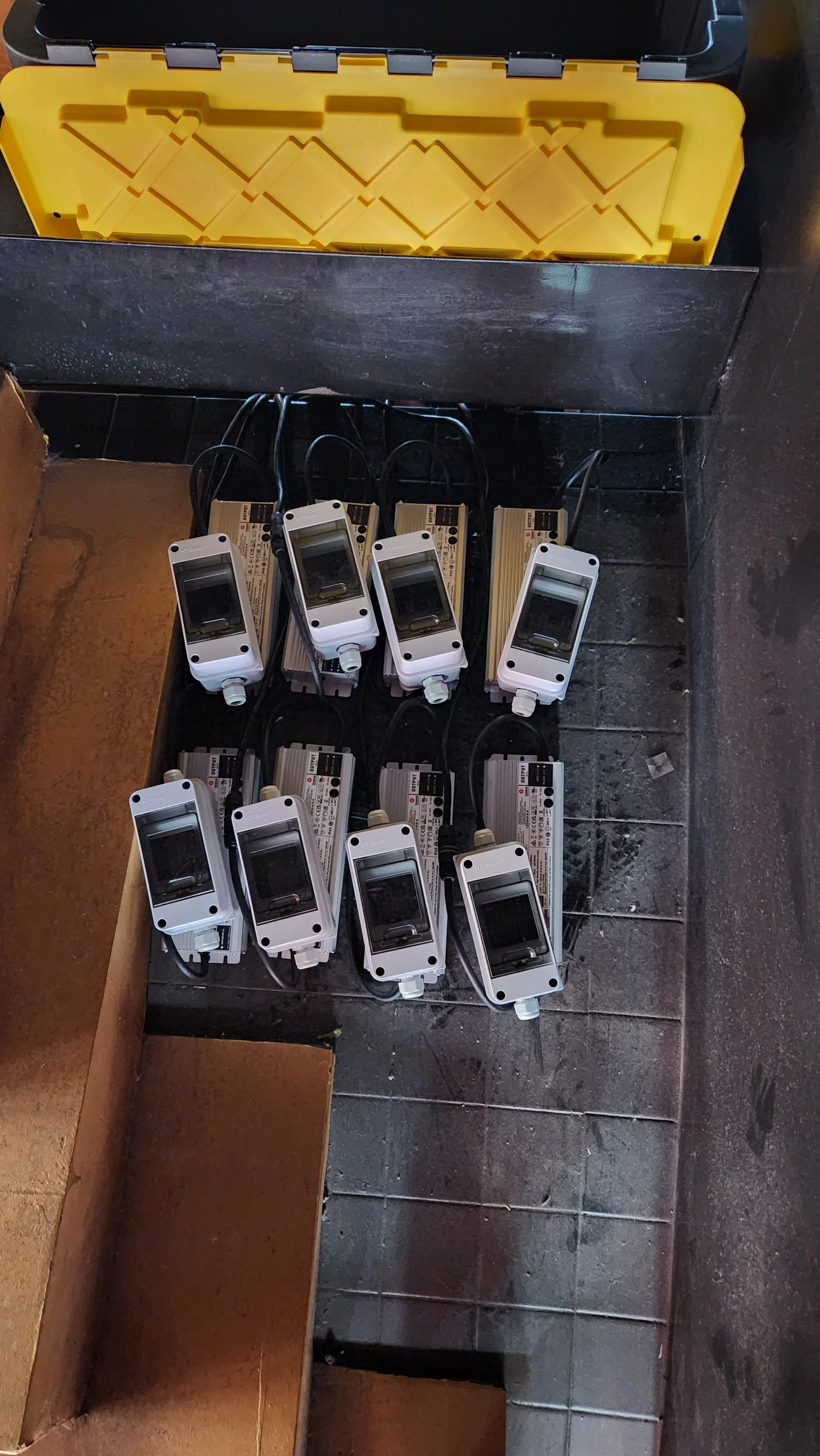
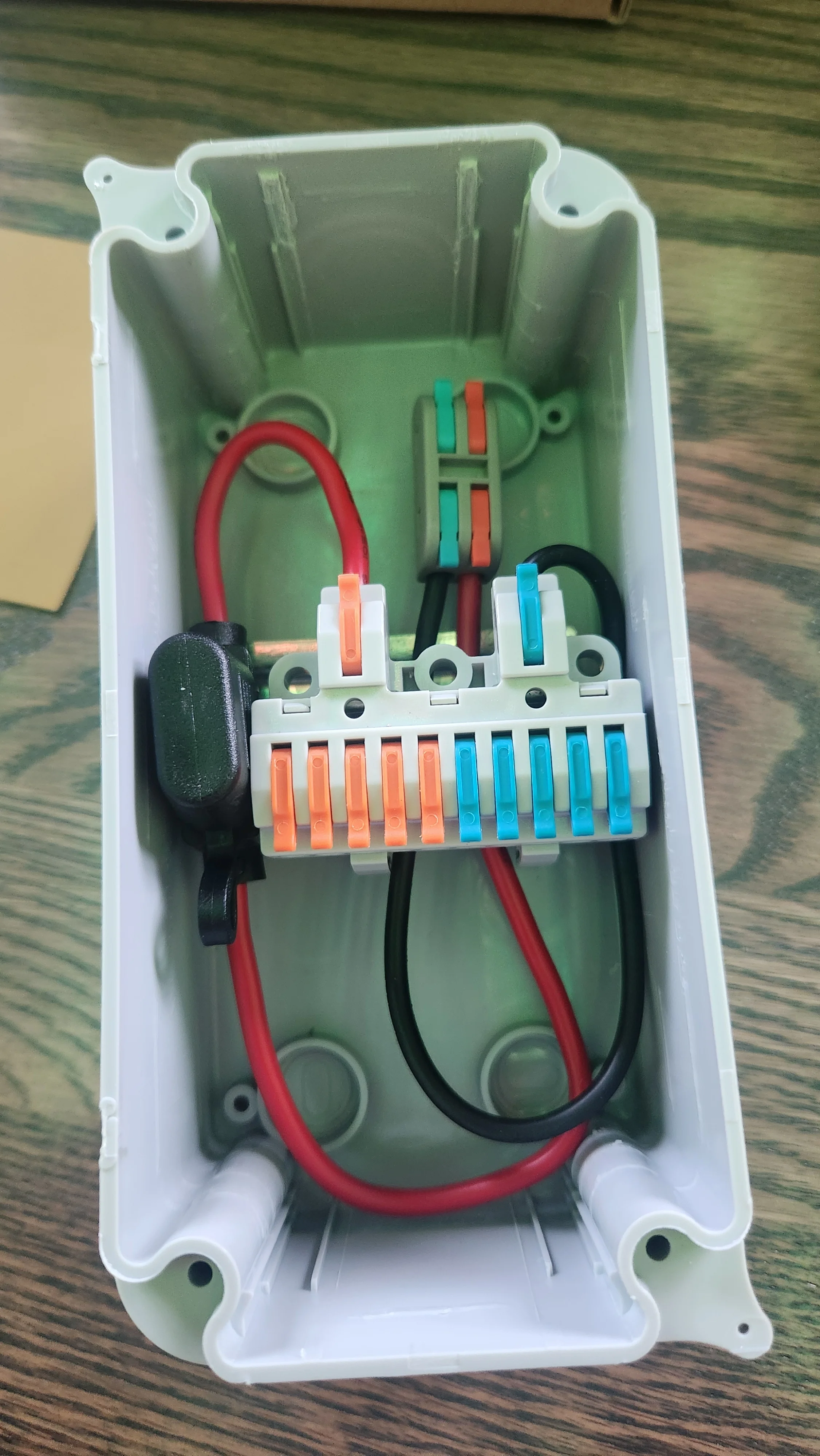
The layout wrapped two sides of the pyramid. I tucked fanless power supplies in the corner, wired to receivers on the main rack. Firing it up revealed a voltage drop. The bottom steps shifted color. Fixing it meant adding power injection at the far ends. I sat on the twelve-foot edge, splicing wire over the tile floor with a battery-powered iron. I bundled the new lines in black wire wrap, leaving a clean arc at every corner.
The painted track vanished during the day. At night, the steady voltage let the server push smooth, flowing shapes across the steps. The top of the kitchen rolled with slow waves, and on certain patterns, the pyramid looked like it was on fire.
- AC/DC Load Calc
- Custom Fabrication
- Hand tools
- Lighting Design
- Madrix
- Pixel Mapping
- Power Distribution
- Power tools
- SPI
- Wire-to-Board Soldering
Gallery